
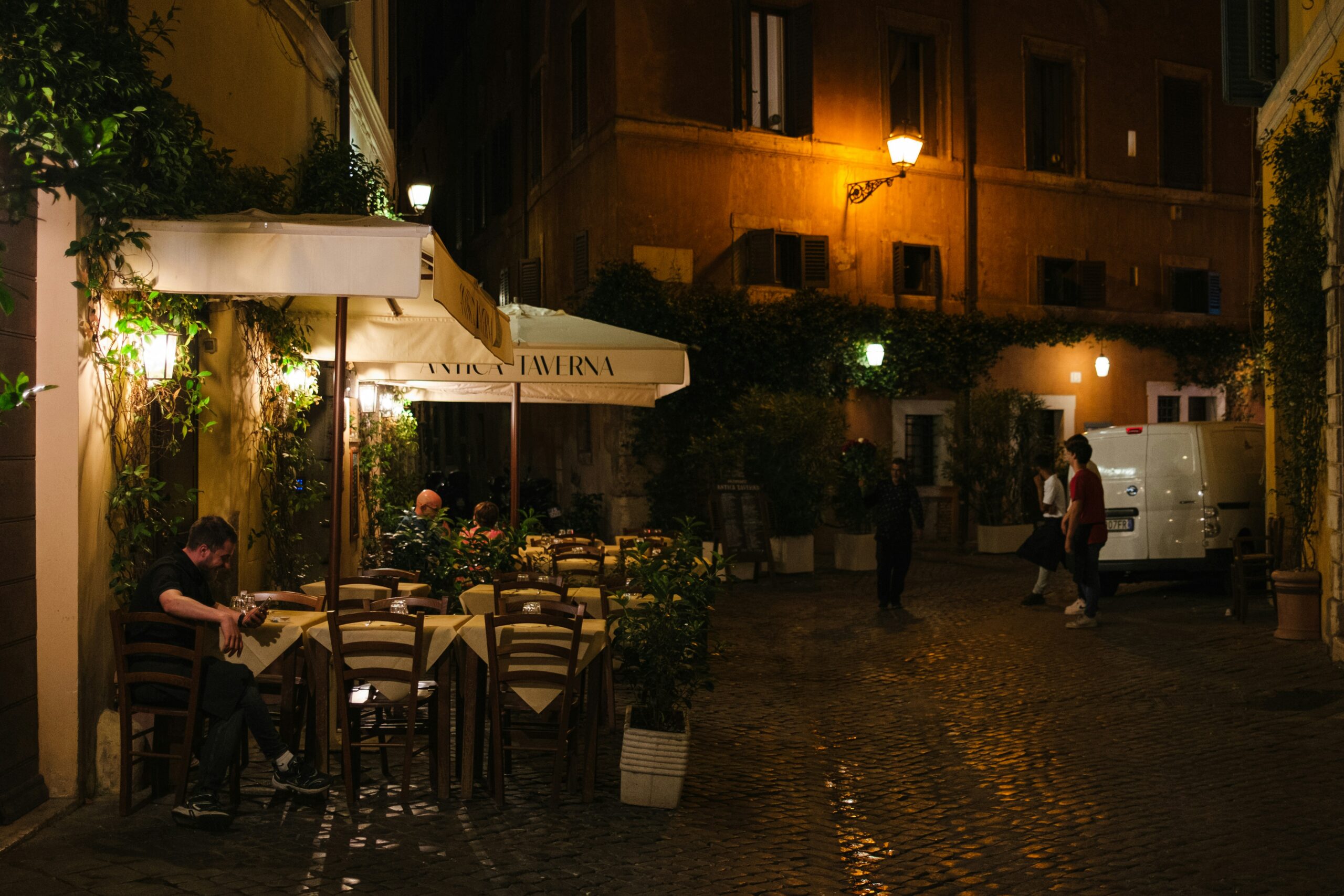
Your first 24 hours in Rome can shape the rest of your trip. The goal isn’t to rush through as many landmarks as possible — it’s to arrive with a plan that helps you settle in, eat well, avoid unnecessary spending, and start experiencing the city without feeling overwhelmed.
This guide is designed to help you plan that first day before you arrive. We’ll focus on the decisions that make the biggest difference: how to use your first few hours wisely, where to look for good-value food, which Roman dishes are worth trying, what you can enjoy without paying for another ticket, and where spending a little more can genuinely improve the experience.
Think of it less as a strict hour-by-hour itinerary and more as a practical framework for starting Rome well — with enough structure to avoid common mistakes and enough flexibility to actually enjoy being there.
Don’t Try to “Do Rome” on Arrival
Once you’ve checked in and dropped your bags, resist the temptation to immediately start ticking off major attractions. Your first few hours are better used to get oriented, slow down after the journey, and begin experiencing Rome without committing yourself to another reservation.
If you arrive with part of the day still ahead of you, keep the first outing simple. Choose an area that can be explored largely on foot, rather than crossing the city several times to reach attractions you could visit more logically on another day.
Rome makes this surprisingly easy. Some of its most memorable first impressions — lively piazzas, historic streets, fountains, churches and neighbourhood atmosphere — don’t require an admission ticket at all. Saving the major timed-entry attractions for a properly planned day can also prevent you from paying for tickets you are too tired or too rushed to enjoy.
Smart first-day rule: spend less on scheduling your arrival day and keep more of your budget for the experiences that genuinely benefit from advance booking.
Make Your First Meal Simple — and Roman
Your first meal in Rome doesn’t need to be an expensive sit-down restaurant experience. In fact, arrival day is a good opportunity to try one of the city’s simpler food traditions while keeping both your schedule and budget flexible.
Look for pizza al taglio — Roman-style pizza sold by the slice or by weight — or try a supplì, the classic Roman fried rice snack. Both work particularly well for a quick lunch or afternoon bite when you would rather continue exploring than spend a long time at a restaurant.
A useful rule is to avoid choosing a restaurant simply because it sits directly beside a major landmark. A beautiful view can be worth paying for when you deliberately want that experience, but it shouldn’t be confused with better food or better value. Walking a few streets away from the busiest tourist spots usually gives you more choice before you decide where to eat.
Save the longer meal for later, when you have the time to enjoy a proper Roman dinner rather than paying restaurant prices simply because you arrived hungry.
What You Should Actually Eat in Rome
You don’t need a long food checklist to experience Roman cuisine. A better approach is to know a handful of dishes that are genuinely connected to the city and choose a few that fit naturally into your stay.
Rome is particularly famous for its pasta traditions. Cacio e pepe combines pecorino romano and black pepper; carbonara traditionally brings together guanciale, egg, pecorino and pepper; amatriciana adds tomato to the combination of guanciale and pecorino; and gricia offers a simpler version built around guanciale, pecorino and pepper.
Beyond pasta, keep an eye out for supplì and pizza al taglio for inexpensive, informal eating. Carciofi alla giudia, the deep-fried artichokes associated especially with Rome’s Jewish culinary tradition, are another distinctive choice when artichokes are in season.
More adventurous eaters may also encounter dishes such as coda alla vaccinara (slow-cooked oxtail) and trippa alla romana. These belong to Rome’s deeper culinary history and are particularly associated with the tradition of making excellent food from less expensive cuts and ingredients.
You certainly don’t need to try everything. Pick a few dishes you genuinely want to experience and leave room for discoveries — food in Rome should be part of the trip, not another checklist to complete.
Where to Eat Without Planning Every Restaurant
You don’t need to reserve every restaurant before arriving in Rome. It is often more useful to know which neighbourhoods are worth exploring for food and then keep some flexibility in your plans.
Testaccio deserves particular attention. The neighbourhood has deep connections with traditional Roman cooking and remains a useful place to look for trattorias, local food and some of the city’s more distinctive culinary traditions. It is especially relevant if food is an important part of your trip but you don’t want every meal to revolve around the busiest tourist streets.
Mercato Testaccio is another option worth knowing before you travel. Rather than committing to a formal restaurant lunch, you can explore market stalls and prepared-food counters, making it easier to try something local while keeping lunch relatively informal.
Areas such as Ostiense and Garbatella can also be worth considering when your plans take you outside the historic centre. The point isn’t that every restaurant outside the main tourist zone will automatically be cheaper or better — it won’t. The advantage is simply having a broader choice than the restaurants competing for visitors immediately beside Rome’s biggest landmarks.
Planning tip: instead of saving a list of twenty restaurants, mark two or three food-friendly areas on your map before the trip. Then choose where to eat according to where you already expect to be that day.
Eat Well Without Making Every Meal Expensive
Eating on a budget in Rome shouldn’t mean surviving on supermarket sandwiches. A better strategy is to decide which meals deserve more of your budget and keep the others simple.
Breakfast can be light and inexpensive — many Italians start the day simply with coffee and something sweet at a bar. For lunch, pizza al taglio, supplì, a market stop or another informal option can keep both the cost and time commitment lower.
Then leave room in your budget for a proper Roman dinner. That is a much better moment to sit down, order one of the city’s traditional pasta dishes and enjoy the meal without feeling that you need to rush back to sightseeing.
Smart food-budget rule: don’t try to save money on every meal. Save on the meals that matter less to you, so you can comfortably spend more on the one you actually want to remember.
Another useful rule: decide roughly how many restaurant meals you want before the trip. This makes the food budget far easier to control than choosing every meal spontaneously once you are hungry and standing in a tourist-heavy area.
Don’t Pay for Everything — Some of Rome’s Best Moments Are Free
Rome is one of those cities where spending more does not automatically mean experiencing more. A surprising amount of the city can be enjoyed without buying another ticket.
Piazzas, historic streets, fountains and many churches can fill several hours without adding anything to your sightseeing budget. Places such as the Trevi Fountain, Piazza Navona and the Spanish Steps can naturally become part of a walk rather than separate paid activities.
Rome also participates in Italy’s Domenica al Museo initiative, which provides free admission to participating state museums and archaeological sites on the first Sunday of the month. Some municipal museums are free throughout the year as well. Because participating sites, access conditions and opening arrangements can change, check the official information for your travel dates before building your itinerary around a free-admission day.
Another tiny saving is surprisingly easy: Rome’s public drinking fountains, commonly known as nasoni, provide drinking water across the city. Carrying a refillable bottle means you don’t need to keep buying bottled water while sightseeing.
Money-saving rule: before paying for another attraction, ask whether the experience you want from that part of Rome actually requires a ticket.
If your visit includes a free-admission day, check it before buying tickets — but never build your entire itinerary around it until you have verified the rules for the specific attraction and date.
Budget for the Costs That Are Easy to Forget
A realistic Rome budget needs to include more than accommodation, food and attraction tickets. Several smaller expenses are easy to overlook when you are comparing the headline cost of a trip.
One is Rome’s accommodation tax. The amount depends on the type and category of accommodation and is normally charged per person, per night, subject to the applicable rules and exemptions. Because rates can change, check the current amount for your accommodation before travelling rather than assuming it is included in the room price.
Small daily purchases can add up as well — bottled water, snacks bought beside major attractions, frequent short transport journeys and spontaneous restaurant stops can quietly increase the cost of a multi-day stay.
Be careful with tourist passes too. A city or transport pass is not automatically a money-saving purchase simply because it bundles several things together. Compare its current price with the attractions and journeys you genuinely intend to use.
Budget rule: calculate the cost of the trip you actually plan to take — not the theoretical value of everything included in a pass.
Before booking accommodation, compare the final price after taxes and fees, not only the nightly rate shown in the first search result.
Spend Here, Save Here: Where Your Rome Budget Matters Most
A smarter Rome budget isn’t about choosing the cheapest option every time. It is about spending more where the extra money improves your trip — and spending less where it doesn’t.
SAVE on the perfect postcard address. Staying directly beside the Trevi Fountain, Pantheon or another major landmark can carry a premium. A well-connected neighbourhood slightly outside the busiest tourist core may give you better value without making sightseeing difficult.
SPEND on location when it genuinely saves time. A cheaper room far outside the areas you plan to visit can become poor value once you add daily transport and the time spent travelling back and forth.
SAVE on routine lunches. Pizza al taglio, supplì, markets and other informal options can make excellent daytime meals without turning every food stop into a restaurant bill.
SPEND on one meal you genuinely want to experience. Leave room in the budget for a proper Roman dinner and choose it deliberately rather than sitting at the first restaurant you see because you are hungry.
SAVE on experiences that are easy to enjoy independently. Rome offers an enormous amount that can be explored on foot and without a guide.
SPEND when paying solves a real problem. A guided or organised experience can make sense when it saves substantial planning time, simplifies something difficult to arrange independently, provides expertise you genuinely value, or helps you make better use of limited time.
The rule to remember: don’t ask only “How can I make Rome cheaper?” Ask “Which expenses will actually make my trip better?”
When Is a Tour in Rome Actually Worth Paying For?
Want to compare organised experiences before deciding whether one is worth adding to your Rome budget? You can browse different options, compare what’s included, and see which experiences fit the way you want to explore the city.
Compare Rome Tours & See What’s Included
Rome is not a city where you need a tour for everything. Much of the pleasure comes from walking, exploring neighbourhoods and discovering places independently. But there are situations where paying for an organised experience can provide real value.
A guided experience may make sense when the history and context are an important part of what you want from a site. Seeing an ancient structure and understanding what happened there can be very different experiences.
It can also be useful when your time in Rome is limited. A well-organised experience may reduce some of the planning involved in combining several places or help you use a limited sightseeing window more efficiently.
On the other hand, paying for a tour simply because one exists is rarely a good reason. If an attraction is straightforward to visit independently and you are comfortable organising it yourself, keeping that money for food, another experience or an extra day in Rome may give you more value.
Before booking a tour, ask: What problem is this solving for me — access, time, logistics, or understanding? If the answer is “none”, you may not need it.
Compare what is actually included before comparing prices. Two experiences with similar names can offer very different levels of access, duration, group size or guidance.
A Cheaper Room Isn’t Always a Cheaper Stay
Accommodation is often the largest part of a Rome budget, which makes the location decision more important than simply finding the lowest nightly rate.
Before paying a premium to stay beside Rome’s most famous sights, widen your search to neighbourhoods with practical connections to the areas you expect to visit. San Giovanni, for example, can offer a useful balance between access to central Rome and accommodation outside the most heavily touristed streets. Ostiense and Garbatella are also worth comparing if you prefer a more residential base with restaurants and everyday neighbourhood life nearby.
Travellers on a tighter budget may also encounter options around San Lorenzo or Pigneto. These areas have a younger, more local character, but the right choice depends on your itinerary and how much travelling across the city you are comfortable doing.
Don’t judge an accommodation bargain by the room price alone. Check how long your likely journeys will take, whether you can walk to useful places, what transport you will need in the evening, and what taxes and fees are added to the booking.
Accommodation rule: compare the total cost of staying there — money, transport and time — rather than simply choosing the cheapest nightly rate.
Before booking, map the accommodation against the places you genuinely plan to visit. Saving a little on the room is poor value if you lose a large part of every day getting to and from it.
Make These Decisions Before You Arrive
You don’t need to plan every hour of your first day in Rome. But making a handful of decisions before the trip can prevent unnecessary spending and leave you much more freedom once you arrive.
Decide which meals matter most to you, rather than researching every restaurant. Identify one or two neighbourhoods where you would like to eat. Check the true final cost and location of your accommodation. Decide which paid experiences genuinely deserve space in your budget, and leave some of Rome deliberately unplanned.
It is also worth saving a few practical places on your map before departure — your accommodation, a food area you want to explore, one or two backup places to eat, and the attractions you have already booked. You don’t need dozens of saved pins.
Pre-trip rule: plan the decisions that can cost you money or time. Leave the small discoveries for Rome.
A good first 24 hours should give you confidence in the city — not leave you exhausted from trying to complete an itinerary.
Final Thoughts: Spend Better, Not Simply Less
A memorable trip to Rome doesn’t have to be built around the biggest budget. What matters more is knowing where your money will genuinely improve the experience.
Keep everyday meals simple when you want to, but make room for the Roman food you came to try. Don’t automatically pay a premium for the most famous address. Enjoy the enormous amount of Rome that costs nothing, and pay for an attraction, guide or organised experience when it gives you something you would struggle to get on your own.
Most importantly, make these decisions before the trip rather than when you are tired, hungry or standing beside a major attraction wondering what to do next.
The smartest Rome budget isn’t the one where you spend the least. It’s the one where you come home feeling that you spent well.
Still deciding what deserves a place in your Rome plans? Browse more experiences and ideas, compare the options, and choose only what genuinely fits your time, interests and budget.