
What if a mountain was born from a door that once kept the sun hidden? And what if, in a quiet Japanese town, an enormous painted phoenix appeared to follow your every movement?
These stories belong to two remarkable destinations just beyond Nagano City — Togakushi and Obuse.
In Togakushi, ancient cedar trees tower above sacred forest paths, shrines preserve legends of Japan’s sun goddess, and stories of mountain ascetics and ninja traditions still capture the imagination. It’s a place where nature, mythology and history seem almost inseparable.
Obuse offers a different kind of discovery. This charming town welcomed the legendary artist Katsushika Hokusai during the final years of his life. Today, visitors can explore his artistic legacy, wander through intimate gardens and taste the chestnut delicacies for which the town has become famous.
And depending on when you visit, the experience changes completely.
Spring brings late-blooming cherry trees along the Chikuma River. Summer transforms Togakushi into a lush green mountain retreat. Autumn paints the forests in gold and red, while Obuse celebrates its chestnut harvest. Winter reveals a quieter landscape — beautiful, but with important seasonal access restrictions.
This guide explores two very different day trips from Nagano, helping you discover their stories, choose the best season, find memorable local experiences and plan your journey without unnecessary detours.
Rather than rushing through both destinations in a single day, we’ll show you how to enjoy each at a comfortable pace.
If you’re planning your first visit to the region, start with our two-day Nagano itinerary, which covers the city, Zenko-ji Temple and the famous snow monkeys.
Here, we’re taking a different path — into the sacred forests, artistic treasures and seasonal wonders that many visitors never discover.
Affiliate Disclosure: Some links in this guide may be affiliate links. If you book through them, Buildward Lab may earn a commission at no additional cost to you.
There’s More of Nagano Waiting to Be Discovered
From ancient forest shrines and hands-on cultural experiences to unforgettable mountain adventures, Nagano has so much more to offer. At the end of this guide, you’ll find our handpicked collection of experiences to help you discover something truly special.
Togakushi: The Mountain Born from a Legend
The Mountain That Brought Back the Sun
According to one of Japan’s most fascinating Shinto legends, there was once a time when the world lost its sunlight.
The sun goddess Amaterasu had hidden herself inside a cave, sealing the entrance with an enormous stone door. Without her light, the world fell into darkness.
The other gods gathered outside the cave and devised a plan to bring her back. Music, laughter and dancing finally persuaded Amaterasu to look outside. At that moment, the powerful deity Ame-no-Tajikarao pulled away the stone door, allowing sunlight to return.
Legend says the door flew across the sky and landed in the mountains of present-day Nagano.
That is how Mount Togakushi — the “Hidden Door” — received its name.
This is mythology, not geological history. Yet the story has shaped the spiritual identity of Togakushi for centuries.
And when you walk beneath its towering cedar trees, the connection between nature and ancient beliefs feels remarkably vivid.
Five Sacred Shrines Hidden in the Mountains
Togakushi Shrine is not one building, but a collection of five sacred sites spread across a forested mountain landscape.
Each shrine honors a different deity, and together they reveal the region’s deep connection with Shinto mythology and mountain worship.
Chusha — The Shrine of Wisdom
Chusha is an excellent starting point. Surrounded by magnificent old cedar trees, it honors the deity associated with wisdom and the plan that brought Amaterasu out of hiding.
Its peaceful setting invites visitors to slow down and appreciate the atmosphere rather than rush toward the next attraction.
Okusha — The Sacred Cedar Walk
For many travelers, the walk toward Okusha is the highlight of Togakushi.
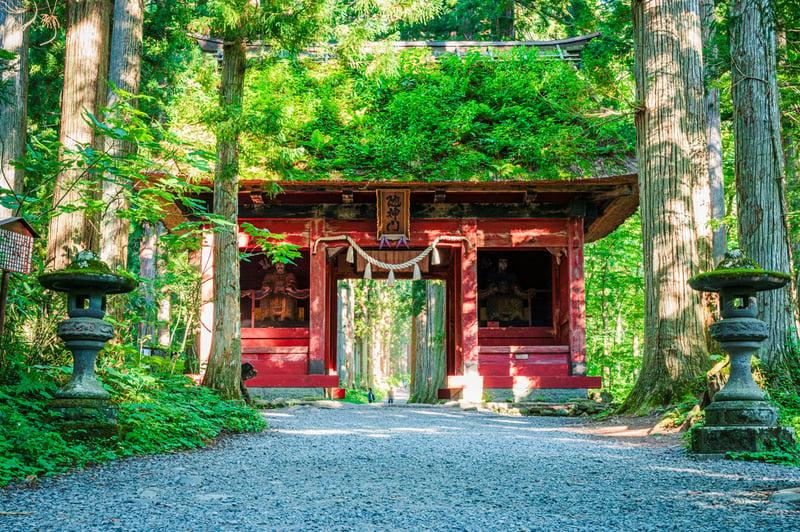
A forest path leads approximately two kilometers toward the upper shrine. Halfway along stands Zuishinmon, a striking red gate with a traditional thatched roof.
Beyond it begins an extraordinary avenue of Japanese cedar trees, many around 400 years old.
The immense trunks form a natural corridor through the forest. Their height, the filtered daylight and the quiet surroundings make this one of the most memorable walks in the region.
The final approach becomes steeper, with uneven stone steps leading toward the shrine.
Allow approximately 40–50 minutes each way, depending on your pace and the trail conditions.
The Other Three Shrines
Hokosha is reached by climbing approximately 270 stone steps and is associated with protection and the arts.
Hinomikosha honors a deity connected with music and dance, while Kuzuryusha, near Okusha, is dedicated to a dragon deity traditionally associated with water and harvests.
Visiting all five shrines is possible during the accessible season, but requires a substantial amount of walking.
For a comfortable first visit, Chusha and the cedar-lined approach to Okusha make an excellent combination when the route is open.
The Ninja Connection: History, Legends and Hidden Doors
Togakushi has another intriguing identity.
Long before ninjas became popular characters in films and video games, these mountains were associated with practitioners of Shugendo — a tradition of spiritual discipline involving mountain worship and demanding physical training.
The region is also linked to Togakure-ryu, a traditional school of ninjutsu. Some stories about its origins are difficult to verify historically, so it is important to distinguish documented traditions from later legends.
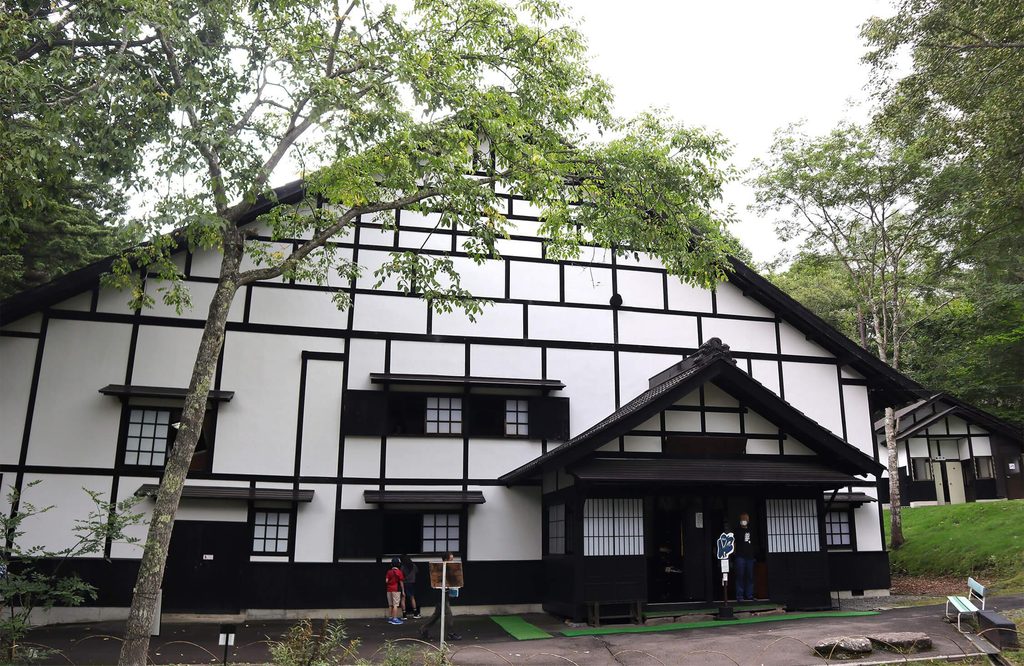
Today, visitors can explore this heritage through displays of historical equipment, concealed passages and a traditional ninja trick house.
The trick house is particularly entertaining: ordinary-looking doors and rooms conceal unexpected ways forward, challenging visitors to find their way through.
Shuriken-throwing activities may also be available.
The ninja museum attractions generally operate from spring through late autumn, with winter closures and occasional weather-related interruptions.
For families and curious travelers, this offers a completely different experience from the peaceful shrine paths.
A Taste of Togakushi: Make Your Own Soba
Another memorable way to experience Togakushi is through its local food traditions.
The area is particularly associated with handmade buckwheat noodles, and visitors can take part in traditional soba-making workshops.
Instead of simply ordering a bowl of noodles, you’ll discover how the dough is prepared, rolled and cut into thin strands.
The process looks straightforward until you attempt it yourself.
A typical workshop, including preparation and eating the finished noodles, may take around two hours.
These activities generally require advance arrangements, and many operate seasonally.
An important planning tip: A soba-making workshop takes a meaningful part of the day. If you want to enjoy the full walk to Okusha and explore the ninja attractions, consider choosing between activities rather than rushing through all of them.
Experience Togakushi’s Sacred Forests, Ninja Traditions & Soba Making
Why just explore Togakushi when you can experience its traditions firsthand? This guided day trip combines hands-on soba making, lunch with your own handmade noodles, ancient shrines and seasonal activities exploring the region’s ninja heritage.
An English-speaking guide and transportation from Nagano are included. Activities vary by season, and winter access restrictions apply.
Free cancellation up to 24 hours before the tour. Reserve Now & Pay Later is available.
Discover the Togakushi Soba, Ninja & Shrine Adventure
How to Plan Your Togakushi Day Trip
Togakushi is accessible from Nagano City by sightseeing bus.
Services depart from bus stop No. 7 near Nagano Station’s Zenkoji Exit, with the journey generally taking around one hour or longer depending on your destination stop.
The main tourist bus uses a reservation system. Travelers without reservations may board only if seats remain available.
Local shuttle buses operate within the Togakushi area on separate schedules, with cash payment required.
Check the current timetable before departure, particularly for your return journey.
A realistic one-day plan:
Begin at Chusha, spend time exploring the shrine and surrounding forest, then continue toward the Okusha approach if conditions allow.
Enjoy a traditional soba lunch and choose one additional experience — perhaps the ninja attractions or a hands-on cooking activity.
Trying to complete every shrine, museum and workshop in one day would leave very little time to appreciate the experience.
The Sacred Forest, Without the Transport Puzzle
Discover Togakushi’s ancient shrines and towering cedar trees on a private tour with an English-speaking local guide. Travel comfortably by private vehicle, explore the area’s spiritual traditions and enjoy a flexible, more personal experience.
Lunch is not included, and shrine access depends on seasonal conditions.
Free cancellation up to 24 hours before the tour. Reserve Now & Pay Later is available.
Explore Togakushi with Your Private Local Guide
Safety and Seasonal Access
Togakushi sits considerably higher than Nagano City, and mountain conditions can change quickly.
During the warmer months, comfortable walking shoes, drinking water and weather-appropriate layers are essential.
Spring can arrive late, with lingering snow on higher paths even when Nagano City is already enjoying mild weather.
Autumn brings spectacular forest colors, particularly around October, but temperatures can drop sharply toward evening.
Winter requires special attention.
Okusha and Kuzuryusha close during the snowy season. When winter restrictions are in force, visitors are prohibited from continuing beyond Zuishinmon Gate because of avalanche danger and falling snow, ice or branches.
This restriction applies even to guided groups and visitors using snowshoes.
The exact closure and reopening dates depend on conditions, so never assume that a route is accessible simply because it appears on a map.
Winter travelers should also remember that daylight is limited, mountain paths can become icy and some attractions close for the season.
The best way to enjoy Togakushi is to respect its pace.
Its greatest attraction is not how many places you can visit in one day, but the extraordinary combination of sacred forests, ancient legends and living traditions.
And if Togakushi belongs to the world of mountain spirits and mysterious pathways, our next destination reveals another side of Nagano — one shaped by art, remarkable imagination and the sweet taste of chestnuts.
Obuse: The Town Where Art and Nature Meet
The Japanese Town That Captured Hokusai’s Imagination
What could persuade one of Japan’s greatest artists to travel to a small country town when he was already in his eighties?
For Katsushika Hokusai, the answer was Obuse.
Famous around the world for The Great Wave off Kanagawa, Hokusai spent much of his extraordinary career experimenting with artistic styles and techniques. Even in old age, his curiosity remained undiminished.
He visited Obuse four times after turning 80, encouraged by his friendship with Takai Kozan, a wealthy local merchant and patron of the arts.
Here, away from the bustle of Edo — modern-day Tokyo — Hokusai continued to create ambitious works.
And one of his most remarkable achievements still watches over visitors today.
The Phoenix That Follows You with Its Eyes
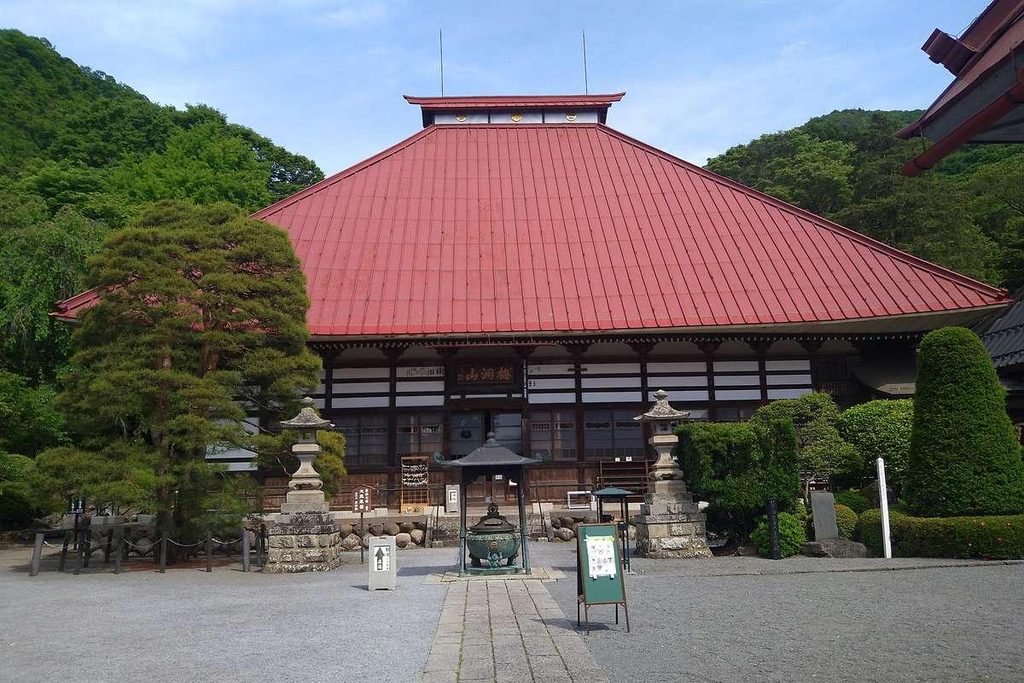
At Gansho-in, a Buddhist temple outside Obuse’s historic center, visitors encounter an extraordinary ceiling painting.
Completed by Hokusai in 1848, Phoenix Glaring in All Directions covers an area equivalent to 21 traditional tatami mats.
Its enormous wings, intricate details and vivid colors are impressive enough. But the painting has another remarkable quality.
As you change your viewing position, the phoenix’s eyes appear to follow you.
The effect gives the mythical creature an almost living presence.
Even more astonishingly, the painting has never been repainted. Its original colors have survived for more than 175 years.
Standing beneath this immense work, it’s difficult not to admire the ambition of an artist who continued creating on such a scale near the end of his life.
Visiting Gansho-in: Allow approximately 40 minutes for the temple. The current adult admission is ¥600, and the temple generally opens during the day, with shorter winter visiting hours.
Short explanations of the painting are offered in Japanese. Visitors can sit while listening, but photography inside the main hall is prohibited.
The temple is outside Obuse’s compact center. Allow roughly 30 minutes to walk there, or use suitable local transport when available.
It’s worth including Gansho-in in your itinerary rather than limiting your visit to the town’s main shopping streets.
Discover the Artist Behind the Great Wave
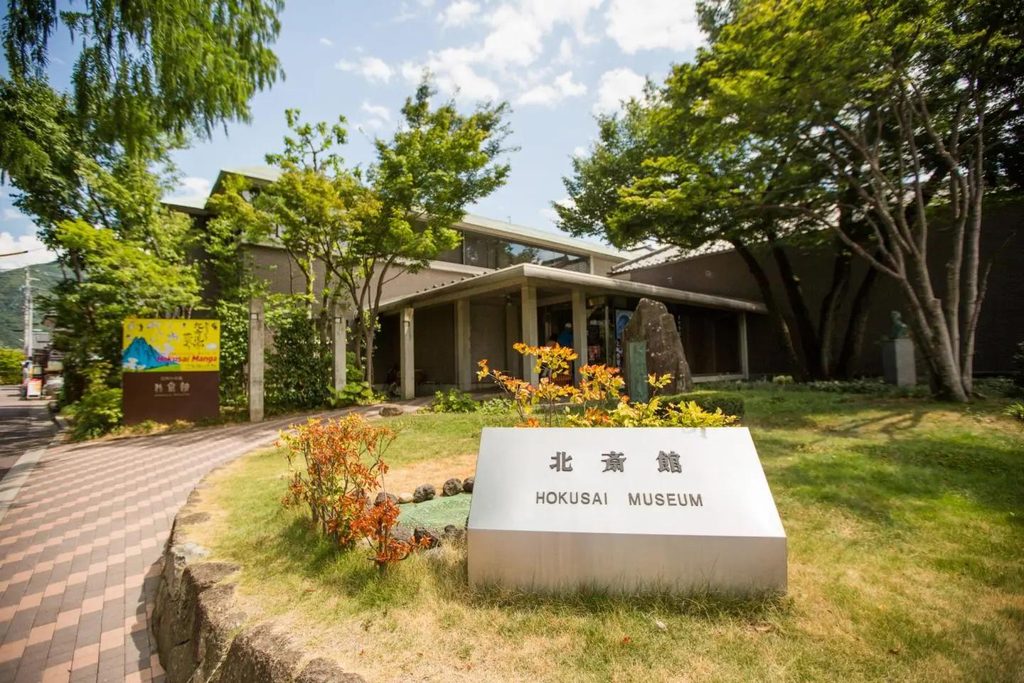
Back in central Obuse, the Hokusai Museum reveals another side of the artist’s extraordinary career.
The collection includes paintings, woodblock prints, hanging scrolls and two historic festival floats decorated with Hokusai’s artwork.
The beautifully painted ceilings of the floats are particularly interesting. They demonstrate how Hokusai’s imagination extended beyond framed pictures into objects connected with community celebrations.
Exhibitions change throughout the year, so not every artwork is displayed at all times.
Allow approximately one hour, or longer if you enjoy studying Japanese art.
Even if you know little about Hokusai before arriving, the museum offers an opportunity to discover why his work has fascinated audiences far beyond Japan.
Obuse’s Sweetest Tradition: Chestnuts

Obuse’s artistic history is only part of its identity.
For approximately 600 years, the town has cultivated chestnuts, taking advantage of local growing conditions.
Today, chestnuts appear in an irresistible variety of regional specialties.
Try kuri kanoko, a delicate sweet made with chestnut paste and pieces of chestnut, or kuri yokan, a smooth Japanese confection.
For something more substantial, look for kuri okowa, sticky rice prepared with chestnuts.
And if you prefer a café stop, you’ll find chestnut Mont Blanc desserts, roasted chestnuts and seasonal creations.
Autumn is particularly special.
The main harvest usually runs from mid-September to mid-October, when freshly harvested chestnuts inspire limited seasonal dishes and sweets.
Many chestnut desserts are available throughout the year, but certain specialties are only offered during harvest season.
Instead of rushing through a tasting, make time for a relaxed afternoon break. Obuse’s small cafés and traditional streets are part of the experience.
The Open Gardens: A Beautiful Obuse Tradition
One of Obuse’s loveliest surprises is something you might otherwise walk straight past.
Throughout the town, some residents open their private gardens for visitors to enjoy.
Look for signs welcoming people into an Open Garden.
These spaces vary considerably — from intimate flower-filled corners to carefully maintained Japanese-style gardens.
Some even provide pleasant shortcuts between quiet streets.
It’s an unusual opportunity to see how local residents contribute to the town’s character.
Remember that these are private spaces shared voluntarily. Enter only where visitors are welcomed, respect signs and avoid disturbing plants or personal property.
Spring in Obuse: Six Hundred Cherry Trees Along the River
If you’re visiting Japan in spring, Obuse offers a beautiful alternative to the better-known cherry blossom destinations.
Along the Chikuma River, approximately 600 double-flowered cherry trees stretch across four kilometers of embankment.
These late-blooming yaezakura trees usually reach their most beautiful period between late April and early May.
Their richly layered pink blossoms create a striking contrast with yellow spring flowers and mountains that may still hold traces of winter snow.
This is a wonderful place for an unhurried walk, photography or simply enjoying the landscape.
Timing matters: Cherry blossom dates vary from year to year, so the usual flowering period is only a guide.
The riverside cherry trees are also outside the main museum district. Treat them as an additional outing rather than assuming they’re beside the historic center.
If spring flowers are your priority, allow extra time for the riverbank instead of trying to visit every museum and attraction.
Getting to Obuse and Making the Most of Your Visit
Obuse is one of the easiest cultural excursions from Nagano City.
Take the Nagano Dentetsu railway from Nagano Station to Obuse Station. Local trains generally take around 35 minutes, while limited express services can be faster.
The railway is separate from JR, so ordinary Japan Rail Pass coverage does not apply.
Once you arrive, the compact historic center is easy to explore on foot. The Hokusai Museum, traditional streets, chestnut confectioneries and several Open Gardens are within comfortable walking distance.
Gansho-in Temple and the riverside cherry blossom area require more time.
A local sightseeing shuttle serves several attractions on selected days during the warmer months, but it does not operate throughout winter. Don’t assume it runs every day — check the schedule before arranging a visit to the more distant sites.
For a comfortable experience, plan approximately four to six hours in Obuse, depending on your interests.
Start with the Hokusai Museum and historic streets, enjoy lunch or a chestnut dessert, then choose an additional highlight:
- Gansho-in for Hokusai’s extraordinary phoenix.
- The riverside cherry trees during the spring flowering season.
- A longer walk through Obuse’s gardens and traditional neighborhoods.
If you’re interested in all three, consider spending most of the day here.
Obuse isn’t a destination that demands a packed sightseeing schedule.
Its charm lies in the combination of extraordinary art, small-town hospitality, seasonal landscapes and culinary traditions that have survived for generations.
And perhaps that’s its greatest surprise: a town small enough to explore on foot, yet filled with stories that reach far beyond its borders.
When to Visit Togakushi & Obuse: Four Seasons, Different Experiences
One of the most rewarding things about exploring beyond Nagano City is that the landscape never tells quite the same story twice.
A forest path that feels mysterious in autumn becomes a peaceful green retreat in summer. A quiet riverside in winter transforms into a corridor of pink blossoms in spring.
Choosing the right season can make your visit even more memorable.
Spring — Cherry Blossoms and Mountain Flowers
Late April to early May is an especially beautiful time to explore Obuse.
Along the Chikuma River, hundreds of late-blooming cherry trees create a spectacular spring landscape. Because these varieties flower later than many of Japan’s famous cherry trees, Obuse can be an appealing destination for travelers arriving after the main blossom season in Tokyo or Kyoto.
Higher in the mountains, spring arrives more slowly.
In Togakushi, lingering snow gradually gives way to woodland flowers. The Forest Botanical Garden becomes particularly interesting in May, when seasonal plants begin to emerge.
Remember that flowering dates depend on weather conditions. A beautiful photograph from last year’s cherry blossom season is not a guarantee of what you’ll see on a particular day.
Summer — Escape into the Green Mountains
If you’re visiting during Japan’s warmer months, Togakushi offers a welcome change of atmosphere.
Its higher elevation, shady cedar forests and mountain scenery make it attractive for travelers seeking nature and fresh air.
This is a good season for enjoying the shrine paths, exploring the forest and discovering the region’s outdoor traditions.
Obuse remains rewarding for art, gardens and relaxed café visits, but the lower-lying town can be considerably warmer.
Autumn — Golden Forests and Chestnut Season
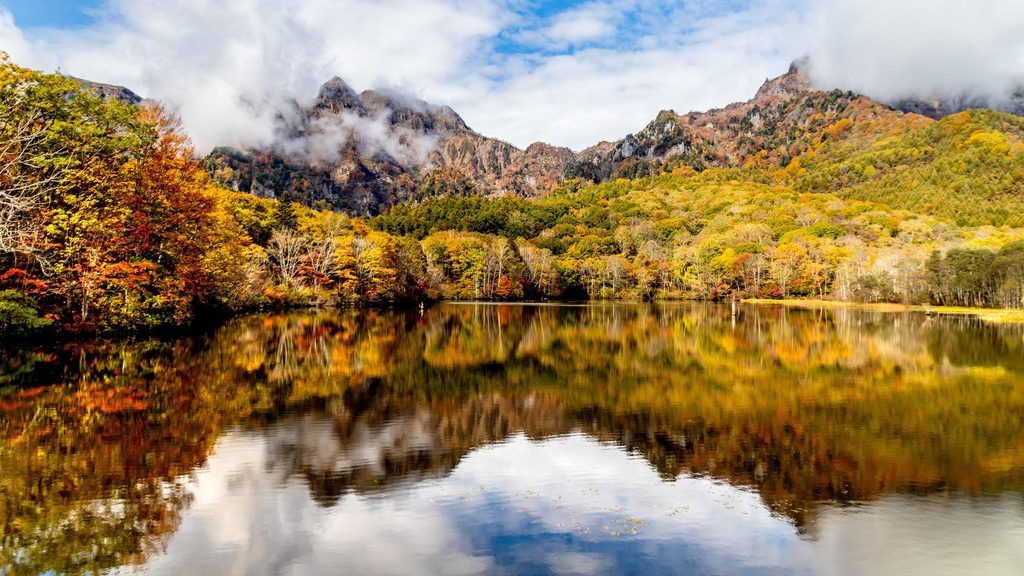
Autumn is arguably one of the most atmospheric seasons for exploring both destinations.
In Togakushi, the forests surrounding Kagami Pond are especially beautiful when yellow, orange and red leaves reflect on the water. The most celebrated colors usually appear around mid-to-late October, although the timing varies each year.
In Obuse, autumn brings the chestnut harvest and seasonal delicacies.
For travelers who love photography, mountain scenery and regional food, this is an especially appealing combination.
Winter — Beautiful, but Not the Same Journey
Snow gives Togakushi an entirely different character, but it also changes what visitors can safely experience.
Some attractions close, transport arrangements become more limited, and access to the upper shrine is restricted during the snowy season.
Winter hiking should never be treated like an ordinary sightseeing walk. Check current conditions and respect all closure notices.
Obuse is generally the simpler choice for a relaxed winter cultural excursion, although individual attractions may have reduced hours.
Togakushi or Obuse: Which Should You Choose?
Choose Togakushi if you love nature, mythology, atmospheric walks and active cultural experiences.
Allow a substantial part of the day, and remember that the best experience depends on the weather and your comfort with walking.
Choose Obuse if you prefer art, historic streets, gardens and local food traditions.
Its compact center makes it easier to explore at a gentle pace, although some attractions require additional travel.
If you have two extra days in Nagano, visiting both gives you two remarkably different perspectives on the region.
With only one day, don’t try to squeeze them together simply to tick more places off your list. Choose the experience that genuinely interests you.
Final Thoughts: The Japan Beyond the Familiar
Some journeys stay with us because of the famous places we’ve visited.
Others become unforgettable because of something we never expected to find.
Perhaps it will be the silence beneath Togakushi’s ancient cedars, the strange gaze of Hokusai’s phoenix, or a riverside filled with cherry blossoms long after spring has passed elsewhere.
Togakushi and Obuse reveal a Japan that rewards curiosity, patience and the willingness to explore beyond the obvious.
You don’t need to see everything.
Sometimes, the most memorable journey begins when you choose to slow down and discover what others pass by.
Your Next Nagano Adventure Starts Here
You’ve discovered the stories. Now it’s time to experience them. Explore our handpicked collection of Nagano adventures and find the experience that turns your curiosity into a memory worth keeping.
Affiliate Disclosure: This article contains affiliate links, including links to Viator experiences. If you book through these links, Buildward Lab may earn a commission at no additional cost to you. We recommend experiences based on their relevance and potential value to your trip.