
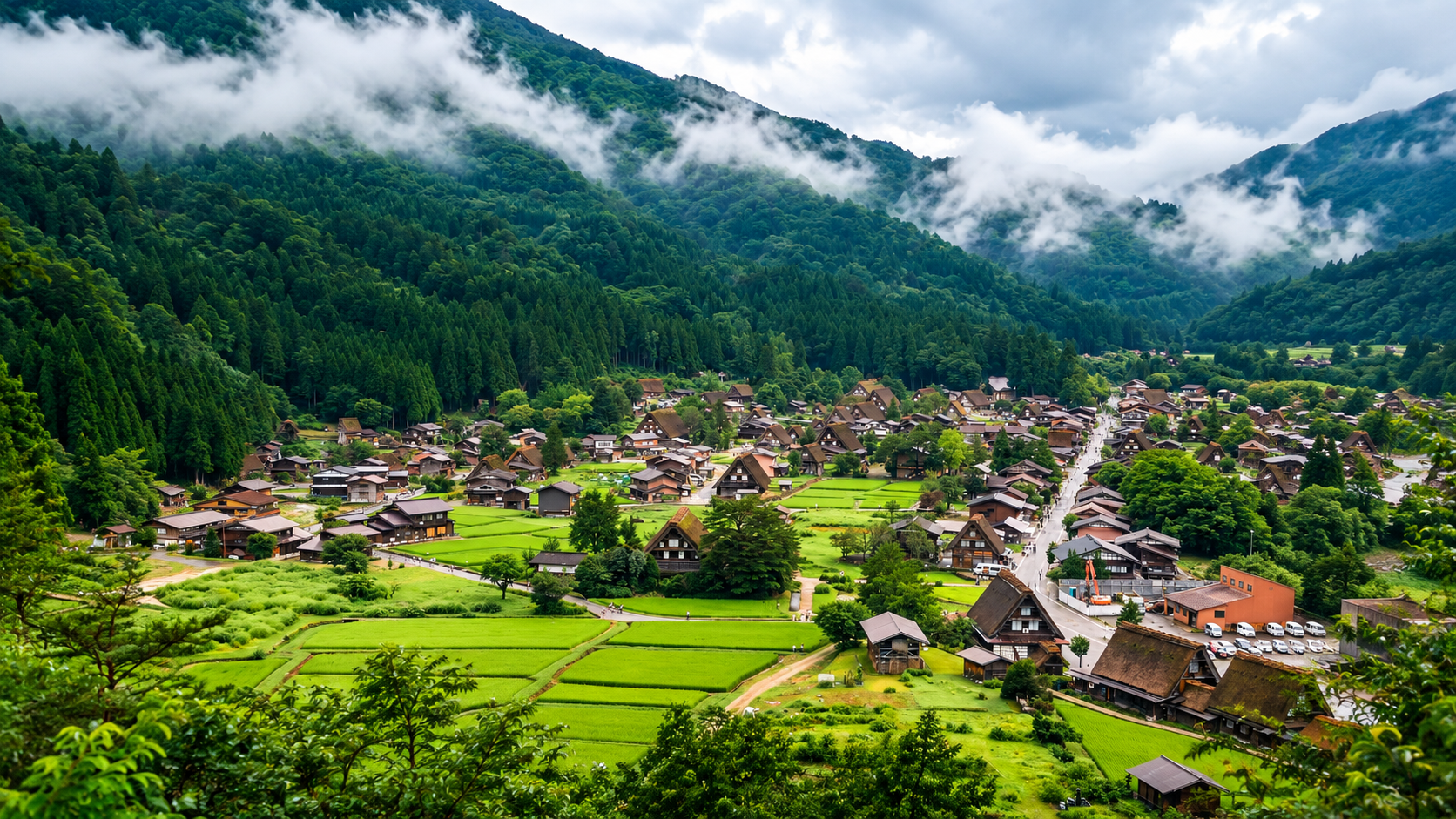
On a map, Kanazawa, Shirakawa-go, and Takayama may look like an easy combination for a trip through central Japan. In reality, a few planning decisions can make the difference between a relaxed journey and a day spent worrying about bus connections, luggage, and missed opportunities.
Each destination offers a different side of Japan. Kanazawa brings together historic samurai neighborhoods, beautifully preserved teahouse districts, traditional craftsmanship, and one of the country’s most celebrated gardens. Shirakawa-go offers a glimpse into mountain village life through its distinctive thatched-roof houses. Takayama invites travelers to slow down among old merchant streets, morning markets, local food, and the traditions of the Hida region.
The challenge is connecting these experiences without rushing through them. Unlike a typical city-to-city journey by train, this route involves regional buses, advance planning for certain departures, and a few practical decisions about where to stay and what to do with your luggage.
For most travelers, four days and three nights provide a comfortable starting point: two nights in Kanazawa, a visit to Shirakawa-go on the way to Takayama, and one night in Takayama. A shorter three-day journey is possible, while five days allow more time for local experiences and a slower pace.
This guide will help you choose the right itinerary, understand your transport options, decide where to stay, estimate your costs, and avoid common mistakes. You’ll also find practical recommendations for visiting each destination respectfully and comfortably, with alternatives for different seasons, interests, and travel styles.
The goal is simple: spend less time figuring things out along the way and more time enjoying this remarkable part of Japan.
Is This Route Right for Your Japan Trip?
Kanazawa, Shirakawa-go, and Takayama are an excellent choice for travelers who want to experience a quieter, more traditional side of Japan without giving up the convenience of established tourist routes.
This journey is particularly rewarding if you have already planned time in Tokyo, Kyoto, or Osaka and want to explore somewhere with a different atmosphere. Instead of moving between major urban centers, you’ll discover historic neighborhoods, traditional wooden architecture, regional food, and mountain landscapes.
However, this is not a route that suits every travel schedule equally well.
Who Will Enjoy This Itinerary Most?
First-time visitors with at least 10–14 days in Japan. If your schedule already includes Tokyo and Kyoto, adding three or four days in central Japan can introduce a different side of the country. The key is allowing enough time rather than squeezing these destinations between tightly scheduled city visits.
Travelers interested in Japanese history and traditional culture. Kanazawa’s samurai heritage and teahouse districts, Shirakawa-go’s historic farmhouses, and Takayama’s preserved merchant streets provide opportunities to explore different aspects of Japan’s past.
Couples and independent travelers who prefer a relaxed pace. With the right overnight stops, the journey can combine sightseeing with quiet walks, local meals, and time to enjoy places without rushing from one attraction to another.
Photography and architecture enthusiasts. Each destination offers a distinctive visual character, from Kenrokuen’s landscaped gardens to the steep thatched roofs of Shirakawa-go and Takayama’s traditional wooden streets.
When Might Another Route Be Better?
If you have only five or six days for your entire first trip to Japan, trying to include all three destinations alongside Tokyo and Kyoto is unlikely to be a comfortable choice. It may be better to focus on fewer places and leave central Japan for another visit.
Travelers who dislike coordinating transport connections should also consider the extra planning involved. The journey is manageable without a rental car, but the bus connections through Shirakawa-go deserve more attention than a straightforward train trip between major cities.
Visitors with limited mobility or large amounts of luggage should examine the route carefully. Historic streets, uneven surfaces, changing weather, and the need to transfer between transport services may affect how comfortable the journey feels.
The Buildward Lab Recommendation
Choose this route for the experience, not simply to add three more destinations to your Japan itinerary.
Four days offer a practical balance for most independent travelers. Three days can work if your arrival and departure times are favorable, while five days provide greater flexibility for cultural experiences, slower sightseeing, and unexpected changes.
You don’t need to see every museum, enter every traditional house, or visit every viewpoint to make the journey worthwhile. The best version of this trip is the one that leaves enough time to appreciate the places you’re visiting.
How Many Days Do You Need for Kanazawa, Shirakawa-go & Takayama?
The ideal length of your trip depends on where you’re coming from, how much time you want to spend exploring, and whether you prefer a busy itinerary or a more relaxed experience.
Although Kanazawa, Shirakawa-go, and Takayama can be combined in three days, that doesn’t necessarily make three days the best choice.
For most independent travelers, we recommend four days and three nights. This gives you time to explore Kanazawa properly, visit Shirakawa-go without rushing, and enjoy Takayama’s historic streets and morning market.
Here’s how the different options compare.
3 Days: The Short but Manageable Option
Best for: Travelers with limited time who are comfortable with a more structured schedule.
Recommended overnight stops: One night in Kanazawa and one night in Takayama.
Day 1 — Kanazawa: Arrive as early as practical and choose a small number of highlights. Kenrokuen Garden, Kanazawa Castle Park, or the historic teahouse districts are worthwhile options, but visiting all of them thoroughly in one afternoon may not be realistic.
Day 2 — Shirakawa-go and Takayama: Take a pre-booked bus to Shirakawa-go, spend a few hours exploring the village, and continue to Takayama. Enjoy a relaxed evening in the old town.
Day 3 — Takayama: Visit the morning market and explore the historic streets before departing.
The main trade-off: You’ll experience all three destinations, but your time in Kanazawa will be limited. A late arrival or early departure could make the itinerary feel rushed.
Buildward Lab Tip: Choose the three-day version only when your transport connections allow enough time for sightseeing. If arriving in Kanazawa late on Day 1, consider adding another night rather than attempting to fit everything into a few hours.
4 Days: The Best Balance for Most Travelers
Best for: First-time visitors to the region, independent travelers, and anyone who wants a practical itinerary without unnecessary rushing.
Recommended overnight stops: Two nights in Kanazawa and one night in Takayama.
Day 1 — Arrive in Kanazawa: Check in, explore Omicho Market if your arrival time allows, and enjoy an afternoon walk through Higashi Chaya or Kazue-machi.
Day 2 — Discover Kanazawa: Visit Kenrokuen Garden, Kanazawa Castle Park, and the Nagamachi Samurai District. Leave time for a traditional craft experience, museum, or relaxed meal.
Day 3 — Shirakawa-go to Takayama: Travel by bus to Shirakawa-go, explore the village and its traditional houses, then continue to Takayama for an overnight stay.
Day 4 — Experience Takayama: Visit the morning market, walk through Sanmachi Suji, and explore Takayama Jinya if time permits before continuing your journey.
Why we recommend it: The extra day in Kanazawa makes a significant difference. You can explore the city’s major attractions without turning your arrival day into a race against closing times.
The overnight stay in Takayama also gives you access to its morning atmosphere, rather than treating the city as another quick stop on a long travel day.
For travelers visiting all three destinations for the first time, this is our preferred starting point.
5 Days: A More Relaxed Journey with Additional Experiences
Best for: Slow travelers, photography enthusiasts, couples, and visitors interested in local crafts, food, and traditional accommodation.
Recommended overnight stops: Two nights in Kanazawa and two nights in Takayama.
Day 1 — Kanazawa: Arrive, settle in, and explore the historic teahouse districts.
Day 2 — Kanazawa: Spend a full day visiting the main cultural attractions, with time for an additional museum, a traditional workshop, or a longer garden visit.
Day 3 — Shirakawa-go and Takayama: Travel through Shirakawa-go at a comfortable pace before continuing to Takayama.
Day 4 — Takayama: Enjoy the morning market, historic streets, and a local food or cultural experience. Depending on your interests, consider Hida Folk Village or a quieter walking route.
Day 5 — Flexible departure: Enjoy a slow breakfast, visit anything you missed, or continue your journey without having to leave first thing in the morning.
The main advantage: You have room to adjust your plans if the weather changes, a cultural experience takes longer than expected, or you simply discover somewhere you’d like to spend more time.
Five days also make it easier to include a traditional ryokan stay without feeling that you’re paying for an experience you barely have time to enjoy.
Before Choosing Your Itinerary
The number of days is only part of the planning process. Three other factors matter just as much.
Your arrival time: Reaching Kanazawa in the morning is very different from arriving in the late afternoon. Avoid counting a mostly spent travel day as a full sightseeing day.
Your onward destination: Leaving Takayama for Nagoya, Tokyo, Kyoto, or another destination involves different transport connections. Check the full journey before deciding how much sightseeing to schedule on your departure day.
The season: Snow, heavy rain, holiday crowds, and seasonal events can affect travel times and the comfort of walking between attractions. In winter, a little extra flexibility is especially valuable.
Buildward Lab Recommendation: If your schedule allows it, choose four days. You’ll have enough time to appreciate the contrast between the three destinations while keeping the journey practical and manageable. Choose five days if a slower pace matters more to you than covering additional destinations elsewhere in Japan.
How to Get to Kanazawa, Shirakawa-go & Takayama — and Which Direction to Travel
Planning the order of your journey is one of the most important decisions when visiting Kanazawa, Shirakawa-go, and Takayama.
The three destinations form a convenient route through central Japan, but they are not connected by a single railway line. Kanazawa is served by high-speed rail, Takayama has regional train connections, and Shirakawa-go is reached primarily by bus.
The most practical direction depends on where your journey begins and where you plan to travel afterward.
For our recommended four-day itinerary, we follow this route:
Kanazawa → Shirakawa-go → Takayama
This works particularly well when arriving from Tokyo, Kyoto, or Osaka and continuing toward Nagoya or other destinations connected through central Japan.
However, traveling in the opposite direction can be equally sensible in the right circumstances.
From Tokyo: Start in Kanazawa
Tokyo is one of the easiest starting points for this itinerary.
The Hokuriku Shinkansen connects Tokyo Station directly with Kanazawa Station. Depending on the service, the journey generally takes around two and a half to three hours.
This allows travelers to leave Tokyo in the morning and still have time to explore part of Kanazawa in the afternoon.
The journey is straightforward because there is no need to change trains when using a direct service.
Recommended approach: Travel from Tokyo to Kanazawa, spend two nights in the city, visit Shirakawa-go on the way to Takayama, and continue your journey after your stay in Takayama.
This direction is especially useful if your next destination is Nagoya or somewhere conveniently reached through Nagoya.
Buildward Lab Tip: Avoid assuming that an afternoon departure from Tokyo will leave enough time for sightseeing in Kanazawa. Include the journey from your Tokyo accommodation to the station, check-in or luggage storage, and the opening hours of the attractions you want to visit.
From Kyoto or Osaka: Travel via Tsuruga
Kanazawa is also a practical addition to an itinerary that already includes Kyoto or Osaka.
However, there is an important detail that older travel articles may not reflect.
Since the Hokuriku Shinkansen extension opened in March 2024, the conventional route from Kyoto or Osaka involves a transfer at Tsuruga Station.
The usual journey is:
Kyoto or Osaka → Thunderbird Limited Express → Tsuruga → Hokuriku Shinkansen → Kanazawa
Allow approximately two to three hours for the journey, depending on your departure station and train connections.
The transfer is a normal part of the route, not an unexpected detour. Nevertheless, travelers should book or plan the correct connecting services rather than relying on outdated information about a direct Thunderbird train to Kanazawa.
Recommended approach: Leave Kyoto or Osaka in the morning, arrive in Kanazawa with enough time to settle in, and begin your sightseeing without trying to fit a full day’s activities into the arrival afternoon.
Buildward Lab Tip: If you’re traveling with large suitcases, check your train connections and transfer arrangements before departure. A journey with one planned transfer is manageable, but rushing between platforms with heavy luggage can make an otherwise straightforward trip unnecessarily stressful.
From Nagoya: Consider Reversing the Route
Nagoya offers a particularly convenient connection to Takayama.
The JR Hida Limited Express runs from Nagoya to Takayama, with typical journey times of approximately two hours and twenty minutes to two and a half hours, depending on the service.
If you are beginning your journey in Nagoya, it may be more logical to visit the three destinations in reverse:
Takayama → Shirakawa-go → Kanazawa
This allows you to explore Takayama first, travel through Shirakawa-go, and finish in Kanazawa.
From Kanazawa, you can continue toward Tokyo on the Hokuriku Shinkansen or connect to Kyoto and Osaka via Tsuruga.
There is little benefit in traveling all the way to Kanazawa first simply to follow a particular itinerary direction.
Buildward Lab Recommendation: Choose the order that minimizes unnecessary travel between your previous and next destinations. The ideal itinerary is not always the one that starts in the same city as a travel guide.
How to Travel Between Kanazawa, Shirakawa-go and Takayama
This is the section of the journey that requires the most careful planning.
Regional highway buses connect Kanazawa with Shirakawa-go and continue toward Takayama.
The approximate travel times are:
- Kanazawa to Shirakawa-go: around 75–85 minutes.
- Shirakawa-go to Takayama: around 50 minutes.
These are normal scheduled journey estimates, not guarantees. Heavy traffic, winter weather, and busy travel periods can affect arrival times.
For travelers following our recommended itinerary, Shirakawa-go works particularly well as a stop between the two overnight destinations.
Instead of visiting the village on a return trip from Kanazawa or Takayama, you can explore it while traveling from one city to the other.
However, doing this successfully requires advance planning.
Some bus departures require seat reservations, while others operate under different boarding arrangements. Never assume that every departure follows the same rules.
If you plan to spend several hours in Shirakawa-go, check your onward departure separately. A through-ticket or a seat on the first bus does not automatically guarantee the ability to stop for sightseeing and board any later service.
The most important considerations are your reserved departure times, available luggage storage, and how much time you want to spend in the village.
We will explain these details in the dedicated transport and luggage section later in this guide.
Where Should You Continue After Takayama?
Your onward destination should influence the last day of your itinerary.
Continuing to Nagoya: The JR Hida Limited Express offers a practical rail connection. This is often one of the simplest ways to continue south after staying in Takayama.
Continuing to Kyoto or Osaka: Traveling through Nagoya is an option worth comparing, depending on the train schedule and your final destination.
Returning to Tokyo: Compare the available train routes before booking. Traveling through Nagoya may be convenient for some schedules, while connections through Toyama and the Hokuriku Shinkansen may suit others. The best option depends on departure times, transfer arrangements, and total travel duration.
Continuing into the Japanese Alps: Takayama is a useful starting point for selected mountain and onsen destinations, but some services operate seasonally. Do not assume that every alpine route is available throughout the year.
Buildward Lab Tip: If you have an international flight or another important connection, avoid building your schedule around a tight transfer from a mountain-region bus. Allow enough time for unexpected delays or consider an additional overnight stay near your departure point.
Which Direction Do We Recommend?
For travelers starting in Tokyo, Kyoto, or Osaka, our preferred route is:
Kanazawa → Shirakawa-go → Takayama
For travelers arriving from Nagoya, the reverse direction may be more convenient:
Takayama → Shirakawa-go → Kanazawa
Neither direction is universally better.
What matters is avoiding unnecessary backtracking, allowing realistic travel time, and choosing overnight stops that make the experience comfortable rather than exhausting.
The best route is the one that fits naturally into the rest of your Japan trip — not one that forces you to reorganize everything around three destinations.
The Complete 4-Day Kanazawa, Shirakawa-go & Takayama Itinerary
Day 1: Arrive in Kanazawa — Markets, Teahouse Streets & a Relaxed First Afternoon
Your first day in Kanazawa should be about settling in and discovering the city’s atmosphere, not racing through its major attractions.
If you’re arriving from Tokyo, Kyoto, or Osaka, aim to reach Kanazawa by late morning or early afternoon. This leaves enough time for a few rewarding stops without turning your travel day into a demanding sightseeing schedule.
Kanazawa is compact enough to explore several historic areas on foot, but it’s worth considering your energy level, the weather, and the time spent getting to your accommodation.
Late Morning to Early Afternoon — Arrival and Luggage
After arriving at Kanazawa Station, head to your accommodation or arrange luggage storage before sightseeing.
Staying near the station is particularly convenient for this itinerary. You’ll have easy access to trains, local buses, and your departure point for Shirakawa-go on Day 3.
However, accommodation closer to the historic center can also work well if you prefer exploring on foot.
If your room isn’t ready, ask whether the hotel can hold your luggage. Avoid carrying large suitcases through the historic districts, especially when walking along narrow streets or visiting small shops.
Once you’ve settled in, begin with Omicho Market.
Early Afternoon — Discover Omicho Market
Omicho Market has been part of Kanazawa’s food culture for more than three centuries.
Its covered passages contain fishmongers, produce sellers, specialty food shops, and restaurants. Seafood from the Sea of Japan is a particular highlight, with seasonal ingredients playing an important role in the local food scene.
For lunch, consider a seafood rice bowl, sushi, or another regional specialty that suits your preferences and budget.
The market is approximately a 15-minute walk from Kanazawa Station, although buses are available if you prefer not to walk.
Allow around 60–90 minutes, including time to explore and eat. Popular restaurants can have queues, particularly during the busiest lunch hours.
Most market businesses operate roughly between 9:00 AM and 4:00 PM, but individual hours vary. Some fishmongers close on Wednesdays, so don’t assume every stall will be operating.
Buildward Lab Tip: If you’re arriving after 3:00 PM, don’t rush across the city just to reach the market before closing. Save it for the following morning and enjoy a slower first afternoon instead.
Mid-Afternoon — Explore Higashi Chaya District
Continue to Higashi Chaya, one of Kanazawa’s best-preserved historic teahouse districts.
Traditional wooden buildings and narrow streets create a distinctive atmosphere, offering a striking contrast with the modern railway station and busier shopping areas.
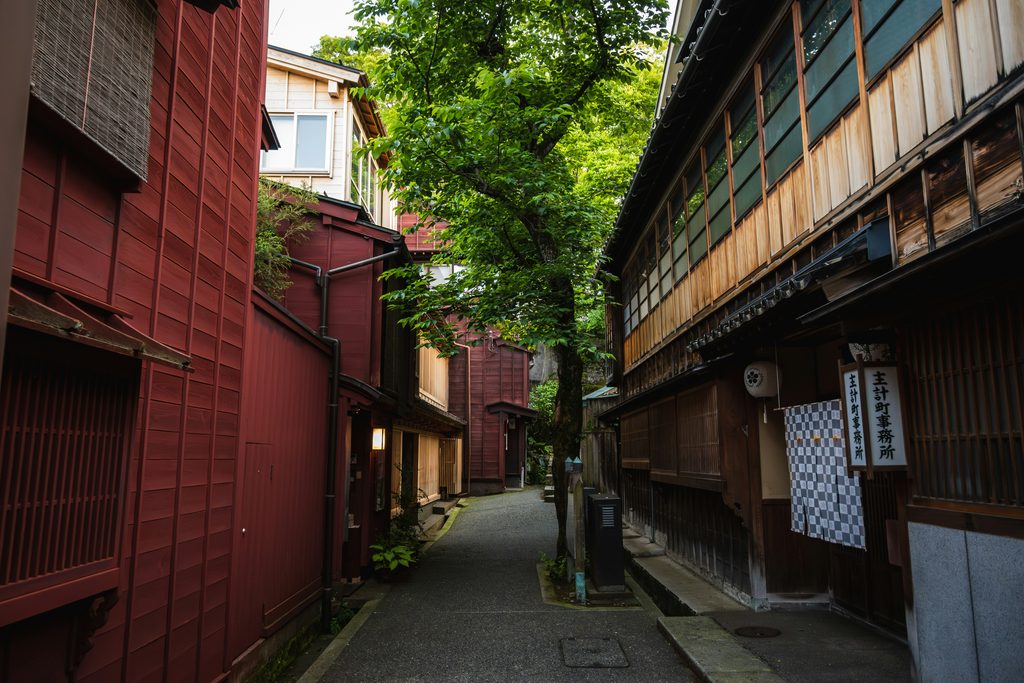
The district developed around traditional entertainment and teahouse culture. Today, some historic buildings house cafés, craft shops, galleries, and visitor attractions.
Take time to appreciate the architecture rather than treating the district as a quick photography stop.
Kanazawa is especially well known for gold-leaf craftsmanship, and this area offers opportunities to discover locally made products and traditional techniques.
If you’re interested in Japanese crafts, a well-chosen hands-on experience can be a worthwhile addition. Just remember that workshops may require advance reservations and can take more time than an ordinary sightseeing stop.
For a relaxed visit, allow approximately 60–90 minutes to explore the streets and browse a few shops.
Most shops close around 5:00 PM, although the streets themselves do not have fixed sightseeing hours.
A Small but Important Etiquette Detail
Higashi Chaya is a historic neighborhood, not an open-air theme park.
Follow local photography signs, respect private buildings, and avoid obstructing entrances or narrow streets.
Eating while walking is generally prohibited within the protected historic district. If you purchase a snack or sweet, ask where it should be eaten rather than assuming you can take it along the street.
These small considerations help preserve the neighborhood’s atmosphere and make the visit more comfortable for residents and other travelers.
Late Afternoon — Walk Through Kazue-machi
From Higashi Chaya, cross the Asanogawa River toward Kazue-machi, another of Kanazawa’s traditional teahouse districts.
Kazue-machi is smaller and often feels quieter than Higashi Chaya. Its narrow streets and traditional facades make it a lovely place for an unhurried walk.
Rather than scheduling another major attraction, use this time to slow down.
Enjoy the riverside atmosphere, notice the architectural details, and take a few photographs where permitted. You may find that this quieter part of the afternoon becomes one of your favorite memories of Kanazawa.
Allow approximately 30–45 minutes for a short stroll, or longer if you prefer exploring at a leisurely pace.
Evening — Dinner and a Restful Night
After a day of travel and sightseeing, choose a comfortable dinner rather than trying to fit in another attraction.
Kanazawa offers excellent opportunities to discover regional Japanese cuisine, including seafood and traditional Kaga dishes.
Check restaurant opening hours before heading out, particularly if you have somewhere specific in mind. Not every business in a historic district remains open late.
Return to your accommodation at a reasonable hour. Tomorrow is your main sightseeing day, with Kenrokuen Garden, Kanazawa Castle Park, and the samurai district on the itinerary.
What If You Arrive Late?
If you reach Kanazawa in the late afternoon or evening, simplify the plan.
Check in, enjoy dinner, and take a short walk near your accommodation if you still have energy.
Move Omicho Market to the following morning, adjusting your sightseeing order accordingly. Higashi Chaya can also be visited the next day if you want to explore its shops while they’re open.
Don’t sacrifice rest simply to complete a predetermined list.
Buildward Lab Recommendation
The first day should introduce you to Kanazawa, not exhaust you.
Prioritize a comfortable arrival, a satisfying meal, and one or two historic neighborhoods. Save the major gardens and museums for Day 2, when you’ll have more time to enjoy them properly.
A relaxed beginning makes the rest of the journey easier — especially when you’re traveling through several destinations in a short period.
Day 2: Kenrokuen Garden, Kanazawa Castle & the Samurai District
Your second day in Kanazawa is dedicated to the history, landscapes, and craftsmanship that make this city such a rewarding stop in central Japan.
Today, you’ll explore one of Japan’s most celebrated traditional gardens, discover the legacy of the powerful Maeda family, and walk through streets once occupied by samurai households.
These attractions are close enough to combine in one day, but that doesn’t mean you should rush between them.
A comfortable plan is to visit Kenrokuen in the morning, explore Kanazawa Castle before lunch, and spend the afternoon in the Nagamachi Samurai District.
This arrangement leaves room for an additional cultural experience without making every hour feel scheduled.
Buildward Lab Recommendation: Explore Kanazawa’s Samurai History with a Local Guide
If you want to understand Kanazawa beyond its beautiful streets and gardens, consider a guided walking tour covering the Nagamachi samurai district, Kanazawa Castle grounds, and Kenrokuen Garden. A local guide can help connect these landmarks to the Maeda clan, the city’s samurai heritage, and everyday life during the Edo period.
This is a particularly useful option for first-time visitors who prefer historical context and a structured route. Wear comfortable walking shoes, and check the latest admission-fee details before booking, as the listing contains inconsistent information about what is included.
Explore the Kanazawa Castle & Samurai History Walking Tour on Viator →
Affiliate disclosure: We may earn a commission if you book through this link, at no extra cost to you.
8:30–10:00 AM — Explore Kenrokuen Garden
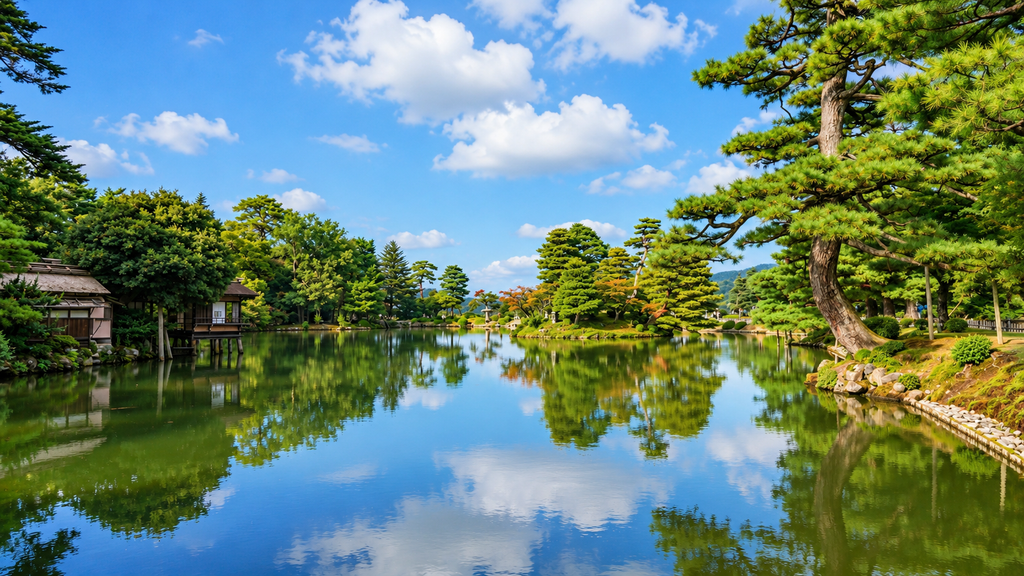
Begin your morning at Kenrokuen, widely regarded as one of Japan’s three great traditional gardens.
Developed and maintained by successive generations of the Maeda family, the garden reflects a Japanese approach to landscape design in which ponds, bridges, stones, trees, and carefully arranged views create a changing experience as you walk.
The name Kenrokuen refers to six qualities traditionally associated with an ideal landscape garden: spaciousness, tranquility, artifice, antiquity, water, and scenic views.
Rather than heading straight to the most photographed location, take time to follow the paths and notice how different sections of the garden connect.
Some of the highlights include:
- Kasumigaike Pond: One of the garden’s central features, with carefully composed views across the water.
- Kotoji-toro Stone Lantern: A distinctive two-legged lantern that has become one of Kanazawa’s most recognizable images.
- Traditional bridges and winding paths: Small details that encourage visitors to experience the landscape from different perspectives.
- Seasonal planting and tree protection: Cherry blossoms, autumn foliage, and winter rope supports known as yukitsuri give the garden a different character throughout the year.
Kenrokuen is particularly rewarding when you allow yourself to wander rather than trying to reach every notable feature.
Practical visiting information
The standard adult admission fee is ¥320.
The garden’s usual opening hours are:
- March 1–October 15: 7:00 AM–6:00 PM.
- October 16–end of February: 8:00 AM–5:00 PM.
Kenrokuen normally opens every day, although exceptional weather conditions may affect access. Officially designated early-morning visiting periods and special free-entry days also exist, subject to their own conditions.
Allow approximately 60–90 minutes for a comfortable visit, with extra time if you enjoy photography or want a tea break.
Buildward Lab Tip: Visit relatively early, especially during cherry blossom season or popular autumn weekends. You may find quieter paths and more opportunities to appreciate the scenery before the busiest visitor periods.
10:15–11:45 AM — Discover Kanazawa Castle Park
From Kenrokuen, continue to the neighboring Kanazawa Castle Park.
This was the historic seat of the Maeda family, who ruled the wealthy Kaga Domain during Japan’s feudal period.
The original castle complex changed considerably over the centuries because of fires, reconstruction, and later developments. What visitors see today includes preserved historic features, impressive stone walls, restored structures, open parkland, and carefully maintained gardens.
Understanding this distinction makes the visit more interesting: Kanazawa Castle is not simply an untouched medieval castle that has survived in its original form.
Start with the castle grounds and take time to appreciate the different stonework and defensive structures.
Depending on your interests, consider the reconstructed Hishi Yagura turret, Gojikken Nagaya storehouse, and Hashizume-mon Tsuzuki Yagura.
Their architecture offers insights into how the castle functioned as both a seat of power and a defensive complex.
Another worthwhile stop is Gyokusen’inmaru Garden, a reconstructed landscape garden within the castle grounds.
Its pond, stone walls, and carefully arranged scenery provide a different atmosphere from Kenrokuen and make it an excellent place for a short pause.
Practical visiting information
Entry to the general castle park grounds is free.
The reconstructed turret and storehouse complex has a separate adult admission fee of ¥320.
The paid buildings generally operate from 9:00 AM to 4:30 PM, with final entry at 4:00 PM.
For travelers who want to see both Kenrokuen and the castle’s paid historical buildings, a combined ticket may offer better value than purchasing the admissions individually. Check the current ticket conditions at the entrance.
Allow approximately 60–90 minutes for the castle grounds, or longer if you intend to visit the paid interior exhibitions.
Buildward Lab Tip: You do not need to enter every reconstructed building to appreciate Kanazawa Castle. If your budget, energy, or available time is limited, the free grounds and Gyokusen’inmaru Garden still offer a worthwhile experience.
12:00–1:15 PM — Lunch and a Proper Break
By lunchtime, you’ll already have spent several hours walking.
This is a good moment to stop rather than moving immediately to another attraction.
Choose a restaurant or café in the central area, particularly around Hirosaka or Korinbo, depending on where you finish your castle visit.
Kanazawa’s food culture offers plenty of opportunities to try regional dishes, but don’t feel obliged to choose an elaborate meal.
A relaxed lunch and a short rest can make the afternoon considerably more enjoyable.
Buildward Lab Tip: Leave flexibility around lunchtime. Restaurant queues, weather, and the time spent exploring the castle can all affect your schedule. There’s no advantage in rushing through a meal simply to arrive at the next street at a predetermined minute.
1:30–3:00 PM — Walk Through Nagamachi Samurai District
After lunch, make your way toward Nagamachi, one of Kanazawa’s best-preserved historic neighborhoods.
During the Edo period, Kanazawa was an important castle town, and this district was home to samurai families connected with the Kaga Domain.
Unlike the teahouse streets you explored on Day 1, Nagamachi reflects the residential and administrative world of the samurai.
Its appeal lies in the details: narrow lanes, earthen walls, traditional gates, canals, and the quiet arrangement of historic properties.
In winter, protective straw coverings are placed over some of the earthen walls to help shield them from frost and snow damage.
It’s a reminder that preserving historic architecture involves ongoing care rather than simply leaving old buildings untouched.
Nagamachi is still a living neighborhood, so explore respectfully and avoid treating private entrances or residences as public attractions.
A worthwhile optional visit: Nomura Samurai Residence
One of the most interesting places to visit in Nagamachi is the former Nomura family residence.
The family served the ruling Maeda clan over successive generations, and the preserved residence offers a closer look at the refined surroundings associated with an influential samurai household.
Inside, visitors can appreciate traditional rooms, decorative details, painted sliding doors, and a carefully maintained garden.
This is a particularly good addition for travelers who want to understand more about life behind the district’s historic walls.
The standard adult entrance fee is ¥550.
The residence generally opens at 8:30 AM and closes at 5:30 PM, with an earlier 4:30 PM closing time from October through March. There are also year-end and New Year holiday closures.
If visiting in winter, keep the earlier closing time in mind.
You can comfortably explore the district and visit the residence within approximately 90 minutes, although visitors interested in history may want longer.
3:00–4:30 PM — Choose One Cultural Experience
At this point, you’ve already seen three of Kanazawa’s defining historical attractions.
Rather than adding several more museums, choose one experience that matches your interests.
Option 1 — Traditional craftsmanship
Kanazawa is associated with a rich tradition of arts and crafts, including gold leaf, lacquerware, ceramics, and textile techniques.
A small workshop can offer a more personal experience than visiting another exhibition, especially when you have the opportunity to learn directly from an instructor.
Check the activity’s duration, language, location, and reservation requirements before including it in your afternoon.
Option 2 — Tea and a peaceful garden
If you prefer a slower afternoon, look for a teahouse or garden setting where you can enjoy matcha and traditional Japanese sweets.
A quiet break can be just as rewarding as another formal attraction.
Option 3 — Continue exploring Nagamachi
If the atmosphere of the samurai district appeals to you, spend more time discovering its smaller streets and publicly accessible historic sites.
You don’t need a paid experience to enjoy this part of Kanazawa.
Buildward Lab Recommendation: Choose only one additional activity, and make sure it adds something different to the day. A hands-on craft workshop or meaningful cultural encounter is often more memorable than another hurried stop.
What If the Weather Is Bad?
Rain is not unusual in Kanazawa, and the city can experience cold, wet conditions during autumn and winter.
If the forecast is poor, keep the most exposed outdoor visits flexible.
For example, you could visit Kenrokuen during a clearer period, spend more time inside the reconstructed castle buildings, or prioritize a pre-booked cultural workshop.
Wear comfortable shoes with good grip, particularly when pathways are wet.
During winter, allow additional time for walking and local transport. Snow can make the gardens beautiful, but it may also reduce visibility, affect footing, or change which areas are accessible.
Buildward Lab Tip: Don’t abandon the entire day’s plan because of rain. Focus on a manageable combination of outdoor and indoor activities, and check official opening updates if severe weather is expected.
Evening — Enjoy Kanazawa at Your Own Pace
Keep the evening free.
You might return to an area you particularly enjoyed, try a local restaurant, or simply spend some time resting before the next day’s journey.
Tomorrow involves traveling by bus through Shirakawa-go to Takayama, so use this evening to confirm your transport reservations, review the departure point, and organize your luggage.
Keep essential items, valuables, medication, and travel documents in a small bag that stays with you.
If you’re leaving a large suitcase at a hotel or arranging luggage forwarding, make sure you’ve confirmed the arrangements rather than assuming the service will be available.
The Most Common Mistake on Day 2
Trying to visit Kenrokuen, the castle, multiple museums, several samurai houses, and a workshop in a single day can turn an enjoyable cultural experience into an exhausting checklist.
The most worthwhile visits are not necessarily the ones that involve the greatest number of attractions.
Buildward Lab Recommendation
Make Kenrokuen Garden, Kanazawa Castle Park, and Nagamachi Samurai District your three priorities.
Then choose one additional experience if time, energy, and weather allow.
This gives you a meaningful introduction to Kanazawa’s landscape design, feudal history, and traditional culture — while leaving you rested and ready for the journey to Shirakawa-go the following morning.
Day 3: Kanazawa to Shirakawa-go and Takayama — A Journey Through Traditional Japan
Day 3 takes you from the cultural elegance of Kanazawa into the mountain landscapes of central Japan, with a stop at one of the country’s most distinctive traditional villages before continuing to Takayama.
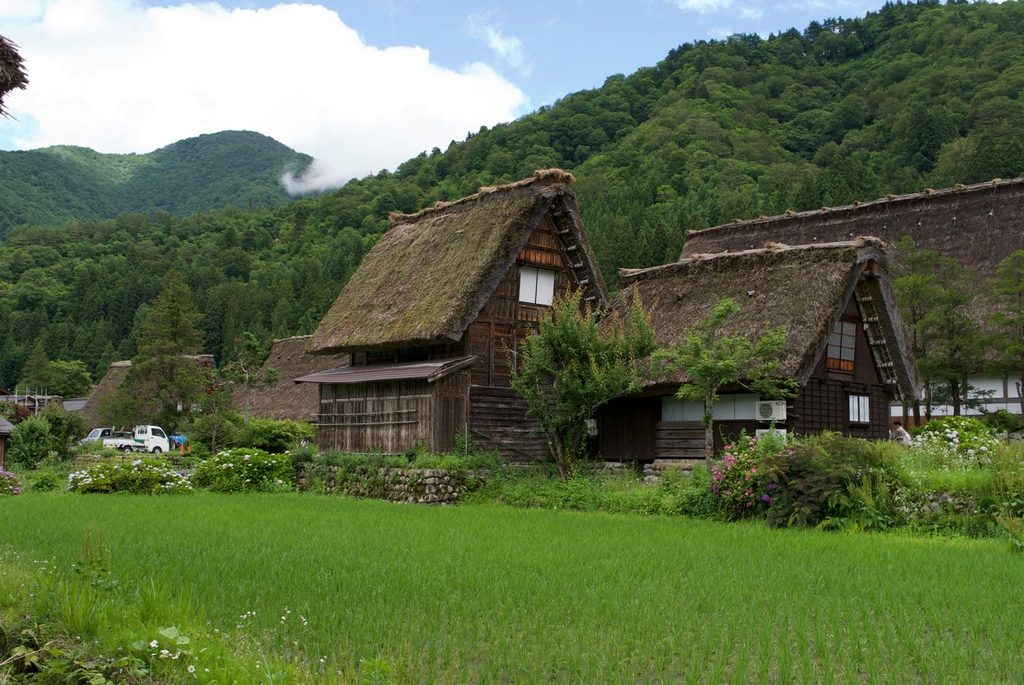
For many travelers, this becomes the most memorable day of the itinerary. You’ll see historic farmhouses with steep thatched roofs, walk through a living mountain community, and finish the afternoon in a beautifully preserved merchant town.
However, it’s also the day that requires the most careful planning.
The key is to arrange your two bus journeys in advance, organize your luggage, and leave enough time to explore Shirakawa-go without worrying about your onward connection.
A Practical Schedule for Day 3
A comfortable example, based on bus services published in October 2026, is:
- 9:10 AM: Depart Kanazawa Station.
- 10:35 AM: Arrive at Shirakawa-go Bus Terminal.
- 10:35 AM–2:15 PM: Luggage storage, village sightseeing, lunch, and an optional viewpoint visit.
- 2:15–2:35 PM: Collect your luggage and return to the bus terminal.
- 2:45 PM: Depart Shirakawa-go for Takayama.
- 3:35 PM: Arrive at Takayama Nohi Bus Center.
These are example scheduled services, not guaranteed departures for every future travel date. Timetables can change, and reservations are required for the particular services shown here.
Always verify the latest Nohi Bus timetable and book your chosen connections before relying on this schedule.
Morning — Leaving Kanazawa Without Stress
Start with breakfast and check out of your hotel.
If you’re staying near Kanazawa Station, you’ll have a straightforward journey to the departure point. Travelers staying elsewhere in the city should allow additional time for local transport.
The buses toward Shirakawa-go depart from the Kanazawa Station West Exit area, also known as the Kanazawa Port Gate. Check the current departure bay on your ticket or the operator’s instructions.
Aim to arrive at least 15–20 minutes before departure, particularly if you have luggage or need assistance locating the correct platform.
Before leaving your accommodation, make sure you have:
- Your bus reservation and any required boarding documents.
- The confirmed departure time for your onward bus from Shirakawa-go.
- Cash for smaller attractions and local services.
- A lightweight day bag with valuables, medication, and essential belongings.
- Suitable footwear and clothing for the weather.
Buildward Lab Tip: Don’t begin this journey without confirming your second bus. Reaching Shirakawa-go is only half the transport plan. You also need a reliable way to continue to Takayama after sightseeing.
10:35 AM — Arrive in Shirakawa-go and Store Your Luggage
After traveling through the mountain region, you’ll arrive at Shirakawa-go Bus Terminal, close to the historic Ogimachi village.
Before exploring, take care of your luggage.
The bus terminal has coin lockers, and additional luggage storage is available nearby. According to the Shirakawa-go Tourist Association, storage services generally operate from 8:00 AM to 5:00 PM, with same-day collection required.
Published prices start from approximately ¥500 for smaller luggage and ¥1,000 for larger items, depending on size and storage arrangements.
However, space is limited, and availability cannot be guaranteed.
If you are traveling with a large suitcase, consider whether luggage forwarding between hotels would make the journey more comfortable. Confirm delivery times and acceptance arrangements with your accommodation before using this option.
Never leave passports, money, essential medication, or other valuables in stored luggage.
Buildward Lab Tip: Take a photograph of your luggage locker number or keep your storage receipt somewhere easily accessible. Check the collection deadline before walking away from the terminal.
Late Morning — Discover Ogimachi Village
Shirakawa-go is famous for its traditional gassho-zukuri farmhouses, whose steep thatched roofs resemble hands joined in prayer.
The roof design developed in response to the mountain region’s climate, particularly its heavy snowfall.
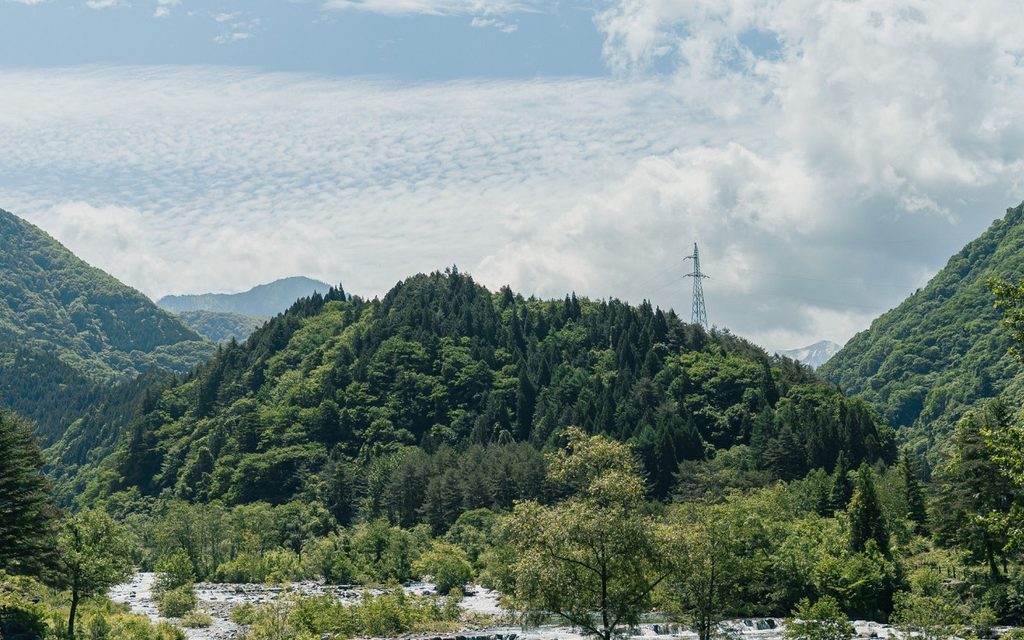
The large attic spaces were also historically useful for activities such as silkworm cultivation, an important part of the local economy.
Ogimachi is one of three historic settlements recognized by UNESCO as the Historic Villages of Shirakawa-go and Gokayama. The other two are Ainokura and Suganuma, located in the Gokayama region.
What makes Ogimachi particularly special is that it remains a living community.
These houses are not simply museum exhibits arranged for visitors. Residents continue to live and work in the village, and preserving the historic landscape requires ongoing maintenance and cooperation.
Begin with a relaxed walk through the streets.
Notice the shape of the roofs, the arrangement of houses, small agricultural plots, waterways, and the mountain scenery surrounding the settlement.
There is no general admission fee to walk through the village. Individual historic houses and museums charge separate entrance fees.
Allow time to enjoy the setting rather than moving immediately from one photograph to another.
An Important Visitor Etiquette Reminder
Because Shirakawa-go is a residential community, respect for local life is essential.
Do not enter private houses, gardens, or fields without permission. Follow signs indicating restricted areas, and avoid blocking entrances or narrow roads while taking photographs.
Do not fly a drone over the protected village; drones are prohibited within the World Heritage area.
Public rubbish bins are not generally provided around the settlement. Take your waste with you or return it to the shop where you purchased the item when appropriate.
Visitors who are not staying overnight are asked to complete ordinary sightseeing between 8:00 AM and 5:00 PM, apart from specially authorized events.
Buildward Lab Recommendation: Think of Shirakawa-go as a historic community you’re privileged to visit, not an attraction created entirely for tourists.
Prefer a Guided Experience in Shirakawa-go?
If you’d rather explore Shirakawa-go with an organized tour, the World Heritage Shirakawa-go Morning Tour is an option worth considering. Check the departure point, duration, itinerary, and what’s included before booking to make sure it fits your travel plans.
Explore the World Heritage Shirakawa-go Morning Tour on Viator →
Affiliate disclosure: We may earn a commission if you book through this link, at no extra cost to you.
Late Morning — Visit Wada House
For a closer understanding of traditional life, we recommend visiting at least one historic farmhouse interior.
Wada House is one of the most worthwhile choices.
The building is an important cultural property and one of the largest traditional gassho-zukuri houses in Shirakawa-go.
Historically, the Wada family held influential positions within the village and participated in trading activities connected with the local economy.
Visitors can explore the publicly accessible floors and learn more about the building’s construction and everyday life.
Seeing the interior provides context that is difficult to appreciate from the outside alone, particularly the use of the upper levels beneath the large thatched roof.
Practical information for Wada House:
- Adult admission: ¥400.
- Payment: Cash.
- Usual opening hours: 9:00 AM–5:00 PM.
- Closing days: Irregular.
- Location: A short walk from Shirakawa-go Bus Terminal.
Allow approximately 30–45 minutes, depending on how much time you spend examining the exhibits.
This is a planning estimate, not a fixed tour duration.
If Wada House happens to be closed, consider another publicly accessible traditional house, such as Kanda House, after checking its operating hours.
There is no need to visit every historic farmhouse. One thoughtfully chosen interior usually provides a more meaningful experience than rushing through several.
12:15–1:00 PM — Lunch in Shirakawa-go
After exploring the village, take time for lunch.
Depending on the restaurant and seasonal menu, you may find regional soba noodles, dishes featuring Hida beef, or other local specialties.
Restaurant opening hours and availability vary, and some establishments may be busy during peak visiting periods.
If you have a reserved afternoon bus, avoid choosing a restaurant with a long queue unless you have enough time to spare.
You can also keep lunch simple and save a more leisurely regional dining experience for the evening in Takayama.
Buildward Lab Tip: Keep lunch flexible. The priority is enjoying the village and comfortably making your onward bus, not fitting a particular restaurant into an already tight schedule.
Early Afternoon — Shiroyama Viewpoint
One of the most recognizable views of Shirakawa-go is the panorama from the observation area above Ogimachi.
From this elevated position, you can appreciate the arrangement of traditional houses against the surrounding mountain landscape.
The viewpoint is especially attractive in clear weather, although mist, rain, snow, and seasonal light can create very different experiences.
A shuttle bus connects the village with the observation area.
The tourist association’s updated information lists a one-way adult fare of ¥300, payable in cash, with departures approximately every 20 minutes during operating periods. There is a midday service break.
The shuttle boarding point is a short walk from the main bus terminal. Check the current location and timetable before heading uphill.
Walking to the viewpoint is also possible, but the route involves an uphill section and may be unsuitable for some visitors, particularly in icy or slippery conditions.
Allow sufficient time for both directions and for the return to the main bus terminal.
If the shuttle queue is long or the weather is poor, it’s perfectly reasonable to skip the viewpoint.
The village itself is the main experience, and missing a panoramic photograph should never put your reserved bus connection at risk.
Buildward Lab Recommendation: Treat the viewpoint as an optional highlight, not an obligation. Prioritize an enjoyable village walk, one historic house, and a comfortable lunch.
2:15 PM — Return to the Bus Terminal
Before leaving Shirakawa-go, collect your luggage and make your way back to the bus terminal.
Aim to be ready well before departure.
Double-check that your ticket is for Takayama rather than Kanazawa, Toyama, or another destination.
The bus journey from Shirakawa-go to Takayama usually takes approximately 50 minutes, although actual arrival times can be affected by traffic or weather.
Because this route passes through a mountain region, delays are possible.
Nohi Bus specifically warns that heavy snowfall, road closures, and traffic during popular travel periods can cause significant disruption.
This is one reason we recommend staying overnight in Takayama rather than connecting immediately to another important train or flight.
3:35 PM — Arrive in Takayama
Your bus arrives at Takayama Nohi Bus Center, conveniently located close to JR Takayama Station.
From here, head to your accommodation.
For this itinerary, staying within walking distance of the station and historic center is a practical choice. It makes both your arrival and next day’s departure easier.
If you’ve booked a traditional ryokan, check the property’s expected arrival time and dinner arrangements.
Some traditional accommodations have set meal times, so it’s important to communicate possible delays rather than arriving unexpectedly late.
After checking in, take a little time to rest.
You’ve already experienced an eventful day, and there’s no need to begin an extensive sightseeing program immediately.
Late Afternoon — A First Walk Through Takayama Old Town
If you still have energy, enjoy a short walk through Takayama’s historic center.
The Sanmachi Suji area is known for its traditional wooden merchant buildings, narrow streets, and historic atmosphere.
Some shops and visitor attractions may already be closing by late afternoon, so treat this as an introduction rather than your main sightseeing opportunity.
Tomorrow morning is a better time to explore the markets and shops while they are operating.
Take a short stroll, notice the distinctive architecture, and enjoy the different atmosphere after Shirakawa-go.
Evening — Discover the Flavors of Hida
Takayama is an excellent place to try the regional cuisine of Hida.
Hida beef is especially well known, but the local food scene also includes dishes such as hōba miso, regional ramen, and traditional Japanese preparations featuring seasonal ingredients.
Choose a restaurant that suits your budget and appetite.
If you’re staying in a ryokan with dinner included, take advantage of the experience rather than booking an additional restaurant unnecessarily.
Keep the evening relaxed.
Tomorrow you’ll explore Takayama’s morning market and historic streets before continuing your journey.
What If Something Goes Wrong?
Even a carefully planned travel day can be affected by unexpected circumstances.
If the first bus is delayed: Reassess your sightseeing priorities immediately after arrival. Visit the village and one historic house before considering optional activities.
If the weather becomes difficult: Avoid unnecessary uphill walks, keep your time outdoors manageable, and prioritize safe movement between the village and bus terminal.
If you have too much luggage: Ask about available storage services before entering the village. Do not assume there will always be an empty large locker.
If your onward bus is disrupted: Contact the operator or seek assistance at the bus terminal. Inform your Takayama accommodation if your arrival will be delayed. Don’t assume a later service will have available seats or operate under the same reservation rules.
If you’re traveling during a particularly busy holiday period: Consider the possibility of longer queues and slower road travel. Avoid scheduling an important onward connection for the same evening.
The Most Common Mistakes on Day 3
The biggest problems on this journey are usually caused by planning decisions rather than the attractions themselves.
Travelers may book only the first bus, underestimate the need for luggage storage, allow too little time to return from the viewpoint, or assume that road travel through the mountains always follows the published schedule.
Another common mistake is trying to include too many sightseeing stops in Shirakawa-go.
A village walk, one historic house, lunch, and an optional viewpoint already create a satisfying visit.
Adding multiple museums and additional excursions may leave little time to appreciate the surroundings.
Buildward Lab Recommendation
For a comfortable journey, book your bus connections, solve the luggage question in advance, and plan approximately three to four hours in Shirakawa-go.
Choose a small number of meaningful experiences rather than attempting to see everything.
Then continue to Takayama with enough time to check in, enjoy dinner, and rest.
This is the kind of travel day that rewards preparation: once the essential arrangements are made, you can focus on the places themselves instead of constantly checking the clock.
Day 4: Takayama Morning Markets, Historic Streets & Hida Traditions
Your final day begins in Takayama, a historic town where traditional wooden merchant houses, small shops, regional food, and morning markets offer a different atmosphere from the larger cities of Japan.
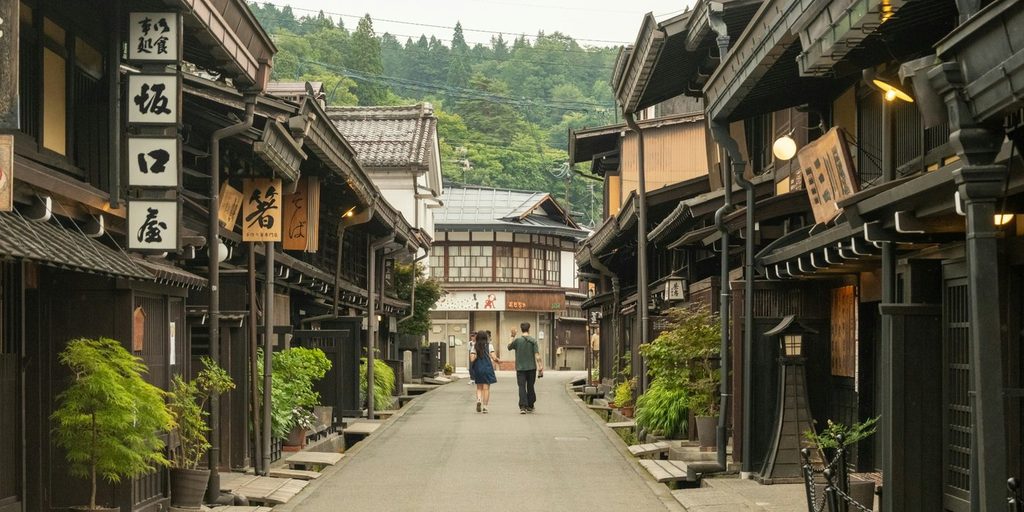
After yesterday’s journey through Shirakawa-go, there’s no need for an early departure or a demanding sightseeing schedule.
Instead, use your morning to experience Takayama at a comfortable pace before continuing to your next destination.
Our recommended plan combines Miyagawa Morning Market, the historic Sanmachi district, and Takayama Jinya, followed by a relaxed lunch and an onward journey in the afternoon.
This allows you to enjoy the town’s most distinctive attractions without trying to turn a departure day into another full sightseeing marathon.
Before Breakfast — Make Your Departure Easier
If you’re leaving Takayama later in the day, check out of your accommodation and arrange somewhere to leave your luggage.
Many hotels and ryokan can store guests’ bags temporarily, but confirm the arrangements and collection time in advance.
Luggage lockers and storage services are also available around Takayama Station and the Nohi Bus Center. Availability and payment methods vary, so don’t leave this decision until the last minute.
Keep your valuables, travel documents, medication, and essential belongings with you.
If you’ve arranged a traditional Japanese breakfast at your accommodation, enjoy it rather than rushing to leave.
The morning market will still be active during its normal operating hours, although arriving earlier usually offers a wider choice of stalls.
8:00–9:15 AM — Explore Miyagawa Morning Market
Begin your sightseeing at Miyagawa Morning Market, held along the Miyagawa River near Takayama’s historic center.
Morning markets have been part of the town’s commercial traditions for generations, bringing together local growers, food producers, and craftspeople.
Depending on the season, you’ll find stalls offering vegetables, fruit, pickles, traditional sweets, small handicrafts, and locally made souvenirs.
The market is more than a place to shop. It provides an opportunity to see the everyday food culture of the Hida region and discover products that may be less familiar to international visitors.
Take your time browsing, but remember that this is a working market, not simply an attraction designed for photographs.
Practical visiting information
Miyagawa Morning Market normally operates:
- April–November: 7:00 AM–12:00 PM.
- December–March: 8:00 AM–12:00 PM.
Admission is free.
The market is approximately a 15-minute walk from Takayama Station.
Although it operates throughout the year, the number of stalls can be considerably smaller in winter or during rainy weather.
For this itinerary, allow approximately 45–75 minutes.
You don’t need to buy anything to enjoy the atmosphere, but a small purchase from a local producer can be a pleasant way to discover regional flavors.
Buildward Lab Tip: Carry some cash for small purchases, ask permission before taking close-up photographs of vendors, and avoid blocking the market aisles. If the weather is poor and only a few stalls are operating, shorten your visit and spend more time in the old town.
An Alternative: Jinya-mae Morning Market
Takayama actually has two traditional morning markets.
The second, Jinya-mae Morning Market, is held in front of Takayama Jinya.
It has a different layout and is particularly convenient if you plan to visit the historic government building immediately afterward.
You can visit both markets if you enjoy local food and small-scale shopping, but there is no need to treat them as two essential attractions.
If your departure time is limited, choose the one that best fits your route.
9:15–10:30 AM — Wander Through Sanmachi Suji
Continue toward Sanmachi Suji, the best-known section of Takayama’s historic merchant district.
This part of the old town preserves traditional wooden buildings associated with the town’s development as a commercial center during the Edo period.
Dark timber façades, wooden latticework, narrow streets, and water channels create an atmosphere very different from modern urban Japan.
You’ll find small shops, local food businesses, traditional craft retailers, and historic sake breweries.
Some breweries can be recognized by a spherical ornament made from cedar leaves, known as a sugidama, hanging near the entrance.
These ornaments are associated with sake brewing and provide a distinctive detail to notice as you explore.
Rather than moving quickly from one souvenir shop to another, take time to appreciate the architecture and the relationship between the buildings and the streets.
Many historic properties remain active businesses, so opening hours vary.
The streets themselves can be enjoyed early in the morning, but some shops may not open until later.
What Is Worth Looking For?
Traditional wooden architecture: Notice the repeating latticework, low façades, and carefully preserved street frontage.
Local crafts: Takayama is associated with skilled woodworking and traditional decorative arts. Look for handmade objects rather than assuming every souvenir is locally produced.
Historic sake breweries: Some offer visitor experiences or tastings, but availability, prices, and opening arrangements differ.
Regional snacks: Small food shops offer opportunities to sample local specialties, including soy-sauce-flavored rice dumplings and other seasonal treats.
Buildward Lab Tip: If you visit a sake brewery, check its visitor arrangements before entering. Tastings are optional, and alcohol should never be combined with driving. Travelers who prefer not to drink can still appreciate the historic architecture and traditional production culture.
10:30–11:30 AM — Visit Takayama Jinya
After exploring the merchant district, visit Takayama Jinya, one of the most historically important buildings in the town.
Unlike the merchant houses of Sanmachi, Takayama Jinya tells the story of government and administration during the Edo period.
In 1692, the Hida region came under the direct control of the Tokugawa shogunate.
Takayama Jinya became an important administrative center, used by officials responsible for governing the region, collecting taxes, and carrying out judicial functions.
It is particularly significant because its main historic government building survives — an unusual distinction among Japan’s former regional administrative offices.
Inside, visitors can explore spaces used for official business, reception rooms, residential areas, and the former rice storehouse.
The building provides a fascinating contrast with the samurai residences of Kanazawa and the traditional farmhouses of Shirakawa-go.
Together, these places help explain different aspects of life in historical Japan.
Practical visiting information
The standard adult admission fee is ¥500, according to the official information available in October 2026.
Visitors aged 18 or younger can enter free of charge, with proof of age or student status potentially required.
Normal opening hours are:
- April 1–October 31: 8:45 AM–5:00 PM.
- November 1–March 31: 8:45 AM–4:30 PM.
Ticket sales end 30 minutes before closing.
The building normally closes from December 29 to January 3, and temporary closures are possible for maintenance or severe weather.
Allow approximately 45–60 minutes if you want to explore at an unhurried pace, although a shorter visit is possible.
Buildward Lab Tip: Bring a small bag for your shoes or follow the instructions provided at the entrance. Preserving traditional wooden interiors requires visitors to respect the site’s footwear and conservation rules.
Buildward Lab Recommendation: Explore Takayama’s Old Town with a Local Guide
If you’d prefer to understand Takayama’s history rather than simply walk past its traditional buildings, this 45-minute guided walking tour offers a compact introduction to the town.
Led in English, the tour covers historic Kamisannomachi, Nakabashi Bridge, Takayama Jinya, and Yamazakura Shrine. Along the way, you can ask questions and learn about the town’s Edo-period heritage and local culture.
Good to know: This is a short walking experience, not a full-day sightseeing tour. It starts and ends at the designated meeting point in central Takayama. The English-speaking guide is included; other expenses are not listed as included.
Explore the Takayama Old Town Walking Tour on Viator →
Affiliate disclosure: We may earn a commission if you book through this link, at no extra cost to you.
11:30 AM–12:15 PM — A Final Walk Through Old Takayama
After Takayama Jinya, leave some time for an unplanned walk.
You may want to return to a shop you noticed earlier, stop at a small café, or cross one of the town’s bridges for a different view of the historic streets.
This is also a good opportunity to purchase a small souvenir, provided you have enough room in your luggage.
Don’t schedule another museum simply because there’s an empty space in your itinerary.
A little flexibility is often what makes the final morning of a trip feel enjoyable rather than rushed.
12:15–1:15 PM — Lunch: Discover the Flavors of Hida
Before leaving Takayama, make time for a regional meal.
The town is particularly well known for Hida beef, but its culinary traditions extend beyond expensive beef dishes.
Depending on your preferences, consider:
Hida beef: A regional specialty from Gifu Prefecture, available in a variety of preparations. Restaurant prices and quality vary, so review menus rather than assuming every dish featuring Hida beef offers the same experience.
Takayama ramen: Typically made with thin noodles in a soy-based broth. Different restaurants have their own recipes and styles.
Hōba miso: A distinctive regional dish in which miso and other ingredients are heated on a magnolia leaf, often served with rice.
Hida soba: Buckwheat noodles associated with the region’s mountain climate and local food traditions.
Mitarashi dango: Grilled rice dumplings that are commonly seasoned with soy sauce in the Takayama style.
Choose a meal that suits your budget, appetite, and departure schedule.
There’s no need to spend heavily to experience the local food culture.
Buildward Lab Recommendation: If you have already enjoyed a Hida beef dinner on Day 3, consider a different regional specialty for lunch. Trying a variety of local foods can provide a more interesting experience than ordering the same famous dish repeatedly.
Optional Food Experience — Make Onigiri and Miso Soup in Takayama
If you’d prefer a hands-on introduction to Japanese food culture, consider an onigiri rice ball and miso soup-making experience in Takayama. It’s an alternative to a restaurant lunch for travelers who enjoy learning through food.
Check the activity’s duration, meeting point, and available start times before booking. Only include it in your itinerary if it fits comfortably around your onward travel plans.
Explore the Takayama Onigiri & Miso Soup Making Experience on Viator →
Affiliate disclosure: We may earn a commission if you book through this link, at no extra cost to you.
Early Afternoon — Collect Your Luggage and Continue Your Journey
After lunch, return to your accommodation or luggage storage facility and collect your belongings.
Allow enough time to reach the station, locate your platform, and confirm your onward connection.
Your next destination determines the most practical transport choice.
If you’re traveling to Nagoya: The JR Hida Limited Express provides a convenient rail connection, with typical journeys taking approximately two and a half hours.
If you’re traveling to Kyoto or Osaka: Compare train connections through Nagoya, allowing realistic transfer time.
If you’re returning to Tokyo: Compare routes via Nagoya and connections through Toyama, depending on the services available for your date.
If you’re traveling elsewhere in the Japanese Alps: Check whether your intended mountain transport operates during your travel season. Some routes are affected by winter closures or seasonal service changes.
Remember that train schedules and ticket prices can change.
Rather than choosing a departure based on an approximate travel time from an article, confirm the complete itinerary using official railway information.
Buildward Lab Tip: Don’t plan to finish lunch at the exact moment you need to leave for the station. Build in time to collect luggage, use the facilities, and handle small delays. An unhurried departure is a better ending than a last-minute dash for the train.
Have More Time in Takayama? Consider Hida Folk Village
Travelers who are staying a second night, leaving late in the day, or following our five-day itinerary may want to visit Hida Folk Village.
This open-air museum preserves more than 30 traditional buildings and offers insights into rural life and craftsmanship in the Hida region.
Some activities introduce visitors to traditional techniques such as weaving, lacquerwork, and other local crafts.
Unlike Shirakawa-go, where historic farmhouses remain part of a living community, Hida Folk Village is a museum designed for cultural preservation and interpretation.
That distinction makes it a valuable experience for visitors particularly interested in architecture, but not necessarily an essential stop for everyone.
The museum is located outside Takayama’s immediate historic center.
A local bus from the station area takes approximately 10 minutes.
The published adult admission fee is ¥700, and the museum normally opens from 8:30 AM to 5:00 PM throughout the year.
Allow additional time for transportation and a meaningful visit.
Buildward Lab Recommendation: If you’re leaving Takayama in the early afternoon, don’t squeeze Hida Folk Village into an already full morning. Save it for a longer stay or choose it instead of another attraction.
What If Your Morning Doesn’t Go as Planned?
Travel days rarely unfold exactly according to a schedule.
If rain reduces the activity at Miyagawa Morning Market, spend less time there and prioritize the historic streets or Takayama Jinya.
If the old town is crowded, explore a quieter street rather than waiting unnecessarily at every popular shop.
If your departure changes unexpectedly, adjust the order of your activities and prioritize anything that requires advance booking or has a fixed closing time.
If you’re tired after several days of sightseeing, there’s nothing wrong with enjoying a slow breakfast and one meaningful stop before leaving.
The Most Common Mistake on Day 4
Trying to treat Takayama as both a full sightseeing day and a departure day.
The morning markets, historic streets, traditional shops, and museums are all worth exploring, but attempting to experience every one of them thoroughly can create unnecessary pressure.
For our four-day itinerary, the goal is to enjoy a memorable final morning while leaving enough time for a comfortable onward journey.
Buildward Lab Recommendation
Prioritize Miyagawa Morning Market, Sanmachi Suji, and Takayama Jinya.
Enjoy a regional lunch, leave space for a spontaneous discovery, and choose your departure time carefully.
If you want deeper cultural experiences, additional museums, or a longer stay in traditional accommodation, extend your journey to five days rather than sacrificing the relaxed character of this itinerary.
Kanazawa, Shirakawa-go, and Takayama offer three very different perspectives on Japan. The most rewarding journey is one that gives each place enough attention without making travel itself the main source of stress.
Where to Stay in Kanazawa, Shirakawa-go & Takayama
Choosing where to stay is about more than finding a comfortable hotel. On a journey involving trains, regional buses, luggage storage, and several historic districts, the location of your accommodation can make a significant difference to how relaxed your trip feels.
For our recommended four-day itinerary, the simplest arrangement is:
Two nights in Kanazawa + one night in Takayama.
This allows you to explore Kanazawa without changing hotels, visit Shirakawa-go while traveling between the cities, and enjoy Takayama’s morning market before departing.
You do not need to stay overnight in Shirakawa-go to follow this route successfully, although a traditional farmhouse stay can be a memorable alternative for travelers with more time.
Where to Stay in Kanazawa: Station Convenience or Historic Atmosphere?
Kanazawa has several convenient accommodation areas, but two are particularly suitable for this itinerary.
The best choice depends on whether you prioritize easy transport connections or being closer to the city’s historic attractions.
Option 1 — Near Kanazawa Station: Best for Transport Convenience
For most first-time visitors following our four-day route, staying near Kanazawa Station is our preferred option.
You’ll arrive by train on Day 1 and depart by highway bus toward Shirakawa-go on Day 3. Choosing accommodation within a short, manageable walk of the station reduces the need for additional transfers with your luggage.
The station area also offers restaurants, convenience stores, shops, and access to local buses.
While you won’t be staying directly among the traditional teahouses or samurai streets, reaching the main sightseeing districts is straightforward by local transport.
Best for: Independent travelers, first-time visitors, travelers with larger suitcases, and anyone who values easy arrivals and departures.
What to check before booking:
- The actual walking route from the station, not just the straight-line distance shown on a map.
- Whether the hotel offers luggage storage before check-in and after check-out.
- Whether the room has sufficient space for your luggage.
- Breakfast arrangements if you plan to catch an early bus.
- The cancellation policy in case your travel plans change.
Buildward Lab Tip: A hotel advertised as being near Kanazawa Station may still involve a longer walk than expected. Check the route from the correct station exit, especially if you’re traveling with heavy luggage or during winter.
Option 2 — Korinbo, Katamachi or the Central Area: Best for Sightseeing
If atmosphere and easy access to the historic center matter more to you, consider accommodation around Korinbo, Katamachi, or nearby central districts.
These areas place you closer to shopping streets, restaurants, Nagamachi Samurai District, and several major attractions.
Korinbo and Katamachi are particularly convenient for travelers who enjoy going out for dinner and exploring the city after the main sightseeing hours.
The Omicho Market area is another useful compromise, offering a central location between the station and several historic neighborhoods.
However, staying in the center means you’ll need to plan how to reach Kanazawa Station for your departure to Shirakawa-go.
Best for: Couples, travelers with light luggage, visitors who enjoy walking, and anyone who prefers being closer to restaurants and historic sights.
Buildward Lab Tip: Don’t choose a beautiful historic property without checking its transport access. A charming location can become inconvenient when you need to reach an early bus with a heavy suitcase.
Our Kanazawa Recommendation
For this specific itinerary, we favor the station area.
You’re staying for only two nights, and practical transport access will make both your arrival and departure easier.
Choose a more central hotel if atmosphere is a higher priority and you’re comfortable using local buses or taxis when necessary.
Where to Stay in Takayama: Close to the Station or in the Old Town?
Takayama is compact enough that several accommodation areas can work well, but your choice should reflect the relatively short stay.
For our four-day itinerary, you’ll arrive by bus on Day 3 and depart by train or bus on Day 4.
Option 1 — Near Takayama Station: Best for a One-Night Stay
The area around JR Takayama Station and the neighboring Nohi Bus Center is our most practical choice.
After arriving from Shirakawa-go, you can reach your accommodation without needing another complicated transfer.
The historic Sanmachi district is approximately a 12-minute walk from the station, making it entirely possible to explore the old town while staying close to your transport connections.
This is particularly helpful when you have only one night in Takayama.
Best for: Short visits, travelers with luggage, early departures, and visitors continuing by train.
Buildward Lab Tip: If you expect to arrive tired after visiting Shirakawa-go, a comfortable hotel near the station may be a better choice than accommodation requiring a long walk with luggage.
Option 2 — Takayama Old Town: Best for Traditional Atmosphere
Staying within or close to the historic center offers a different experience.
Traditional buildings, small streets, and the atmosphere of old Takayama can feel particularly special in the early morning, before the busiest sightseeing hours.
Some properties offer Japanese-style rooms, traditional hospitality, and regional meals.
However, not every historic accommodation is equally convenient.
The building may have stairs, narrow entrances, limited luggage facilities, or traditional sleeping arrangements that differ from those of a standard hotel.
Before booking, check the room details carefully.
Best for: Couples, travelers interested in traditional Japanese accommodation, and visitors planning to spend more than one night in Takayama.
Buildward Lab Tip: Historic charm and modern accessibility are not always the same thing. If stairs, sleeping on a futon, or shared bathrooms might be difficult for you, confirm the facilities before reserving.
Should You Stay in a Traditional Ryokan?
A ryokan can be one of the most memorable accommodation experiences in Japan.
Depending on the property, your stay may include tatami flooring, futon bedding, Japanese-style meals, traditional hospitality, and bathing facilities.
Some ryokan provide private bathrooms and modern beds, while others maintain more traditional arrangements.
The word ryokan does not guarantee that every property offers an onsen, a private bath, or dinner.
Always check what is included.
Three important considerations:
Meal times: If dinner is included, the accommodation may require you to arrive by a specific time. This matters on Day 3, when your arrival from Shirakawa-go depends on road conditions and bus schedules.
Sleeping arrangements: Traditional futon bedding can be comfortable, but travelers with mobility difficulties or specific sleeping preferences may prefer a room with a Western-style bed.
Bathing facilities: Check whether baths are private or shared, whether there are any restrictions, and whether the property can accommodate your needs. Tattoo policies, private bathing options, and accessibility vary between establishments.
A ryokan stay can be wonderful, but it should fit your travel style rather than becoming another source of pressure.
Buildward Lab Recommendation: If you’d like to experience a traditional ryokan, Takayama is a particularly appealing place to consider one. Just make sure your arrival time, meal arrangements, and room facilities are compatible with your itinerary.
Is It Worth Staying Overnight in Shirakawa-go?
For our four-day itinerary, we recommend visiting Shirakawa-go between Kanazawa and Takayama rather than booking an additional night there.
This avoids another hotel change and allows you to continue to Takayama in time for a relaxed evening.
However, staying overnight in a traditional gassho-zukuri farmhouse is a very different experience from visiting the village for a few hours.
Some historic houses operate as small, family-run guesthouses known as minshuku.
Accommodation may include tatami rooms, traditional meals, shared facilities, and the opportunity to experience the village’s quieter atmosphere after most day visitors have left.
These stays are not equivalent to modern hotels, and that is part of their character.
Before booking a farmhouse stay, check:
- Whether the property is located within Ogimachi or elsewhere in Shirakawa Village.
- The available room type and bathroom arrangements.
- Whether dinner and breakfast are included.
- The required check-in time.
- Payment and cancellation conditions.
- How you’ll reach the property from the bus terminal.
- Whether your onward transport plans still work the following morning.
Accommodation availability can be limited, particularly during busy seasons.
The Shirakawa-go Tourist Association offers a dedicated accommodation reservation service, with online bookings typically available approximately three months ahead.
Who should consider staying overnight?
Travelers who enjoy slow travel, traditional architecture, rural settings, and smaller family-run accommodation may find it particularly rewarding.
However, an overnight stay changes the structure of the journey and may be better suited to a five-day itinerary or a longer visit.
Buildward Lab Tip: Don’t book a farmhouse simply because it looks beautiful in photographs. Read the practical conditions carefully and make sure you’re comfortable with the facilities, meal arrangements, and limited transport options.
Accommodation Mistakes That Can Make This Journey Harder
A few booking decisions can create unnecessary complications.
Choosing accommodation far from transport: A cheaper room outside the center may become less convenient when extra taxis or long walks are required.
Ignoring check-in deadlines: This is particularly important for traditional inns that serve dinner at fixed times.
Assuming luggage storage is always available: Hotels may have different rules for early arrivals, late collection, or storing luggage after check-out.
Booking non-refundable rooms before arranging the key transport: If your trip depends on specific bus connections, check those arrangements before committing to accommodation that cannot be changed.
Overlooking seasonal demand: Takayama’s major festivals, Japanese holiday periods, and popular winter dates around Shirakawa-go can make accommodation harder to secure.
Comparing only the advertised nightly rate: Check whether the price includes taxes, meals, and any additional property charges. A cheaper room may not necessarily offer better overall value.
Our Final Accommodation Recommendation
For travelers following the recommended four-day route:
Nights 1 and 2 — Kanazawa: Stay near Kanazawa Station for convenient rail and bus connections, or choose a central district if you prioritize atmosphere.
Night 3 — Takayama: Stay near the station for a practical one-night visit, or choose a traditional ryokan in or near the old town if you’re looking for a more immersive experience.
Shirakawa-go: Visit during the day on the way between the two cities. Consider an overnight farmhouse stay only if you’re deliberately planning a slower, longer journey.
The goal isn’t to find the most elaborate hotel in every destination.
It’s to choose accommodation that supports your itinerary, makes luggage and transport easier, and gives you a comfortable place to rest between memorable experiences.
Buses, Tickets, Luggage & Travel Passes: How to Plan Without Stress
Transport between Kanazawa, Shirakawa-go, and Takayama is straightforward once you understand how the different services work. However, it’s also the part of the journey where a small booking mistake can cause significant inconvenience.
Unlike traveling between major Japanese cities by high-speed train, this route combines railway services with regional highway buses. Some buses require reservations, luggage space is limited, and not every transport pass covers the same journeys.
The good news is that you don’t need a rental car to complete this itinerary.
With the right bus reservations, a sensible luggage plan, and realistic connections, all three destinations can be visited comfortably using public transport.
Understanding the Bus Connections
The main highway bus route connects Kanazawa with Shirakawa-go and Takayama.
Services are operated by companies including Nohi Bus and Hokutetsu, with different departures and booking arrangements.
The approximate scheduled journey times are:
- Kanazawa to Shirakawa-go: 75–85 minutes.
- Shirakawa-go to Takayama: 50 minutes.
- Kanazawa to Takayama: Approximately 2 hours and 15 minutes on services traveling through Shirakawa-go.
These times describe normal scheduled journeys. They do not include sightseeing stops, waiting for connections, or unexpected delays.
For our recommended four-day itinerary, the most useful arrangement is to travel from Kanazawa to Shirakawa-go, spend several hours exploring the village, and then continue to Takayama.
This avoids returning to your starting city after sightseeing.
However, not every bus between Kanazawa and Takayama allows the same itinerary. Some departures may operate directly without stopping in Shirakawa-go.
Always check the intermediate stops, not just the departure and arrival cities.
How to Book the Two Bus Journeys
If you’re visiting Shirakawa-go between two overnight destinations, treat the transport as two separate journeys:
Ticket 1: Kanazawa → Shirakawa-go
Ticket 2: Shirakawa-go → Takayama
You need to choose a departure time for each section.
For the first journey, select a morning service that arrives early enough to enjoy the village.
For the second, choose an afternoon departure that allows time for walking, visiting a traditional house, lunch, and collecting your luggage.
Some buses require advance seat reservations, while others operate without reservations. The official Nohi Bus timetable identifies reservation-required departures with the letter R.
For travelers following our itinerary, booking reserved services on both sections provides greater certainty.
A practical booking process:
- Check the current timetable on the official Nohi Bus website.
- Select your travel date and confirm which buses stop at Shirakawa-go.
- Choose your preferred morning departure from Kanazawa.
- Choose a suitable onward departure to Takayama, leaving enough sightseeing time.
- Complete the required reservations using the operator’s approved booking channel.
- Save your confirmations and review the boarding instructions.
- Recheck your services shortly before traveling.
Nohi Bus lists Japan Bus Online as one of its online booking options for reservation-required services. Telephone reservation channels are also available.
Booking arrangements may differ depending on the operator, route, or transport pass you’re using.
Buildward Lab Tip: Don’t assume that buying a ticket from Kanazawa to Takayama automatically allows you to leave the bus in Shirakawa-go, explore for several hours, and board a later service. Arrange the sightseeing stop and onward seat explicitly.
How Much Do the Buses Cost?
Published adult one-way fares in October 2026 are approximately:
- Kanazawa → Shirakawa-go: ¥2,800.
- Shirakawa-go → Takayama: ¥2,800.
- Kanazawa → Takayama without a sightseeing break: ¥4,200.
Nohi Bus has announced revised fares beginning December 1, 2026:
- Kanazawa → Shirakawa-go: ¥2,900.
- Shirakawa-go → Takayama: ¥2,900.
- Kanazawa → Takayama: ¥4,400.
Under the announced revised tariffs, visiting Shirakawa-go between Kanazawa and Takayama would therefore cost approximately ¥5,800 per adult for the two bus journeys, before any applicable discounts.
These figures are useful for estimating costs, but your actual ticket price should always be confirmed for the departure date and operating company.
The journey with a sightseeing stop costs more than a direct through journey. For most visitors following this itinerary, that additional cost is worthwhile because Shirakawa-go is one of the main reasons for taking the route.
Buildward Lab Recommendation: Budget for the two separate journeys rather than using the cheaper through fare when estimating the cost of visiting all three destinations.
Which Transport Pass Is Worth Considering?
Japan offers numerous railway and regional transport passes, but a pass is not automatically cheaper than individual tickets.
For this particular route, the Takayama-Hokuriku Area Tourist Pass deserves consideration.
According to the official tourist pass information available in October 2026, it costs ¥19,800 for adults and ¥9,900 for children aged 6–11.
The pass is valid for five consecutive days and covers specified JR railway routes and designated highway bus services, including eligible connections through Shirakawa-go.
It can be particularly useful for travelers completing a broader journey involving Osaka or Kyoto, Kanazawa, Shirakawa-go, Takayama, and Nagoya.
However, the pass has important limitations.
It does not cover every railway line in Japan.
For example, the Tokyo–Kanazawa section of the Hokuriku Shinkansen is outside the pass’s covered railway area. The Tokaido Shinkansen between Kyoto and Shin-Osaka is also not included.
The pass is intended for eligible international visitors with Temporary Visitor status, subject to the operator’s conditions.
It also does not remove the requirement to reserve seats on bus services that need advance reservations.
Pass holders should follow the separate reservation instructions provided by the railway and bus operators. Do not assume that a seat can be booked through the same online process used for an ordinary paid bus ticket.
When might the pass be useful?
It is worth comparing if you’re traveling through several eligible railway sections within five consecutive days.
When might individual tickets be better?
If you’re only taking the two buses between Kanazawa, Shirakawa-go, and Takayama, purchasing a regional pass solely for those journeys would generally be poor value.
Likewise, travelers arriving from Tokyo should calculate the separate cost of the journey outside the pass’s coverage.
Buildward Lab Tip: Before buying a pass, list every train and bus journey you plan to take during its validity period. Compare the total price of individual tickets with the pass price, and confirm that each route is actually covered.
Is the Nationwide Japan Rail Pass Enough?
The nationwide Japan Rail Pass can cover many eligible JR railway journeys, but it does not cover the Nohi Bus and Hokutetsu highway services used to visit Shirakawa-go.
This distinction is easy to miss.
Even if you’re traveling around Japan with a nationwide rail pass, you’ll normally need separate arrangements for the regional bus journey.
Do not assume that a pass covering your train to Kanazawa will also cover the onward highway bus.
Managing Your Luggage in Shirakawa-go
Luggage is one of the biggest practical considerations when using Shirakawa-go as a sightseeing stop between two cities.
The village is best explored on foot, and moving around historic lanes with a large suitcase is inconvenient.
Fortunately, luggage storage is available near Shirakawa-go Bus Terminal.
The tourist association lists the following general arrangements:
- Coin lockers for small and medium luggage: ¥500 per use.
- Large lockers: ¥1,000 per use.
- Locker operating hours: 8:00 AM–5:00 PM.
- Additional luggage storage near the terminal, generally available until 5:00 PM.
Availability is limited, and the stated operating hours should be checked before your visit.
What if all the large lockers are occupied?
Ask about the additional storage service near the terminal. However, don’t assume that oversized luggage can always be accommodated.
If you’re traveling during a particularly busy period, consider reducing the amount of luggage you take through the village.
Before leaving your bag, confirm the collection deadline and keep the receipt or locker details somewhere safe.
Buildward Lab Tip: Never plan to collect your luggage after the storage facility has closed. Your sightseeing schedule must work around both the onward bus departure and the luggage collection time.
Should You Use Luggage Forwarding?
Japan has well-established luggage delivery services, including Yamato Transport’s TA-Q-BIN service.
Sending a large suitcase between hotels can make travel considerably easier, especially when changing destinations by bus.
However, luggage forwarding is not the same as guaranteed same-day delivery.
Depending on the locations, collection time, and service conditions, delivery may take one or more days.
If you’d like to send a suitcase from Kanazawa to Takayama, ask both accommodations whether they can arrange or receive a delivery, and confirm the expected arrival date.
If the suitcase won’t arrive until the following day, pack everything you’ll need for your first night in Takayama into a separate overnight bag.
Keep with you:
- Passport and travel documents.
- Money, bank cards, and valuables.
- Essential medication.
- Phone, chargers, and power bank.
- Weather-appropriate clothing.
- Any items required before the luggage is scheduled to arrive.
Nohi Bus advises passengers to keep mobile power banks in the passenger cabin rather than placing them in luggage stored in the bus compartment.
Buildward Lab Recommendation: Luggage forwarding can be helpful, but it isn’t necessary for everyone. Travelers with one manageable suitcase may find the bus journey and terminal storage perfectly practical. Choose the option that suits your luggage size, budget, and delivery schedule.
Getting Around Kanazawa: Do You Need a Bus Pass?
Kanazawa’s historic attractions are spread across several districts, so public buses can reduce unnecessary walking.
The Kanazawa Loop Bus connects the station with major sightseeing areas, including Omicho Market, Higashi Chaya, Kenrokuen, and Nagamachi.
The standard adult fare is ¥220 per ride.
The city also offers a one-day bus pass, listed at ¥800 for adults, which covers designated services within central Kanazawa.
Whether it saves money depends on how frequently you use the bus.
Four standard Loop Bus rides at ¥220 would cost ¥880, making the ¥800 day pass potentially worthwhile. For only one or two journeys, individual tickets are likely to be cheaper.
There is another important distinction.
The sightseeing Loop Bus accepts major Japanese transport IC cards such as Suica, PASMO, and ICOCA, as well as other listed payment methods.
However, not all ordinary Hokutetsu local buses accept nationwide IC cards.
Check the operator and available payment methods before boarding.
Buildward Lab Tip: Don’t assume that a Suica card works on every bus in Japan. Keep some cash available and check the specific service you intend to use.
What Happens if Your Bus Is Delayed or Cancelled?
The route passes through mountainous areas where weather and road conditions can affect travel.
Nohi Bus warns that heavy snowfall, congestion around Shirakawa-go, and expressway closures may cause delays of two hours or more in some circumstances.
This is particularly important in winter and during popular holiday periods.
If your morning bus is delayed: Shorten your sightseeing plan rather than trying to complete every attraction in less time.
If severe weather is expected: Check the operator’s official service updates before leaving your accommodation.
If your onward bus is cancelled: Contact the bus operator or seek assistance at the terminal. Ask about the available alternatives and your ticket conditions before making another reservation.
If you’re going to arrive late in Takayama: Inform your accommodation, particularly if dinner is included or check-in is restricted to certain hours.
If you have a major onward connection: Avoid scheduling a flight or an important long-distance train immediately after a mountain bus journey.
A sensible itinerary should include enough flexibility to handle disruption without putting the rest of the trip at risk.
The Essential Transport Checklist
Before leaving Kanazawa for Shirakawa-go and Takayama, make sure you’ve answered these questions:
- Have you confirmed the bus timetable for your actual travel date?
- Have you booked both required bus segments?
- Have you checked the departure terminal and boarding location?
- Have you confirmed whether your transport pass covers the services?
- Do you know where you’ll store your luggage?
- Can you collect your luggage before the storage facility closes?
- Have you allowed enough time to return from the village and viewpoint?
- Have you checked the weather and current service alerts?
- Does your Takayama accommodation know when to expect you?
You don’t need an elaborate travel-planning system to answer these questions. Saving your booking details and keeping a simple itinerary on your phone is usually enough.
Buildward Lab Recommendation
The easiest way to enjoy this journey is to settle the important transport questions before arriving in Japan.
Book the buses you need, compare transport passes only after calculating your actual journeys, and decide how you’ll handle your luggage.
Then allow the itinerary to remain flexible where it should be flexible — sightseeing, meals, photography, and spontaneous discoveries.
Good preparation doesn’t make a journey less adventurous. It gives you the freedom to enjoy the adventure without unnecessary stress.
How Much Does a Kanazawa, Shirakawa-go & Takayama Trip Cost?
One of the advantages of visiting Kanazawa, Shirakawa-go, and Takayama independently is that you can adapt the journey to different budgets.
You don’t need luxury accommodation, expensive private transfers, or a guided tour every day to enjoy the region.
At the same time, it’s important to understand which expenses are relatively predictable and which can change significantly depending on the season, accommodation choices, and travel dates.
For a comfortable four-day trip, the main costs are three nights of accommodation, meals, two intercity bus journeys, local transportation, and any paid attractions or cultural experiences you choose.
Your trains to reach Kanazawa and continue from Takayama must be calculated separately, because the price depends on where your wider Japan itinerary begins and ends.
All prices below are in Japanese yen (JPY).
Accommodation: Usually Your Biggest Variable Expense
For our recommended four-day route, you’ll need two nights in Kanazawa and one night in Takayama.
Accommodation prices vary considerably according to the season, location, room type, and how far ahead you book.
As a general planning reference, you might allow approximately ¥12,000–¥20,000 per night for a comfortable double room shared by two travelers.
This is a budgeting allowance, not a confirmed room rate in either city. During festivals, holidays, and other busy periods, prices can be considerably higher.
Under that example, three nights would cost ¥36,000–¥60,000 for the room, or ¥18,000–¥30,000 per person when two people share equally.
Solo travelers should not assume they’ll pay half the price of a double room. Compare available single rooms and their actual rates.
A traditional ryokan with dinner and breakfast included may cost substantially more than a simple hotel, but the comparison is not always straightforward.
If two meals are included, part of what you’re paying for replaces restaurant expenses and contributes to the cultural experience.
Buildward Lab Tip: Compare the total stay price, not just the nightly headline rate. Check whether breakfast, dinner, local accommodation taxes, and any other charges are included.
Don’t Forget Local Accommodation Taxes
Both Kanazawa and Takayama apply local accommodation taxes, and the amount depends on the accommodation charge per person per night.
In Kanazawa, the published rates are:
- Less than ¥5,000 per person per night: no accommodation tax.
- ¥5,000 to less than ¥20,000: ¥200 per person per night.
- ¥20,000 or more: ¥500 per person per night.
In Takayama, the published rates are:
- Less than ¥10,000 per person per night: ¥100.
- ¥10,000 to less than ¥30,000: ¥200.
- ¥30,000 or more: ¥300.
The thresholds are based on the accommodation charge under the respective local rules, rather than the full cost of meals and other services.
Children may qualify for exemptions, and hotels may collect the tax separately from the prepaid room rate.
The amounts are relatively small, but they’re worth checking before booking.
Intercity Buses: A Predictable Part of the Budget
The journey through Shirakawa-go requires two separate bus trips:
Kanazawa → Shirakawa-go
Shirakawa-go → Takayama
For services operated by Nohi Bus, the published adult one-way fare for each section is ¥2,800 for journeys through November 30, 2026.
The operator has announced an increase to ¥2,900 per section from December 1, 2026.
This means the two journeys together cost:
¥5,600 per adult before December 2026, or ¥5,800 under the announced revised fares from December 1, 2026.
Check the exact price with your chosen operator when booking.
Remember that these figures cover only the buses between the three destinations. They do not include your train to Kanazawa or your onward journey from Takayama.
If you’re considering a regional transport pass, compare the pass cost with all the eligible journeys you actually intend to take rather than assuming it will automatically save money.
Local Transportation and Luggage Storage
You won’t need a large local transportation budget if you enjoy walking and choose conveniently located accommodation.
In Kanazawa, the sightseeing Loop Bus is useful for moving between the main attractions.
The published adult fare is ¥220 per ride, while the designated one-day bus pass costs ¥800.
For a short stay, compare the price of individual rides with the pass before buying.
Takayama’s historic center is generally easy to explore on foot from the station area, although attractions farther away may require a bus or taxi.
Shirakawa-go also has luggage-storage costs to consider if you’re visiting between hotels.
Published locker prices at the bus terminal are ¥500 for smaller sizes and ¥1,000 for large lockers.
If you plan to use the shuttle bus to the panoramic viewpoint, allow for an additional fare and verify the current price and operating conditions.
Buildward Lab Tip: Keep a small separate allowance for local buses, lockers, and unexpected short journeys. These costs are easy to overlook when comparing the larger hotel and train expenses.
Entrance Fees: Many Highlights Are Affordable
One of the appealing features of this itinerary is that several memorable places can be explored without buying expensive admission tickets.
Walking through Higashi Chaya, Nagamachi’s historic streets, Ogimachi Village, and Takayama’s old town does not require a general admission ticket.
The main paid attractions in our four-day itinerary have comparatively modest standard adult fees:
- Kenrokuen Garden: ¥320.
- Kanazawa Castle Park: free general grounds; ¥320 for the designated paid historical buildings.
- Nomura Samurai Residence: ¥550.
- Wada House in Shirakawa-go: ¥400.
- Takayama Jinya: ¥500.
Visiting Kenrokuen, Nomura Residence, Wada House, and Takayama Jinya would therefore cost approximately ¥1,770 per adult at these published prices.
Adding the paid castle buildings increases the total to approximately ¥2,090, before any applicable combined-ticket savings.
You don’t need to visit every paid attraction.
A combination of historic walks, scenic locations, and a few carefully chosen interiors can provide an excellent experience at a reasonable cost.
Food: Save Where It Makes Sense, Spend Where It Matters
Japan offers a wide range of dining options, from casual noodle shops and simple set meals to elaborate regional cuisine.
For planning purposes, consider allowing approximately ¥3,000–¥5,000 per person per day for food and ordinary drinks.
This is an illustrative allowance, not a guaranteed daily cost.
Travelers choosing simple breakfasts, casual lunches, and inexpensive dinners may spend less. Seafood specialties, premium Hida beef, fine dining, and frequent café stops can increase the total considerably.
Over four days, the example allowance would be ¥12,000–¥20,000 per person.
Check whether any meals are included with your accommodation before adding them to your food budget.
Buildward Lab Recommendation: Choose a few meals that genuinely interest you rather than spending heavily at every stop. A memorable regional dish in Kanazawa or Takayama can be a worthwhile experience, but it doesn’t have to define your entire budget.
A Realistic Four-Day Budget Example
To make the figures easier to understand, consider two adults traveling together, sharing one double room, and following our recommended four-day route.
We’ll use accommodation at approximately ¥12,000–¥20,000 per room per night, normal restaurant meals, public transportation, and a small selection of paid attractions.
Illustrative budget per person:
- Three nights of shared accommodation: ¥18,000–¥30,000.
- Four days of meals and ordinary drinks: ¥12,000–¥20,000.
- Intercity buses through Shirakawa-go: ¥5,800, using the announced December 2026 Nohi Bus fares.
- Local transportation: approximately ¥1,000–¥2,000.
- Selected admission fees: approximately ¥1,770–¥2,090.
- Luggage storage allowance: approximately ¥500–¥1,000.
- Additional buffer for small costs, accommodation taxes, price differences, and unexpected expenses: ¥4,000–¥8,000.
Example total: approximately ¥43,000–¥69,000 per person for four days and three nights.
This is a planning scenario, not a quoted travel package or a promise of available accommodation at these prices.
It excludes the journey to Kanazawa, onward transportation from Takayama, international flights, travel insurance, shopping, and optional paid workshops or guided tours.
For two adults sharing accommodation, the equivalent example is approximately ¥86,000–¥138,000 in total, with the same exclusions.
Traveling alone, staying in higher-end ryokan, or visiting during a major festival may substantially increase the cost.
Where Is It Worth Spending a Little More?
Not every expense adds the same value to your journey.
Convenient accommodation: Paying slightly more for a hotel near the station may save time and avoid additional transport with heavy luggage.
A meaningful cultural experience: A well-chosen craft workshop or knowledgeable local guide can provide insight that would be difficult to gain independently.
A traditional ryokan: This may be worthwhile if you genuinely want to experience Japanese hospitality, meals, and accommodation traditions.
Reliable transportation arrangements: Reserving the right bus connections is more important than saving a small amount and risking a missed departure.
Where Can You Save Without Sacrificing the Experience?
You can often reduce costs by choosing a sensible combination of free and paid attractions.
Walk through Kanazawa’s historic neighborhoods, enjoy Shirakawa-go’s scenery, and explore Takayama’s old streets without feeling obliged to pay for an organized activity at every stop.
Use local buses selectively, compare transport passes carefully, and avoid booking unnecessary return trips between the cities.
Choosing fewer, more meaningful activities can also prevent you from spending money on experiences that repeat what you’ve already seen.
Buildward Lab Tip: Don’t confuse a lower overall trip cost with poor travel quality. This route is especially rewarding because much of its appeal comes from architecture, landscapes, historic streets, and regional atmosphere.
The Budget Mistakes to Avoid
Comparing hotel rates without taxes or meals: Always check the complete booking price and what’s included.
Forgetting the arrival and departure trains: A four-day regional budget isn’t the same as the total cost of adding the trip to your Japan itinerary.
Buying a transport pass without calculating the savings: Pass coverage and convenience vary by route.
Underestimating seasonal price increases: Festival periods, popular holidays, and peak foliage seasons may affect both accommodation and availability.
Booking expensive experiences simply because they’re popular: Choose activities that match your interests and offer value beyond independent sightseeing.
Leaving no contingency: Unexpected local transport, weather changes, or schedule disruptions can introduce small additional expenses.
The Buildward Lab Budget Recommendation
For most travelers, the smartest approach is to establish a realistic spending range before making reservations.
Start with your accommodation, calculate the two required bus journeys, and add the cost of reaching and leaving the region.
Then decide which optional experiences are worth paying for.
You don’t need to visit central Japan on the smallest possible budget or spend heavily to have a memorable journey. The goal is to spend thoughtfully, avoid unnecessary costs, and preserve enough flexibility to enjoy the trip comfortably.
Best Time to Visit Kanazawa, Shirakawa-go & Takayama: Seasons, Weather and Festivals
Kanazawa, Shirakawa-go, and Takayama are rewarding destinations throughout the year, but choosing the right season can significantly affect your experience.
This route combines a historic city near the Sea of Japan with a mountain village and a highland town. Although the destinations are relatively close, their weather, seasonal scenery, and travel conditions are not identical.
Spring brings cherry blossoms and festivals. Summer offers green mountain landscapes and outdoor sightseeing. Autumn transforms gardens and hillsides with colorful foliage. Winter creates striking snow-covered scenery but requires more careful transportation planning.
For most travelers seeking comfortable walking conditions and a manageable itinerary, May outside Golden Week and much of October are particularly appealing choices.
However, the best time for you depends on whether you prioritize traditional festivals, seasonal scenery, smaller crowds, or the simplest possible travel arrangements.
Spring: Cherry Blossoms, Fresh Landscapes and Festival Traditions
Spring is one of the most attractive times to explore central Japan, although the exact timing of seasonal highlights varies between the three destinations.
In Kanazawa, cherry blossoms generally appear from late March to early April, depending on the year.
Kenrokuen Garden and Kanazawa Castle Park are particularly popular places to enjoy spring scenery. The riverside near the historic Kazue-machi district also offers a beautiful setting during the blooming season.
However, travelers should not assume that cherry blossoms will reach their peak everywhere along this route at the same time.
Shirakawa-go is located in a mountainous area where spring arrives later. Snow may still be present early in the season, and cherry blossoms typically appear from mid-April into early May, depending on local conditions.
Takayama also experiences cooler conditions than many of Japan’s major cities, particularly in the morning and evening.
What makes spring special?
- Cherry blossoms in Kanazawa’s gardens and historic districts.
- Fresh mountain scenery as winter snow recedes.
- Seasonal flowers and traditional village landscapes.
- Takayama’s famous spring festival.
- Comfortable sightseeing temperatures later in the season.
The Spring Takayama Festival
One of the region’s most significant cultural events is the Spring Takayama Festival, also called Sannō Matsuri.
It takes place annually on April 14 and 15 and is associated with Hie Shrine.
The festival is famous for its elaborately decorated traditional floats, processions, and cultural performances.
For travelers interested in Japanese festivals, it can be a memorable reason to visit Takayama.
However, a festival visit requires different expectations from an ordinary sightseeing day.
Accommodation demand can be high, central streets become crowded, and some roads or public spaces may be subject to restrictions.
Outdoor festival events may also be changed or cancelled because of rain.
If experiencing the festival is a priority, plan your Takayama stay around the event rather than expecting the normal four-day itinerary to fit around it unchanged.
A spring planning mistake to avoid
Don’t plan an early-April visit expecting Kanazawa, Shirakawa-go, and Takayama to have identical cherry blossom conditions.
Flowering dates change with the weather and elevation.
Similarly, don’t book accommodation in Takayama during the festival without checking availability and the complete price.
Buildward Lab Recommendation: Late April and May can be excellent for travelers who enjoy greenery and comfortable walking. Just remember that Golden Week, from late April into early May, is one of Japan’s busiest domestic travel periods.
Summer: Green Mountain Scenery and Longer Sightseeing Days
Summer creates a completely different atmosphere.
Shirakawa-go is surrounded by lush green mountain landscapes, while the agricultural areas and traditional farmhouses take on a fresh seasonal character.
Takayama’s elevated location can provide cooler mornings and evenings than some major Japanese cities, although daytime temperatures can still become warm or hot.
Kanazawa may feel hotter and more humid, making regular breaks and sensible sightseeing hours especially important.
June and July also bring seasonal rainfall, although the timing and intensity vary from year to year.
Later in summer and into early autumn, typhoons and heavy rain can disrupt transportation in parts of Japan.
Why consider summer?
The mountains are green, outdoor walks can be rewarding, and longer daylight hours provide flexibility for sightseeing.
It can also be a pleasant season for travelers interested in combining this itinerary with suitable nature experiences elsewhere in the region.
However, summer is not automatically a quiet travel period.
Japanese school holidays and the Obon travel period in August can increase demand for accommodation and transportation.
How to adapt the four-day itinerary
In Kanazawa, visit outdoor attractions such as Kenrokuen earlier in the day when possible.
Take advantage of indoor museums, restaurants, and cultural experiences during the hottest or wettest hours.
Carry water and allow enough time for breaks.
In Shirakawa-go, consider the weather before walking uphill to the observation area. Humidity, strong sun, and wet pathways may make the climb less enjoyable.
In Takayama, the morning market is particularly well suited to an early start.
A summer planning mistake to avoid
Don’t underestimate the difference between pleasant-looking mountain scenery and actual walking conditions.
A sunny afternoon can still be hot, while sudden rain may affect visibility and outdoor comfort.
Buildward Lab Recommendation: Summer is a good choice if you enjoy green landscapes and are comfortable adjusting your activities around heat and rainfall. Avoid making every outdoor attraction dependent on perfect weather.
Autumn: Colorful Landscapes and Comfortable Exploration
Autumn is one of our favorite seasons to recommend for this journey.
The changing leaves provide a beautiful backdrop to Kanazawa’s gardens, Shirakawa-go’s mountain setting, and Takayama’s traditional streets.
However, autumn color does not peak everywhere at the same time.
In Shirakawa-go, the tourist association identifies late October to mid-November as the usual period for particularly attractive autumn foliage.
In Kanazawa, colorful leaves can be enjoyed later into the season, depending on the location and weather.
Kenrokuen is especially rewarding during autumn, when changing foliage adds another dimension to the carefully designed landscape.
Another distinctive sight is yukitsuri, the traditional rope supports installed around tree branches to protect them from winter snow.
These structures begin appearing in Kanazawa during autumn and become part of the city’s seasonal scenery.
Why autumn works particularly well
- More comfortable conditions for extended walking.
- Colorful mountain scenery around Shirakawa-go.
- Beautiful garden landscapes in Kanazawa.
- Seasonal food and atmospheric historic streets.
- Opportunities to experience traditional cultural events.
The Autumn Takayama Festival
The Autumn Takayama Festival, also known as Hachiman Matsuri, takes place annually on October 9 and 10.
Held in connection with Sakurayama Hachimangu Shrine, it features ornate festival floats, traditional processions, and cultural performances.
The illuminated evening floats are among the event’s most recognizable attractions.
As with the spring festival, rain can affect the outdoor program, and cancelled processions may not be rescheduled.
Expect crowds, changes to normal traffic arrangements, and greater demand for accommodation.
If the festival is your main reason for visiting, staying longer in Takayama may be more practical than arriving late on Day 3 and leaving shortly after breakfast on Day 4.
A useful autumn detail
By late November, conditions can become considerably colder.
Rain, sleet, and even early snow are possible in parts of the region.
Pack according to the actual forecast rather than assuming that autumn throughout Japan means mild temperatures.
Buildward Lab Recommendation: October outside major festival dates is a particularly attractive option for many independent travelers. For stronger autumn foliage in Shirakawa-go, consider the usual late-October to mid-November period, while remembering that seasonal color is never guaranteed on an exact date.
Winter: Snow-Covered Villages and More Demanding Travel Conditions
Winter transforms this route more dramatically than any other season.
Shirakawa-go is famous for the sight of traditional gassho-zukuri farmhouses surrounded by deep snow.
Takayama’s historic streets can also look beautiful in winter, while Kanazawa offers snow-covered gardens, traditional tree protection structures, and atmospheric historic neighborhoods.
However, winter requires realistic expectations.
Shirakawa-go receives substantial snowfall, and the village’s mountain climate can be considerably more demanding than conditions in Tokyo, Kyoto, or Osaka.
Takayama is also cold during winter, with snow and icy surfaces creating additional walking hazards.
Kanazawa experiences wet winter conditions, and its streets may remain slippery even where snow-melting systems are operating.
What makes winter special?
- Snow-covered traditional farmhouses in Shirakawa-go.
- Kenrokuen Garden with traditional yukitsuri rope supports.
- Atmospheric streets and regional winter food.
- Distinctive seasonal photography opportunities.
- A quieter experience in some locations outside major events and holiday periods.
Yet winter should not be planned as though the weather will always cooperate.
Heavy snowfall, poor visibility, icy paths, and road closures may affect both sightseeing and transportation.
Nohi Bus warns that services through Shirakawa-go can experience major delays, including delays of two hours or more under difficult conditions.
How to adapt our itinerary in winter
Allow additional time for transport connections.
Avoid scheduling an important flight or another fixed international connection immediately after a regional bus journey.
Choose waterproof footwear with reliable grip, warm layers, gloves, and a suitable outer coat.
Be prepared to skip the Shirakawa-go observation viewpoint if the walking conditions are unsafe.
Check whether historic attractions are operating normally during the New Year holiday period.
Keep hotel contact details accessible in case delayed transport affects your expected arrival time.
Most importantly, don’t assume that the presence of snow automatically means perfect visibility or ideal photographic conditions.
Shirakawa-go Winter Light-Up: A Special Event Requiring Separate Planning
Shirakawa-go’s winter illumination is one of the region’s most famous seasonal events.
However, it is not the same experience as an ordinary daytime visit to the village.
For 2027, the officially announced illumination dates are January 11, 17, 24, and 31.
The scheduled illumination period is 5:30 PM–7:30 PM.
Attendance is strictly controlled, and advance reservations are required. Visitors without the appropriate reservation and admission arrangements cannot simply enter the village for the illumination event.
Different approved booking options may involve organized bus tours, accommodation packages, or other specified arrangements.
Access to the observation viewpoint is also restricted. Not every admission or bus tour includes it.
Another essential detail is transportation after the event.
There are no normal scheduled bus services returning to Takayama after the illumination finishes. Visitors must arrange an appropriate approved return journey or eligible overnight stay.
This means our standard Day 3 itinerary is not suitable for attending the winter illumination without modification.
A daytime visit and an evening light-up should be treated as two different travel plans.
If the winter illumination is one of your priorities, organize that experience first and build the surrounding itinerary around the confirmed reservation.
Buildward Lab Tip: Never travel to Shirakawa-go on an illumination evening expecting to buy a ticket at the entrance. Check the official tourist association and transport operator information, including whether your chosen package provides viewpoint access.
Remember that exceptional weather may affect or cancel special events.
The Busiest Travel Periods to Consider
Even outside the famous seasonal festivals, certain periods can create additional pressure on transportation and accommodation.
Golden Week — late April to early May
This national holiday period is one of Japan’s busiest travel seasons.
Obon — usually around mid-August
Domestic travel increases as many people return to their hometowns or take holidays.
New Year — late December to early January
Some businesses operate reduced hours, while transportation and accommodation demand may increase.
Takayama festivals — April 14–15 and October 9–10
These events can be wonderful cultural experiences, but they’re not ideal if your main priority is quiet sightseeing and easy last-minute accommodation bookings.
Shirakawa-go winter illumination dates
Special reservations, visitor limits, and altered access rules apply.
Buildward Lab Recommendation: If your travel dates are flexible, avoiding the busiest holiday and festival periods may make the four-day journey easier to organize and more comfortable to enjoy.
What Should You Pack for This Route?
Your packing list should reflect the fact that you’ll be moving between historic urban areas and a mountain environment.
Throughout the year, comfortable walking shoes are essential.
A small day bag is useful for carrying water, travel documents, cash, and weather protection.
A compact umbrella or waterproof outer layer is particularly valuable in Kanazawa, where weather conditions can change.
For spring and autumn, bring layers that can be added or removed as temperatures change throughout the day.
For summer, carry sun protection, drinking water, and lightweight clothing suitable for warm conditions.
For winter, prioritize waterproof footwear, a warm coat, gloves, and protection against snow and icy surfaces.
Avoid overpacking simply because you’ll visit several destinations.
Remember that managing your luggage during the stop at Shirakawa-go is an important part of this journey.
Which Season Do We Recommend?
There is no single season that will satisfy every traveler.
Choose spring if cherry blossoms, fresh landscapes, and traditional festivals are important to you.
Choose summer if you enjoy green mountain scenery and can adapt your plans around heat and rainfall.
Choose autumn if you want colorful landscapes, comfortable walking, and a balance between scenery and cultural sightseeing.
Choose winter if seeing the historic villages in the snow is a major priority and you’re willing to accept greater weather-related uncertainty.
For a first independent visit, May outside Golden Week and October outside the busiest festival dates offer an appealing balance of scenery, walking comfort, and practical travel planning.
For photographers, winter and peak foliage season may be especially tempting, but beautiful conditions should never be treated as guaranteed.
The Most Important Seasonal Planning Mistake
Don’t build a rigid itinerary around an exact cherry blossom date, a specific autumn color forecast, or the expectation that snow will make every viewpoint accessible.
Nature doesn’t operate according to a fixed tourist schedule.
Use seasonal patterns to guide your plans, but check forecasts, event information, operating hours, and transport updates as your departure approaches.
Buildward Lab Recommendation
Choose your season according to the experiences that matter most to you, then adapt the itinerary to the realities of that time of year.
Allow flexibility for weather, reserve important transportation and accommodation early during busy periods, and avoid adding difficult connections simply to see one more attraction.
A successful journey is not one in which everything looks exactly like the photographs. It’s one where you’re prepared well enough to enjoy the destination in the conditions you actually encounter.
Common Mistakes to Avoid in Kanazawa, Shirakawa-go & Takayama
A successful journey through Kanazawa, Shirakawa-go, and Takayama doesn’t depend on having a perfectly detailed schedule. It depends on making a few important decisions correctly and leaving room for the unexpected.
Most travelers can explore this region independently without major difficulties. However, unlike a simple city break, the route involves mountain transport, changing accommodation, historic streets, and attractions with different opening hours.
The good news is that many common problems are preventable.
Here are the mistakes worth avoiding — and the practical alternatives that can make your journey easier.
Before You Travel: Avoid These Planning Mistakes
Mistake 1 — Treating Shirakawa-go as a spontaneous stop between two cities
Shirakawa-go may look like a convenient stop on a map, but visiting it between Kanazawa and Takayama requires more organization than an ordinary train connection.
If you intend to spend several hours exploring, you need a suitable bus to reach the village and another service to continue your journey.
Some departures require reservations, while other services follow different arrangements.
A better approach: Confirm both bus journeys before finalizing your sightseeing schedule. Check that your selected services stop in Shirakawa-go and allow enough time for your visit.
Don’t assume you can simply board whichever bus arrives after you’ve finished exploring.
Mistake 2 — Using old transport information without checking the date
Transport information can remain online long after timetables, fares, or routes have changed.
This matters particularly when traveling between Kyoto, Osaka, and Kanazawa, where the railway arrangements changed following the Hokuriku Shinkansen extension to Tsuruga in 2024.
Regional highway bus schedules and prices may also change.
A better approach: Use travel articles to understand the route, but use the official operator’s current timetable to make your actual booking.
Pay attention to the travel date, direction of service, intermediate stops, and any seasonal operating conditions.
Buildward Lab Tip: Save the official timetable or booking confirmation on your phone before departure. An itinerary that worked for another traveler last year may not be valid for your date.
Mistake 3 — Choosing accommodation only because it looks beautiful
A traditional property hidden among historic streets may seem ideal in photographs.
However, a charming location can become inconvenient when you’re arriving with luggage, leaving early, or traveling in heavy rain.
Some traditional inns also have specific check-in deadlines and meal arrangements.
A better approach: Decide how important convenience is to your stay.
For our four-day itinerary, accommodation near Kanazawa Station and Takayama Station makes the transport connections particularly manageable.
If you prefer a historic ryokan, confirm the walking route, room facilities, luggage arrangements, and latest arrival time before booking.
Mistake 4 — Assuming every attraction and restaurant will be open
Historic neighborhoods may be accessible throughout the day, but individual shops, museums, restaurants, and cultural workshops have their own schedules.
Morning markets generally finish around midday, and some traditional businesses close relatively early.
Seasonal maintenance, holidays, and exceptional weather can also affect access.
A better approach: Identify the two or three places you most want to visit each day and check their operating information.
Treat everything else as flexible.
If a museum is closed or a restaurant has a long queue, switch to another nearby experience instead of allowing one disappointment to affect the entire day.
During the Journey: Travel More Comfortably
Mistake 5 — Bringing more luggage than you can comfortably manage
The journey involves railway stations, buses, luggage storage, and walking through historic areas.
A large suitcase may be manageable in a major railway station but considerably less convenient on narrow village streets or at a crowded bus terminal.
A better approach: Travel with a manageable amount of luggage, organize storage before sightseeing in Shirakawa-go, or consider luggage forwarding if the delivery arrangements suit your schedule.
Keep a small day bag containing valuables, travel documents, medication, weather protection, and anything you’ll need before reaching your next accommodation.
Don’t rely on finding an available large locker at the last minute.
Mistake 6 — Following the itinerary so strictly that there’s no time to enjoy it
It can be tempting to visit every famous viewpoint, traditional house, museum, market, and local shop mentioned in a guide.
But this route is especially rewarding when you have time to notice architectural details, appreciate the landscape, and enjoy regional food.
Rushing through everything defeats much of its appeal.
A better approach: Give each destination a small number of priorities.
In Kanazawa, focus on the major historic districts and gardens.
In Shirakawa-go, prioritize the village itself, one traditional house, and the viewpoint only if time and conditions allow.
In Takayama, enjoy the morning market and historic streets without turning departure day into a race.
Buildward Lab Tip: If you’re running behind schedule, remove an optional attraction before sacrificing meals, rest, or essential transport connections.
Mistake 7 — Assuming payment works the same way everywhere
Japan is increasingly convenient for card payments, but smaller attractions, local transport services, food stalls, and traditional businesses may have different requirements.
In Kanazawa, for example, the sightseeing Loop Bus accepts major nationwide transport IC cards, while ordinary Hokutetsu local buses have different payment arrangements.
A better approach: Carry a payment card and a reasonable amount of Japanese yen in cash.
Check the payment methods for specific services rather than assuming that a card accepted in Tokyo will work on every regional bus.
Small-denomination cash can be particularly useful for inexpensive admissions, lockers, and local purchases.
Mistake 8 — Underestimating walking conditions
Historic destinations are beautiful partly because they have preserved features that differ from modern city infrastructure.
Visitors may encounter uneven surfaces, steps, sloping streets, narrow pathways, or wet and slippery ground.
Shirakawa-go’s observation area requires additional planning, especially when conditions are icy or visibility is poor.
A better approach: Wear comfortable shoes with reliable grip and choose a pace appropriate to your mobility.
Check accessibility directly with attractions and accommodation providers if stairs, uneven surfaces, or shared facilities may be difficult.
Skip a viewpoint or additional museum when reaching it would make the rest of your day uncomfortable.
A complete travel experience doesn’t require completing every possible walk.
Mistake 9 — Forgetting that historic villages are also people’s homes
Shirakawa-go’s popularity makes it easy to forget that Ogimachi remains a living community.
Likewise, Kanazawa’s historic districts and Takayama’s traditional streets contain active businesses and private properties.
A picturesque building is not automatically open to visitors.
A better approach: Respect signs, private entrances, residential gardens, and agricultural areas.
Ask before photographing people at close range. Keep pathways clear, dispose of rubbish appropriately, and follow local rules about eating, smoking, and drone use.
In Shirakawa-go, visitors are expected to take their rubbish away or return it to the business where it was purchased when appropriate, because public rubbish bins are not generally provided in the village.
Thoughtful behavior helps protect the character of the places that make this route worth visiting.
What to Do When Plans Change
Even with careful preparation, not everything is within your control.
A bus may be delayed, the weather may deteriorate, or you may simply feel too tired to continue the original schedule.
The most useful response is usually to simplify the plan rather than trying to recover every missed minute.
If your bus is delayed
Check official service information and ask the operator or terminal staff about your reservation and available options.
If you’ve missed an onward departure, do not assume you can board a later reservation-required service without approval or a new booking.
Contact your accommodation if your expected arrival time changes, especially when dinner is included.
If severe weather affects Shirakawa-go
Put safety before sightseeing.
Skip exposed viewpoints or steep walking routes if conditions are unsuitable.
Prioritize the accessible parts of the village, check whether historic houses remain open, and monitor official transport updates.
If services are suspended, seek guidance from the transport operator instead of improvising a risky onward journey.
If the luggage lockers are full
Ask terminal staff whether alternative staffed storage is available.
If your luggage cannot be stored safely, adjust your plans rather than leaving belongings unattended or obstructing public pathways.
For future stages of your trip, consider reducing the amount of luggage you carry between cities.
If you’re running out of sightseeing time
Keep the activities that are most important to you and remove the optional ones.
In Shirakawa-go, a village walk is more important than fitting in every historic building.
In Kanazawa, one memorable cultural experience is better than several hurried visits.
In Takayama, leave enough time to collect your luggage and reach your departure point comfortably.
If your onward train is an important connection
Allow a realistic buffer, particularly after mountain bus travel.
Avoid relying on a tightly timed connection to an international flight or another inflexible booking.
When the consequences of a delay are significant, an additional overnight stay closer to your departure point may be the safer choice.
Stay Connected and Prepared Without Overplanning
You don’t need to spend your entire holiday checking your phone, but a few simple preparations can make travel easier.
Before leaving your accommodation, save the address of your next hotel, your transport reservation details, and the location of your departure terminal.
Offline maps can help when mobile coverage is unreliable.
A translation app may be useful when asking for assistance, especially outside major tourist centers.
Keep your phone charged and carry a suitable power bank.
It’s also sensible to know where to find reliable travel safety information.
The Japan National Tourism Organization provides official travel safety guidance, including information about earthquakes, severe weather, and other emergencies.
The JNTO Japan Visitor Hotline operates 24 hours a day and offers assistance in English, Chinese, and Korean.
From within Japan, the number is 050-3816-2787.
For immediate emergencies, Japan’s emergency numbers are 110 for police and 119 for ambulance or fire services.
Save these details before traveling, rather than trying to search for them during a stressful situation.
Travel insurance with suitable medical and disruption coverage is also worth arranging before departure.
Our Stress-Free Travel Priorities
If you remember only a few things from this guide, make them these:
- Confirm the two bus journeys surrounding your Shirakawa-go visit.
- Choose accommodation that supports your arrival and departure plans.
- Decide what to do with your luggage before reaching the village.
- Keep the most important activities realistic for the time available.
- Check operating hours, seasonal restrictions, and weather updates.
- Respect historic neighborhoods as living communities.
- Leave enough flexibility to cope with unexpected changes.
These steps won’t eliminate every inconvenience, but they will help prevent many of the problems that make independent travel unnecessarily difficult.
The Buildward Lab Recommendation
Don’t judge the success of this journey by how many attractions you manage to visit.
A comfortable four-day itinerary allows you to experience Kanazawa’s history, Shirakawa-go’s traditional architecture, and Takayama’s regional culture without spending every hour watching the clock.
The best travel plans are detailed where they need to be — transport, accommodation, and reservations — and flexible where they should be: meals, walks, photography, and spontaneous discoveries.
Prepare the essentials, leave room for the unexpected, and give yourself permission to enjoy the journey at your own pace.
Before You Go: Your Kanazawa, Shirakawa-go & Takayama Booking Checklist
A little preparation goes a long way when traveling through central Japan.
You don’t need to book every restaurant, plan every photograph, or organize each hour of your visit. But there are a few arrangements worth confirming before you leave.
Use this checklist to make sure the important details are covered.
Before Making Your Reservations
1. Confirm the direction of your route.
Decide whether Kanazawa → Shirakawa-go → Takayama or the reverse direction fits better into your wider Japan itinerary.
Consider both your arrival city and your next destination. Avoid unnecessary backtracking simply to follow a particular suggested route.
2. Choose your travel dates with seasonal conditions in mind.
Check whether your visit overlaps with Japanese public holidays, Takayama’s major festivals, or Shirakawa-go’s special winter events.
These periods may require earlier accommodation reservations or a different sightseeing plan.
3. Choose your overnight bases.
For the standard four-day itinerary, plan two nights in Kanazawa and one in Takayama.
Before booking, check the property’s location, total price, cancellation conditions, check-in requirements, and luggage facilities.
Once Your Travel Dates Are Confirmed
4. Arrange the essential bus connections.
If you’re stopping in Shirakawa-go between Kanazawa and Takayama, identify the two bus departures that will make your visit possible.
Reservation-required services generally open for booking around one month before travel, but the precise booking window and procedure depend on the operator.
Check the current Nohi Bus or Hokutetsu information and secure the seats you need when reservations become available.
Remember that a regional transport pass does not automatically guarantee a reserved bus seat.
5. Check your railway connections.
Confirm how you’ll reach Kanazawa and where you’ll travel after Takayama.
If coming from Kyoto or Osaka, remember the train transfer at Tsuruga.
If continuing through Nagoya, review the JR Hida services and any subsequent connections.
Avoid booking an important onward journey with insufficient time for delays.
6. Reserve special experiences selectively.
You don’t need to book every attraction in advance.
However, a traditional craft workshop, a guided cultural experience, or a ryokan stay with included meals may require advance arrangements.
Choose experiences that genuinely interest you and confirm exactly what is included before paying.
During the Final Week
7. Finalize your luggage plan.
Decide whether you’ll carry your suitcase through Shirakawa-go, use luggage storage, or arrange luggage forwarding.
If choosing delivery between hotels, confirm the expected delivery date and pack a separate overnight bag when necessary.
8. Recheck the details that can change.
Review your bus timetable, boarding instructions, accommodation check-in times, and the operating hours of attractions you particularly want to visit.
Check the weather forecast and any official transport notices.
If conditions look difficult, simplify optional sightseeing rather than creating tighter connections.
9. Save essential information offline.
Keep accessible copies of your transport reservations, accommodation addresses, booking references, and travel insurance details.
Download offline maps where useful, and save the contact details of your accommodation and relevant transport providers.
On the Morning of Your Shirakawa-go Visit
Have breakfast, check the day’s service information, and allow time to reach the correct bus boarding point.
Keep your valuables, medication, documents, and essential belongings in a small bag.
Make sure you know when and where to collect your stored luggage.
Most importantly, check the departure time of your onward bus to Takayama before you start sightseeing.
What Doesn’t Need to Be Planned in Advance?
You can leave room for spontaneous discoveries.
A quiet street, a local café, an interesting craft shop, or a longer walk through a historic neighborhood may become a favorite part of your journey.
Not every experience needs a reservation, and not every hour needs an activity.
Buildward Lab Recommendation
Make transport connections, accommodation, and essential reservations your fixed points.
Keep meals, optional attractions, and leisurely walks flexible wherever possible.
The purpose of planning isn’t to control every moment of the journey. It’s to take care of the important decisions early, so you can enjoy the unexpected moments when they happen.
Frequently Asked Questions About Kanazawa, Shirakawa-go & Takayama
Can You Visit Kanazawa, Shirakawa-go and Takayama Without a Car?
Yes. All three destinations can be visited independently using trains and highway buses.
Kanazawa has convenient railway connections, while Takayama is served by the JR Hida Limited Express and regional buses. Shirakawa-go is accessible by highway bus from both cities.
A rental car is not necessary for the itinerary described in this guide. However, advance planning is important because some bus services require reservations.
How Many Days Do You Need for Kanazawa, Shirakawa-go and Takayama?
Four days and three nights offer a comfortable balance for most travelers.
We recommend two nights in Kanazawa, a stop in Shirakawa-go while traveling between the cities, and one night in Takayama.
Three days are possible with favorable arrival and departure times. Five days are better if you prefer a slower pace or want additional cultural experiences.
Is There a Train to Shirakawa-go?
No. Shirakawa-go does not have a railway station.
The most practical public transport option for this itinerary is a highway bus from Kanazawa or Takayama.
If you’re traveling through the region by train, you’ll need to change to a bus to reach the village.
Can You Visit Shirakawa-go as a Day Trip from Kanazawa?
Yes. Shirakawa-go can be visited on a day trip from Kanazawa, with highway buses taking approximately 75–85 minutes in each direction.
However, if you’re planning to visit Takayama as well, stopping in Shirakawa-go between the two cities can be more efficient than returning to Kanazawa.
The best arrangement depends on your overnight accommodation and onward travel plans.
How Much Time Should You Spend in Shirakawa-go?
Allow approximately three to four hours for a comfortable visit.
This provides time to walk through Ogimachi Village, explore one traditional farmhouse, enjoy lunch, and visit the observation area if conditions allow.
Two hours can be enough for a shorter visit, but you’ll need to be more selective.
Remember to include time for luggage storage and returning to the bus terminal before departure.
Do You Need to Reserve the Buses in Advance?
Many highway bus services between Kanazawa, Shirakawa-go, and Takayama require advance seat reservations, although the rules vary by departure.
If you’re visiting Shirakawa-go between two overnight destinations, check both bus journeys separately.
Confirm the latest timetable, reservation requirements, and boarding instructions with the operating company before traveling.
Does the Japan Rail Pass Cover Shirakawa-go?
The nationwide Japan Rail Pass does not cover the ordinary Nohi Bus and Hokutetsu highway services used to reach Shirakawa-go.
However, certain regional passes, including the Takayama-Hokuriku Area Tourist Pass, cover designated bus routes under specific conditions.
Check the exact coverage and reservation rules before purchasing a pass. Buying individual tickets may be more economical for a short itinerary.
Should You Stay Overnight in Shirakawa-go?
An overnight stay is not necessary for the recommended four-day itinerary.
A daytime visit between Kanazawa and Takayama allows you to experience the village without changing accommodation an additional time.
However, staying in a traditional farmhouse guesthouse can be rewarding for travelers interested in rural life and a slower experience.
If you choose this option, check the accommodation facilities, meal arrangements, transport connections, and check-in requirements carefully.
Can You Travel This Route in Winter?
Yes, but winter requires additional preparation.
Snow-covered landscapes can be beautiful, particularly in Shirakawa-go, but heavy snowfall and icy conditions may affect walking routes and bus operations.
Allow flexibility, wear appropriate footwear, and monitor official transport updates.
If your main goal is the Shirakawa-go winter illumination, remember that it requires special advance arrangements and cannot be treated as an ordinary evening visit.
What Should You Do With Your Luggage in Shirakawa-go?
Coin lockers and additional luggage storage are available near Shirakawa-go Bus Terminal.
Storage capacity is limited, and collection deadlines apply, so check the arrangements before traveling.
For larger suitcases, luggage forwarding between hotels may be worth considering if the delivery schedule works for your itinerary.
Always keep passports, medication, money, and important belongings with you.
Can You Travel the Route in Reverse?
Absolutely.
Traveling from Takayama through Shirakawa-go to Kanazawa can be particularly convenient if you’re arriving from Nagoya.
The reverse direction also works well for travelers who want to continue from Kanazawa toward Tokyo or western Japan.
Choose the direction that minimizes backtracking and fits naturally into your wider trip.
Is This Route Suitable for Families or Travelers With Limited Mobility?
It can be, but the experience depends on individual mobility needs, children’s ages, and the specific attractions you choose.
Kanazawa and Takayama offer a mixture of accessible modern infrastructure and historic areas with steps or uneven surfaces.
Shirakawa-go is explored mainly on foot, and some traditional buildings and viewpoints may be difficult to access.
Families should allow more time for breaks and transport connections. Travelers with mobility concerns should confirm accessibility arrangements directly with accommodation providers, transport operators, and attractions before booking.
Buildward Lab Recommendation: The route is most enjoyable when adapted to your own travel style. Choose a realistic pace, reserve important connections, and leave enough flexibility to appreciate each destination without unnecessary pressure.
Final Thoughts: Discover Central Japan at Your Own Pace
Kanazawa, Shirakawa-go, and Takayama offer something that can be easy to overlook when planning a first trip to Japan: the opportunity to experience remarkable places without moving constantly between major cities and famous attractions.
In Kanazawa, you’ll discover the elegance of traditional gardens, samurai heritage, and historic teahouse streets. Shirakawa-go introduces you to a mountain community whose distinctive architecture reflects generations of adaptation to the natural environment. Takayama brings the journey to a close with preserved merchant streets, regional food, and an atmosphere that rewards slowing down.
What makes this route particularly memorable isn’t simply the number of places you’ll visit. It’s the contrast between them — and the chance to appreciate different aspects of Japan’s history, landscape, and everyday culture within a relatively short journey.
Our recommendation is to allow four days and three nights, with two nights in Kanazawa and one in Takayama. Visit Shirakawa-go between the two cities, plan your bus connections carefully, and leave enough space for the experiences you discover along the way.
If you have more time, extend your stay rather than adding destinations simply to fill the schedule.
And remember: a successful itinerary isn’t one in which everything goes exactly according to plan. It’s one that gives you enough information, flexibility, and confidence to handle changes without losing the enjoyment of the journey.
Whether you’re continuing your adventure from Tokyo, Kyoto, or Osaka, this corner of central Japan can add a memorable new dimension to your travels.
Plan the essentials. Travel thoughtfully. And give yourself time to enjoy the Japan you came to discover.
Buildward Lab — Practical Travel Planning Without the Guesswork.
Ready to Explore Kanazawa and Takayama?
From Kanazawa’s beautiful gardens and historic districts to Takayama’s traditional streets and mountain-town atmosphere, the right experiences can make your journey even more memorable.
Explore our handpicked Viator collections to discover guided tours, cultural experiences, and activities that fit your travel plans.
Choose your next experience below:
Affiliate disclosure: Some links in this article are affiliate links. If you book through them, Buildward Lab may earn a commission at no additional cost to you.