
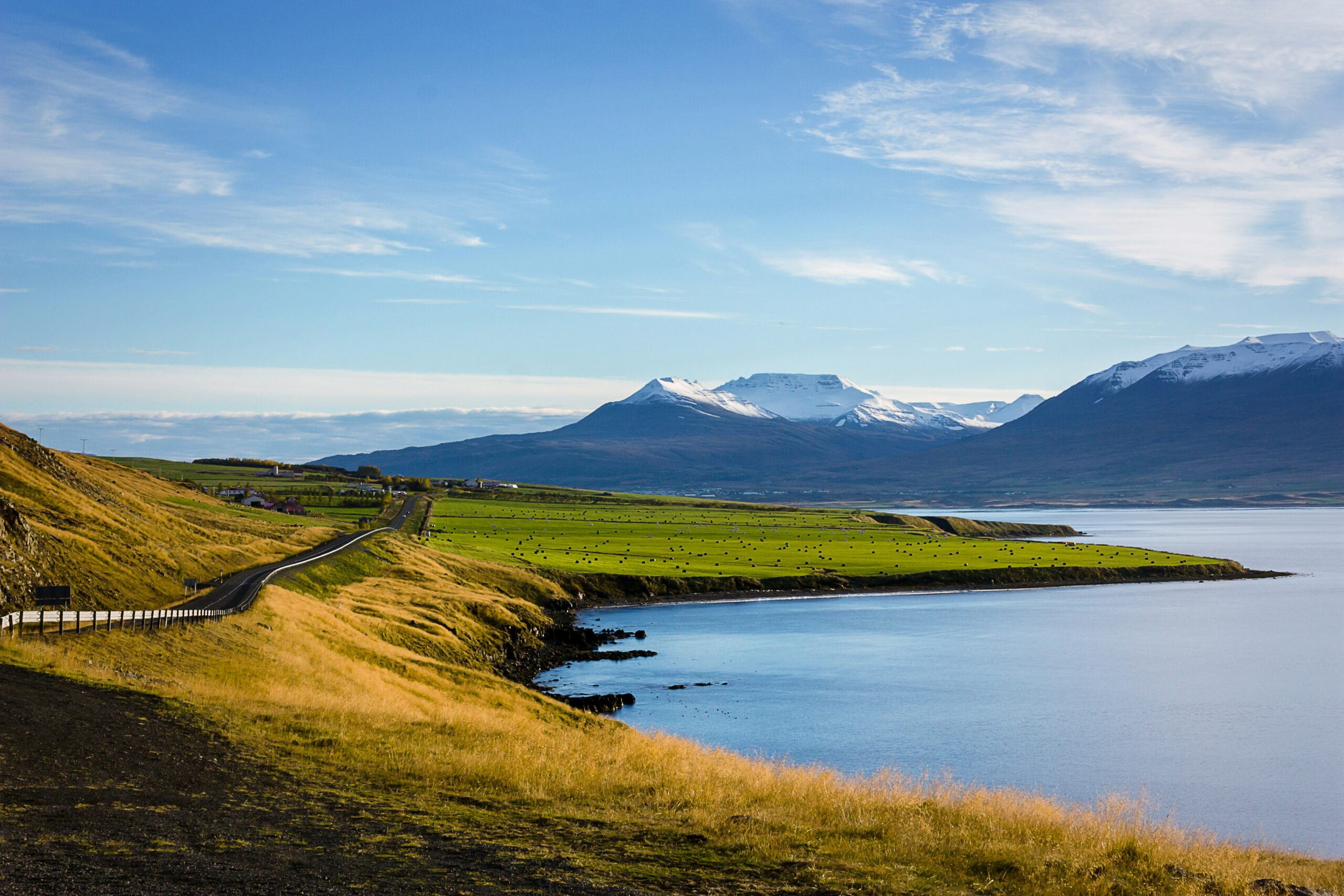
Planning your first trip to Iceland is less about finding more places to add to a map and more about making a few important decisions in the right order.
A five-day summer trip and a five-day winter trip are not the same journey. Staying in Reykjavík changes what you can comfortably reach compared with moving between overnight stops. Renting a car gives you freedom, but it also changes how you need to think about weather, distance and the pace of the trip.
Before booking everything, it helps to understand the shape of the country and decide what kind of Iceland experience actually fits your time.
This first part of the guide will help you do exactly that: choose when to go, decide how many days you need, understand the main regions, choose between Reykjavík and a road trip, and organize your arrival, transport and accommodation around a route that makes sense.
You don’t need to see all of Iceland on your first visit. You need a trip that works.
Affiliate note: Some links in this guide are affiliate links. If you book through them, Buildward Lab may earn a commission at no extra cost to you.
When Is the Best Time to Visit Iceland?
There isn’t one best time to visit Iceland. The right season depends on what kind of trip you want to have.
Summer brings very long days and generally makes road trips and outdoor sightseeing easier. Winter brings long periods of darkness, more demanding travel conditions, and the possibility of seeing the Northern Lights. Spring and autumn sit somewhere between the two, often with more trade-offs but also fewer peak-season crowds.
Before choosing your dates, think about what matters most to you: long sightseeing days, easier driving, Northern Lights, lower costs, or avoiding the busiest travel period. Your answer will shape almost every other decision in your Iceland itinerary.
Summer in Iceland: Best for Long Days and Road Trips

Summer is the easiest season for many first-time visitors, especially if you want to explore Iceland by car.
The biggest advantage is daylight. Around the summer solstice, Iceland experiences extremely long days, and in the north the sun may barely dip below the horizon. That gives you much more flexibility for sightseeing and makes it easier to spread stops throughout the day rather than rushing between them.
Summer also gives you access to a wider range of roads and regions than winter. This matters if you are considering a longer road trip, the Ring Road, or areas that are difficult or inaccessible during the colder months. However, mountain and highland roads follow their own seasonal opening conditions, so summer does not mean that every road is automatically open.
The trade-off is demand. Summer is the main travel season, so accommodation, rental cars, and popular activities can become more expensive or sell out earlier. And although conditions are generally easier, Icelandic summer weather can still be cool, windy, wet, and change quickly.
Summer makes the most sense if: this is your first trip, you want maximum flexibility for sightseeing, you plan to drive extensively, or your priority is exploring rather than seeing the Northern Lights.
Winter in Iceland: Northern Lights, Short Days and More Challenging Travel
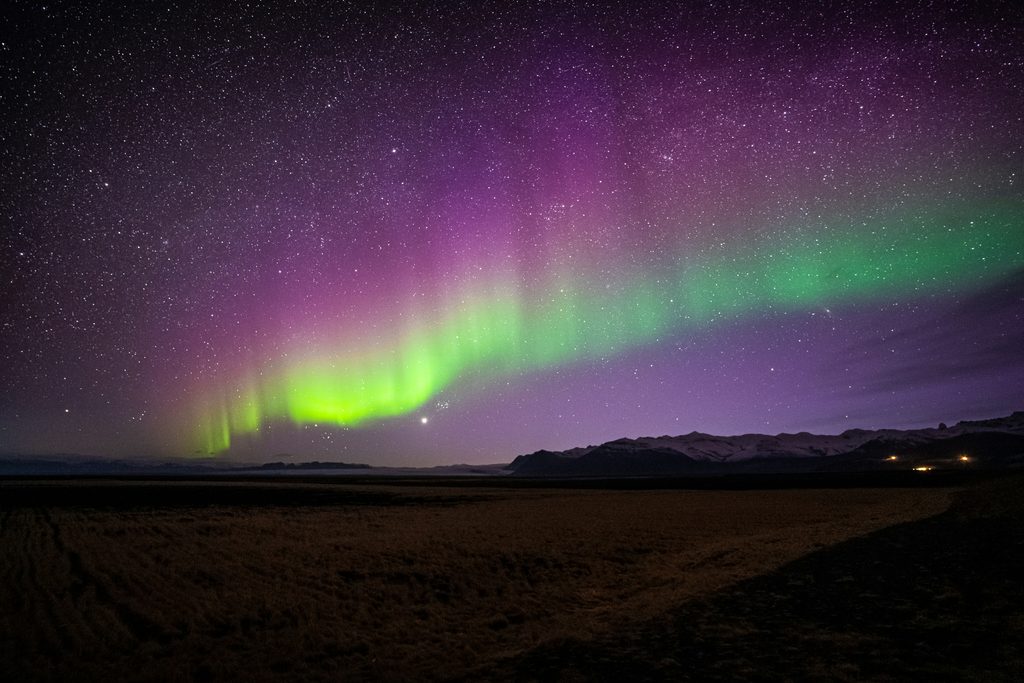
Winter offers a very different Iceland experience. The days are much shorter, weather can disrupt plans more easily, and driving requires more flexibility—but this is also the season for travelers hoping to see the Northern Lights.
Darkness is essential for seeing the aurora, but visiting in winter does not guarantee a display. You still need sufficient solar activity, suitable weather and clear enough skies, so it is better to treat the Northern Lights as a possibility rather than build the entire trip around a single night.
Short daylight hours also change how much you can realistically see in one day. A route that feels comfortable in summer may become rushed or impractical in winter, and road closures or difficult conditions can require last-minute changes.
For a first winter visit, staying in Reykjavík and combining independent sightseeing with selected guided day trips can be easier than attempting an ambitious self-drive itinerary.
Winter makes the most sense if: seeing the Northern Lights is a major priority, you are comfortable with shorter sightseeing days, and you are willing to keep your itinerary flexible when weather or road conditions change.
Prefer a guided Northern Lights experience?
If you’re staying in Reykjavík without a rental car, a small-group Northern Lights tour can make winter evening planning easier. This guided experience includes pickup from designated meeting points, hot chocolate, Icelandic pastries, and photos when conditions allow. Aurora sightings are never guaranteed.
Explore the Northern Lights Small-Group Tour →
Spring and Autumn in Iceland: Fewer Crowds, More Trade-Offs
Spring and autumn can be attractive if you want to travel outside Iceland’s busiest summer period, but they require more flexibility than many visitors expect.
These shoulder seasons sit between the advantages of summer and winter. You may encounter fewer visitors at popular sights and sometimes find better value, while still having enough daylight for substantial sightseeing. But conditions can change quickly, and the experience in early spring can be very different from late spring—the same is true for early and late autumn.
Autumn gradually brings darker nights and the return of Northern Lights viewing opportunities, while spring brings rapidly increasing daylight. Road access, snow, wind, and weather conditions should still be checked close to your travel dates rather than assumed from the season alone.
Spring or autumn may make sense if: you want to avoid peak summer demand, can tolerate more uncertainty in the weather, and are willing to build some flexibility into your itinerary.
So, When Should You Visit Iceland?
For most first-time visitors, summer is the simplest choice—especially if you want to rent a car, cover longer distances, and make the most of long sightseeing days.
Choose winter if the Northern Lights are one of your main reasons for visiting and you are comfortable accepting shorter days, more demanding conditions, and a greater chance that weather will change your plans.
Consider spring or autumn if avoiding the busiest summer period matters more to you than having the easiest possible conditions.
There is no universally best month. The better question is: what kind of Iceland trip do you want to have? Once you know that, choosing the season becomes much easier.
How Many Days Do You Need in Iceland?
How many days you need in Iceland depends less on how many attractions you want to see and more on how far you want to travel.
A short trip can work well if you focus on Reykjavík and a small number of nearby regions. With more time, you can move beyond day trips, change bases, explore more of the South Coast, or consider a longer road trip.
The mistake is assuming that Iceland’s highlights can simply be added to an itinerary like items on a checklist. Distances, changing weather, road conditions, daylight, and the time spent at each stop all affect how much you can realistically cover.
As a starting point, think of your trip in terms of 3, 5, 7, 10, or 14 days. Each gives you a very different level of flexibility and geographic reach.
3 Days in Iceland: Keep It Focused
Three days is enough for a short introduction to Iceland, but not for trying to cover a large part of the country.
The most practical approach is usually to keep Reykjavík as your base and choose one or two major experiences outside the city. The Golden Circle is an obvious option, while part of the South Coast can also work if you dedicate a full day to it. Your arrival and departure times will matter considerably—three calendar days do not always mean three full sightseeing days.
With such a short trip, changing accommodation repeatedly or driving long distances usually costs more time than it saves.
Best for: a city break with selected day trips, a stopover-style visit, or travelers who want a first taste of Iceland without attempting a full road trip.
5 Days in Iceland: Reykjavík Plus More of the South
Five days gives you noticeably more flexibility. You can still use Reykjavík as a base and take several day trips, but a short self-drive route with one or more nights outside the city also becomes realistic.
This amount of time works particularly well for combining Reykjavík with the Golden Circle and part of the South Coast without trying to race around the entire country. You have enough room to see different landscapes while keeping daily driving at a more reasonable level.
A five-day trip is still too short for an unhurried Ring Road itinerary. Trying to turn it into a full circuit usually means spending a large part of the trip driving rather than experiencing the places you came to see.
Best for: first-time visitors who want more than a Reykjavík city break but do not have enough time for a longer Iceland road trip.
7 Days in Iceland: A Proper Road Trip Becomes Possible
Seven days gives you enough time to think beyond Reykjavík-based day trips and build a more substantial road trip.
You can explore the Golden Circle and South Coast at a more comfortable pace, stay overnight in different areas, and potentially add another region depending on the season and your priorities. A week also gives you more room to adjust plans if weather affects a particular day.
You may see seven-day Ring Road itineraries suggested online, and completing the circuit can be technically possible under suitable conditions. That does not necessarily make it the best choice. For a first visit, a full Ring Road trip in seven days can mean long driving days, limited flexibility, and less time at each stop.
Best for: travelers who want a genuine road-trip experience while still having time to explore rather than simply cover distance.
10 Days in Iceland: More Regions and a More Relaxed Pace
Ten days opens up significantly more of Iceland and gives you greater freedom in how you structure the trip.
At this point, a Ring Road itinerary becomes a much more reasonable option in suitable seasonal and road conditions. You can also choose not to complete the full circuit and instead explore fewer regions in greater depth, adding places such as the Snæfellsnes Peninsula or spending more time along the South Coast.
The real advantage of having ten days is not simply fitting in more stops. It is having more breathing room between them. That extra flexibility matters in Iceland, where weather, road conditions, and an unexpectedly worthwhile stop can easily change the pace of a day.
Best for: travelers who want a substantial Iceland road trip without turning every day into a race to the next overnight stop.
14 Days in Iceland: Time to Explore Beyond the Highlights
Two weeks gives you enough time to experience Iceland at a noticeably slower pace and explore beyond the most common first-time stops.
In suitable seasonal conditions, you can build a comfortable Ring Road trip with time for additional regions, longer stops, rest days, or detours that would be difficult to justify on a shorter itinerary. Instead of treating Reykjavík, the Golden Circle, South Coast, North Iceland, and Eastfjords as checkpoints, you have more freedom to decide where you actually want to spend your time.
Fourteen days also gives you something particularly valuable in Iceland: flexibility. If weather disrupts a day or a place deserves more time than expected, the entire itinerary does not have to collapse.
Best for: travelers who want a more complete road-trip experience, prefer slower travel, or want enough flexibility to explore beyond Iceland’s headline attractions.
So, How Many Days Should You Spend in Iceland?
For a first trip, 5 to 7 days is a useful starting point if you want to experience more than Reykjavík without spending most of your time driving.
Three days can work well for Reykjavík and a carefully chosen day trip or two. Around five days gives you more of the south, while seven days makes a more substantial road trip possible. With ten days, a Ring Road itinerary becomes much more comfortable in suitable conditions, and two weeks gives you the freedom to slow down and explore beyond the main highlights.
More days do not automatically make a better trip. What matters is matching the distance you want to cover to the time you actually have—and leaving enough room for Iceland to change your plans.
Understanding Iceland: The Main Regions and Places to Know Before You Plan Your Route
Before deciding where to stay or whether to rent a car, it helps to understand how Iceland’s main travel regions fit together.
Many first-time visitors recognize names such as Reykjavík, the Golden Circle, the South Coast, and the Ring Road without realizing that they describe very different things. Reykjavík is the capital and a practical base, the Golden Circle is a popular sightseeing route, the South Coast is a broader travel region, and the Ring Road is the main road that circles much of the country.
You do not need to learn Iceland’s entire geography before planning your trip. You only need a clear picture of the main areas, what makes each one useful to a first-time visitor, and how much time reaching them can add to your itinerary.
The overview below is designed to give you that orientation before you choose your route.
Reykjavík: The Main Base for Short Trips and Day Tours
Reykjavík is Iceland’s capital and the most practical base for many short first-time trips. It is where you will find the widest concentration of accommodation, restaurants, services, and organized tours, while several of Iceland’s best-known sightseeing areas can be reached on day trips.
Staying in Reykjavík can work particularly well if you have only a few days, do not want to drive, or prefer returning to the same accommodation each evening. From the city, you can join day tours to places such as the Golden Circle and South Coast rather than organizing every part of the journey yourself.
The trade-off is distance. The farther you want to explore, the less efficient it becomes to return to Reykjavík every night. If your plans extend deeper along the South Coast or around the country, changing bases or taking a road trip usually makes more sense.
Think of Reykjavík as a base, not as the center of everything you will want to see in Iceland.
Explore Iceland’s South Coast Without Renting a Car
Discover Seljalandsfoss and Skógafoss waterfalls, Reynisfjara black-sand beach, and the Sólheimajökull glacier area on a guided small-group day tour from Reykjavík.
Explore the South Coast Small-Group Tour on Viator →
The Golden Circle: Iceland’s Classic First-Time Sightseeing Route
The Golden Circle is not a region or a single attraction but a popular sightseeing route connecting three of southwest Iceland’s best-known stops: Þingvellir National Park, the Geysir geothermal area, and Gullfoss waterfall.
Its location and relatively compact format make it one of the easiest ways to experience major Icelandic landscapes without committing to a long road trip. It can be explored independently by car or as an organized day tour from Reykjavík, which is why it appears in so many first-time itineraries.
The Golden Circle can fit comfortably into a shorter Iceland trip, but it should not be confused with the Ring Road. The two serve very different purposes: the Golden Circle is a concentrated sightseeing route in southwest Iceland, while the Ring Road takes you around much of the country.
Think of the Golden Circle as a strong one-day building block rather than an Iceland itinerary by itself.
Want to experience the Golden Circle and Blue Lagoon in one day?
For travelers with limited time, this small-group tour combines Iceland’s classic Golden Circle highlights — Þingvellir, Geysir, and Gullfoss — with Kerið Crater and a visit to the Blue Lagoon. Admission to Kerið and the Blue Lagoon is included, with the lagoon package depending on your selected option. It’s a full sightseeing day, best suited to travelers who prefer a guided itinerary.
Explore the Golden Circle & Blue Lagoon Tour →
The South Coast: Waterfalls, Black-Sand Beaches and Glaciers
The South Coast is one of Iceland’s most rewarding areas for a first visit because several very different landscapes appear along the same general route.
Traveling east from Reykjavík, you can reach major waterfalls such as Seljalandsfoss and Skógafoss, the black-sand coastline around Reynisfjara, and glacier landscapes farther east. Continue far enough and the journey eventually reaches the Jökulsárlón glacier lagoon and Diamond Beach.
Unlike the Golden Circle, however, the South Coast is not a compact loop. The farther east you travel, the longer the return journey becomes. A day trip from Reykjavík can introduce you to part of the coast, but exploring farther east is usually more practical with an overnight stay or as part of a road trip.
Think of the South Coast as a region you can scale to the time you have—from a long day trip to several days of exploration.
The Ring Road: Iceland’s Full-Country Road Trip
Iceland’s Ring Road, officially Route 1, forms a roughly 1,300-kilometer route around much of the country and connects many of the regions travelers associate with a longer Iceland road trip.
Following it can take you from the south into the Eastfjords, through North Iceland and back toward the west and Reykjavík. This makes it a useful backbone for a multi-day itinerary, but the Ring Road itself is not the destination. Many worthwhile places require detours, and the time needed for stops matters just as much as the driving distance.
Completing the circuit should therefore not be treated as a race. Although it is possible to drive the Ring Road relatively quickly under good conditions, a slower itinerary gives you much more flexibility for sightseeing, weather changes, and unexpected stops.
Think of the Ring Road as the framework for a longer road trip—not a checklist that has to be completed on every first visit.
Snæfellsnes Peninsula: A Compact Alternative to a Longer Road Trip
The Snæfellsnes Peninsula lies northwest of Reykjavík and packs a surprising variety of Icelandic landscapes into a relatively compact area.
Its coastline, lava fields, fishing villages, mountains, and the glacier-capped Snæfellsjökull volcano make it attractive to travelers who want to see more of western Iceland without committing to the full Ring Road. Kirkjufell, one of Iceland’s most recognizable mountains, is also located on the peninsula.
Snæfellsnes can be visited on a long day trip, but staying overnight gives you considerably more time to explore without turning the day into a sequence of rushed stops. It can also fit naturally into a longer western Iceland road trip.
Think of Snæfellsnes as a useful middle ground: more road-trip variety than a single sightseeing route, without requiring a journey around the entire country.
North Iceland: A Different Side of the Country
North Iceland becomes especially relevant once you have enough time to travel beyond the Reykjavík–Golden Circle–South Coast corridor.
Akureyri is the region’s main urban center and a useful base, while the Lake Mývatn area brings together volcanic landscapes, geothermal features, lava formations, and other sights within a relatively concentrated area. North Iceland is also well known for whale-watching departures, particularly from towns such as Húsavík.
For most first-time visitors on a short trip, the north is too far away to add casually. It makes much more sense as part of a longer road trip, a Ring Road itinerary, or a trip deliberately focused on this part of Iceland.
Think of North Iceland as a destination to build time around—not an extra stop to squeeze into an already full southern itinerary.
East Iceland and the Eastfjords: Best Suited to Longer Road Trips
East Iceland feels more remote than the heavily visited southwest and is most naturally included as part of a longer road trip around the country.
The Eastfjords are characterized by long coastal fjords, mountain scenery, small communities, and roads that reward slower travel. Egilsstaðir is the main service center for the wider region and can serve as a useful base for exploring parts of the east.
For most short first-time trips, East Iceland is simply too far from Reykjavík to include efficiently. Its value becomes much clearer when you have enough days to travel the Ring Road without rushing from one major stop to the next.
Think of East Iceland as part of the journey when you have time to travel around the country—not as a practical add-on to a short Reykjavík-based trip.
The Icelandic Highlands: Spectacular, Remote and Highly Seasonal
The Icelandic Highlands cover much of the country’s remote interior and offer some of its most dramatic landscapes, including mountains, volcanic terrain, geothermal areas, and vast stretches of largely uninhabited wilderness.
They are very different from the easier sightseeing routes around Reykjavík and the coast. Access is highly seasonal, many routes use mountain roads known as F-roads, and driving conditions can require an appropriate vehicle as well as considerably more preparation. Individual roads open only when conditions allow, so access should never be assumed simply because you are traveling in summer.
For most first-time visitors, the Highlands are better treated as a deliberate experience rather than something to add casually to a general Iceland itinerary. Some areas can also be reached through organized tours, which may make more sense if you do not want to manage the driving requirements yourself.
Think of the Highlands as an advanced or dedicated Iceland experience—not an essential part of a first trip.
Reykjavík Base or Road Trip: How Should You Travel Around Iceland?
Once you know how much time you have and which parts of Iceland interest you, the next decision is how you want to travel between them.
For most first-time visitors, the choice comes down to three approaches: staying in Reykjavík and using day tours, renting a car and building a road trip, or combining the two.
There is no single best option. The right choice depends on the season, the number of days you have, how comfortable you are driving in unfamiliar conditions, and how far beyond Reykjavík you want to explore.
The important thing is to choose your travel style before booking accommodation across the country. Transportation and overnight stops need to work together.
Option 1: Stay in Reykjavík and Take Day Trips
Using Reykjavík as your base is the simplest option if you do not want to rent a car or if you are visiting Iceland for only a few days.
You unpack once, keep the same accommodation, and choose individual day trips according to your priorities. The Golden Circle is particularly easy to visit this way, and organized tours also run from Reykjavík to the South Coast, Snæfellsnes Peninsula, Northern Lights viewing areas, and other destinations.
The main limitation is efficiency. Longer day tours can mean many hours on the road, and returning to Reykjavík every evening becomes less practical as you travel farther from the capital.
This approach works best when convenience matters more to you than complete freedom over timing and stops.
Best for: short trips, travelers who prefer not to drive, winter visitors who are uncomfortable with road conditions, and anyone who wants a simple base with selected excursions.
Option 2: Rent a Car and Build a Road Trip
Renting a car gives you far more control over your Iceland itinerary. You can leave when you want, stay longer at places you enjoy, stop when the landscape catches your attention, and sleep closer to the areas you plan to explore next.
A self-drive trip becomes particularly useful when you want to travel farther along the South Coast, explore several regions, or follow part or all of the Ring Road. Instead of returning to Reykjavík each evening, your accommodation can move with the route.
The freedom comes with responsibility. You need to monitor weather and road conditions, choose a suitable vehicle for your route and season, understand the limitations of Icelandic roads, and be prepared to change plans when conditions require it.
Best for: travelers who value flexibility, want to explore beyond the easiest day-trip range, and are comfortable taking responsibility for driving and route decisions.
Option 3: Combine a Rental Car with Guided Tours
For many travelers, the most practical solution is not choosing between independent travel and organized tours at all—it is combining them.
A rental car can handle the parts of Iceland that are straightforward to explore independently, while a guided tour can make sense when an activity requires specialist equipment, local expertise, or access you should not attempt on your own. Glacier walks, ice caves, certain Highlands experiences, and some wildlife or Northern Lights outings are examples where guided options may add genuine value.
A hybrid approach can also work if you want the freedom of a road trip but prefer not to drive on a particular day or in conditions you are uncomfortable with.
The key is not to book tours simply because they are available. Use them where they solve a real problem or provide access to an experience that independent travel cannot reasonably replace.
Best for: travelers who want the flexibility of self-drive travel without assuming that every Iceland experience needs to be done independently.
Which Option Is Right for You?
Choose a Reykjavík base with day trips if your visit is short, you prefer not to drive, or you want the simplest possible logistics.
Choose a self-drive road trip if you have more time, want to explore beyond the easiest day-trip range, and value flexibility over convenience.
Choose a combination of self-drive and guided experiences if you want independent travel for most of the trip but would rather leave certain activities, difficult routes, or weather-sensitive experiences to local professionals.
For many first-time visitors, the best answer is not one approach for the entire trip. Your transport can change with the itinerary: drive where independence adds value, and use a tour where expertise, access, or convenience genuinely makes the experience easier.
Flights and Arrival: Planning Your First and Last Day in Iceland
Your flight times can shape more of your Iceland itinerary than you might expect.
An early arrival may give you useful time on your first day, while a late arrival can make it more practical to keep the evening simple and begin exploring the following morning. The same applies to departure day: a morning flight and an evening flight should not be treated as if they leave the same amount of usable travel time.
Before booking accommodation, a rental car, or your first activity, look at the entire arrival and departure sequence—not just the airfare. Airport location, transfer time, car-rental arrangements, check-in times, and where you plan to sleep on the first and last night all need to work together.
A slightly cheaper flight is not always the better option if its timing creates an extra hotel night, an unnecessary rental-car day, or a difficult start to the trip.
Keflavík Airport Is Not in Reykjavík
Most international travelers arrive at Keflavík International Airport (KEF), which is located outside Reykjavík on the Reykjanes Peninsula.
That distinction matters when planning your first and last day. Landing at KEF does not mean you can step out of the terminal and immediately begin exploring central Reykjavík. You still need to account for the journey between the airport and the capital, as well as time for baggage collection, picking up a rental car, or waiting for your chosen transfer.
Reykjavík also has a separate domestic airport close to the city center, so always check the airport code when looking at flights or connections.
If you are starting a road trip immediately, collecting your rental car near KEF may fit naturally into the itinerary. If Reykjavík is your first base, an airport transfer may be the simpler option.
How to Get from Keflavík Airport to Reykjavík
There are several ways to travel between Keflavík International Airport and Reykjavík, and the best choice depends on whether you are starting a road trip or heading directly to accommodation in the city.
Airport coaches are a straightforward option for travelers staying in Reykjavík without a car. Private transfers and taxis offer more direct transport but generally cost more. If you are renting a car for your trip, collecting it at or near the airport can remove the need to pay separately for a transfer into Reykjavík.
Do not choose purely on the advertised ticket price. Check where the transfer actually drops you, whether an additional hotel or bus-stop connection is required, how the schedule fits your arrival time, and what is included with your luggage.
If your flight arrives very late, confirm your transport and accommodation arrangements before traveling rather than assuming every option will operate exactly when you need it.
Should You Start Your Road Trip on Arrival Day?
Starting your road trip immediately after landing can save time, but it is not always the smartest use of your first day.
Consider your arrival time, how long you have been traveling, the season, available daylight, and the distance to your first overnight stop. Driving an unfamiliar route while tired—or pushing toward a distant destination because it looks achievable on a map—can turn the first day into unnecessary stress.
If you arrive early, feel rested, and have a modest first-day route, collecting your car at Keflavík and beginning the trip can work well. A later arrival may be better handled with a simple first night near the airport or in Reykjavík before starting the road trip the following morning.
Treat arrival day as a transition day unless your flight schedule genuinely gives you enough time and energy to use it well.
Plan Your Last Night Around Your Departure Flight
Your final night deserves almost as much planning as your first.
If you have an early departure from Keflavík, ending a road trip far from the airport can create an unnecessarily stressful final morning. In that case, spending the last night in Reykjavík or closer to Keflavík may be more practical than trying to squeeze one more distant stop into the itinerary.
With a later flight, you may have more flexibility, but avoid treating departure day as a guaranteed full sightseeing day. You still need time to reach the airport, return a rental car if you have one, handle check-in and security, and absorb reasonable delays.
A useful rule is to build the final part of your route toward the airport rather than away from it. That small decision can make the end of the trip considerably easier.
Where to Stay in Iceland: Choose Accommodation Around Your Route
Where you stay in Iceland should follow your itinerary—not the other way around.
If you are taking day trips, keeping one base in Reykjavík can make the trip much simpler. If you are driving farther along the South Coast or around the country, changing accommodation as you move usually saves significant backtracking.
The goal is not to change hotels every night simply to cover more ground. Too many one-night stays create extra packing, check-in time, and pressure to keep moving. Instead, look for natural bases that allow you to explore an area before continuing to the next part of your route.
Before booking, map your overnight stops together with the driving time between them. A room that looks cheaper can be poor value if its location adds unnecessary hours to the journey.
One Base or Multiple Stops?
A single base works best when most of the places you want to visit can reasonably be reached and returned from in the same day. For a short trip centered on Reykjavík, this can keep the logistics simple.
Multiple overnight stops become more useful when your route moves steadily away from Reykjavík. Instead of driving back over the same road each evening, you continue forward and begin the next day closer to the places you want to explore.
Try to avoid changing accommodation simply because you can. Two nights in a well-positioned base can sometimes produce a better trip than two different one-night stops.
A simple rule: if returning to the same accommodation creates substantial backtracking, it is probably time to move your base.
Build Your Iceland Trip in the Right Order
Planning Iceland becomes much easier when you make the big decisions before booking the details.
Start with the season, because daylight and travel conditions affect what kind of trip is realistic. Then decide how many days you have and which parts of Iceland genuinely fit within that time.
From there, choose your travel style: Reykjavík with day trips, a self-drive road trip, or a combination of independent travel and guided experiences. Only then should you match your flights, airport transport, rental car, and accommodation to the route.
A simple planning order looks like this:
Season → Number of days → Regions → Travel style → Flights → Transport → Accommodation
You do not need to see everything on your first trip. A well-paced itinerary covering fewer places will usually give you more time to experience Iceland than an ambitious route built around collecting as many stops as possible.
Once those decisions are made, the next stage is the practical side of the trip: budgeting, food, packing, weather, driving, safety, reservations, and the mistakes that are easiest to avoid before you arrive.
Explore More of Iceland
From dramatic waterfalls and volcanic landscapes to glacier adventures and Northern Lights experiences, Iceland offers far more than any single itinerary can cover.
If you prefer guided experiences or want to add something memorable to your trip, explore our curated selection of Iceland tours and activities on Viator.